
Highlights
- Understanding Burns and Scalds: Learn what causes burns and scalds and the different types.
- Treating Your Child’s Burn: Quick steps for first aid and when to seek medical help.
- What Not to Do for Burns: Avoid harmful treatments like using ice or applying butter.
- Preventing Burns and Scalds: Tips for childproofing your home and reducing burn risks.
In This Article
- Understanding Burns and Scalds
- Types of Burns
- Treating Your Child’s Burn
- What Not to Do for Burns
- Preventing Burns and Scalds
- Tools and Assistance
Understanding Burns and Scalds
Burns and scalds both damage the skin through heat. Children can also be burnt by contact with very cold things such as dry ice.
A burn is caused by contact with dry heat, such as:
- a hot surface
- electricity
- friction
Scalds are caused by contact with wet heat, usually a hot liquid, such as:
- water in a hot bath
- steam from a boiling kettle
Water can be hot enough to scald a child up to 30 minutes after being boiled.
Whether your child has a burn or scald, their injury is generally referred to as a burn. Burns can also affect the:
- eyes
- respiratory system (airways and lungs)
Types of Burns
A burn may be superficial or deep.
A superficial burn is usually more painful, while deeper burns can cause nerve damage, which may reduce the sensation of pain.
Superficial burns are usually red, while deeper burns can be dark red, pale yellow, or a mottled mix of colors. Very severe burns may be white or charred.
Treating Your Child’s Burn
All burns cause damage to your child’s skin and need first aid treatment.
First Aid
If your child has a burn or scald, it’s important to treat them as quickly as possible. Initial first aid treatment is the same for all burns.
Follow these steps for burn first aid:
- Check that your child is breathing properly.
- Run the burnt area under lots of cool (but not cold) running water for 20 minutes.
- Remove clothing or jewelry if you can. If it’s stuck to the burn, do not try to remove it.
- Keep your child warm, as treating the burn with water can make them cold.
- Cover the burn with a loose, non-stick dressing such as a clean cloth, or plastic cling wrap.
- If needed, you can give your child pain relief, such as paracetamol.
- If the burn is serious or your child is obviously unwell, call for medical help immediately.
Call for medical assistance if:
- the burn is larger than a 3 cm diameter
- the burn is blistering
- the burn is on the face, hands, or genitals
- the burn is to the throat or airways
- the burn is an electrical burn
- the burn is deep — even if your child isn’t in pain
- you are worried about your child
- your child has trouble breathing
What Not to Do for Burns
If your child has a burn:
- DO NOT use ice to cool the area
- DO NOT apply lotions, creams, or food such as butter
- DO NOT pop any blisters
Preventing Burns and Scalds
If you have young children in your house, there is always a risk of them getting burnt or scalded. There are ways to reduce this risk.
Most burns to children occur at home. Other high-risk places include fireplaces in:
- pubs
- restaurants
- camp sites
Keeping the Kitchen and Dining Areas Safe
When you are in the kitchen or have hot food and drinks, always supervise your child.
In the kitchen:
- Keep hot drinks, hot liquids, and chemicals out of your child’s reach.
- Store appliances such as microwaves and kettles out of your child’s reach.
- Refill your kettle with cold water after use.
- Avoid cooking or drinking hot drinks while holding or breastfeeding your baby.
- Don’t let appliance cords dangle in reach of your child.
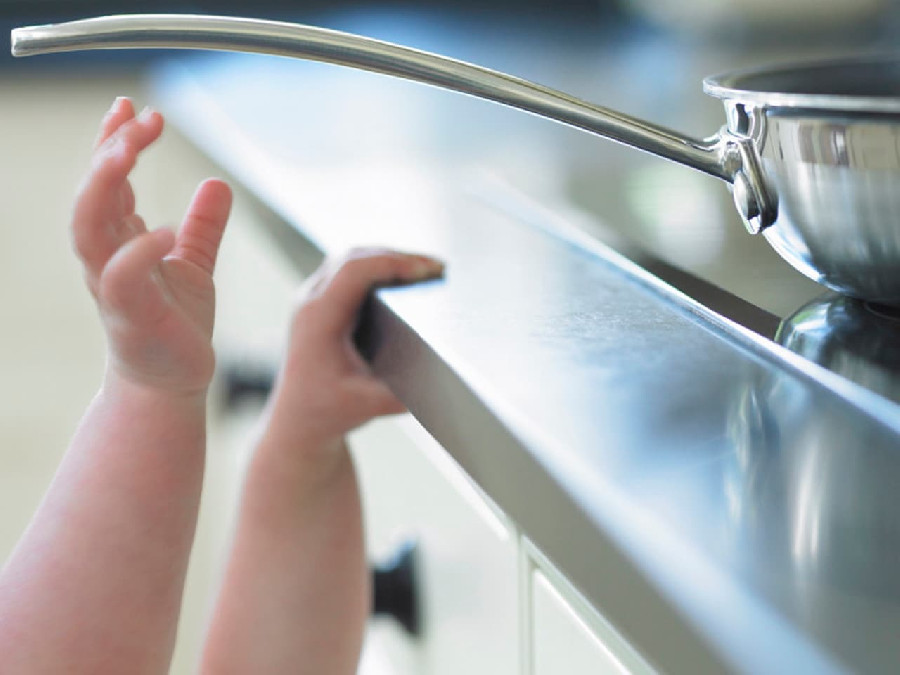
- Use the back burners on the stove rather than the front ones, and turn pot handles towards the wall so your child can’t reach them.
- Keep children’s play areas out of the kitchen — consider a child safety gate to keep your child out of the kitchen while you’re cooking.
When dining:
- Test the temperature of food and hot drinks before serving it — ‘hot’ drinks for children should only be warm.
- Stir microwaved food well to distribute the hot spots.
- Use placemats rather than tablecloths, to avoid your child grabbing a tablecloth and pulling hot food onto themselves.
Keeping the Bathroom Safe
Like the kitchen, always supervise your young child when they are in the bathroom. Most hot tap water scalds occur at home. They are often caused by bathwater heated to unsafe temperatures.
The temperature of your hot water system should be set at 50°C. You can talk to a licensed plumber about installing a device that will limit the water temperature.
Install child-resistant tap covers to prevent toddlers from turning on the hot water tap.
When bathing or showering your child:
- Turn on the cold water first.
- Make sure the water is warm, not hot — it is recommended to bathe your child at 38°C.
- Always test the water first with your wrist or elbow, or use a thermometer.
- Supervise your child and keep them within arm’s reach.
- Never leave a child alone in the bathroom. If you need to leave the bathroom, take your child with you.
Keeping the Bedroom Safe
- Don’t use electric blankets on children’s beds. Electric blankets can cause children to overheat if left on for too long. Your child is also at risk of electrocution if they wet the bed.
- Turn heaters off once children are in bed. If your child can get out of bed by themselves, you can:
- take the heater out of the room
- install a guard around the heater
- Keep clothes and toys at least one metre away from heaters.
- Buy your children close-fitting sleepwear with a ‘low fire danger’ label.
- Keep bedside lamps out of their reach.
Keeping the Living Area Safe
In living spaces, be sure to:
- place guards or screens in front of fireplaces
- keep lighters, matches, and candles out of your child’s reach
- wait until your child is asleep in their bedroom before doing any ironing
Also, be sure to check that your smoke alarms are working and up to date.
- Test them every month by pressing the test button.
- Replace the batteries in your smoke alarms every year.
- Replace smoke alarms every 10 years.
Keeping the Garage and Outdoor Areas Safe
If you are camping, make sure your children wear shoes. Keep them away from campfires and hot coals.
Make sure you:
- don’t use accelerants to light fires
- don’t leave fires unattended
- watch children around barbeques and fires
- secure outdoor gas heaters so they can’t fall over
- keep children away from lawn mowers
Be sure to check metal objects in hot weather so your child doesn’t burn themselves, such as:
seat belt buckles in the car
play equipment, especially slides
Tools and Assistance
If you have children or look after children, it’s important to know some essential tools and resources to help you manage burns and scalds effectively:
- First Aid Kits: Always have a well-stocked first aid kit with essential burn treatment supplies, such as non-stick dressings, gauze, and pain relievers like paracetamol.
- Burns First Aid Guide: Keep a printed guide or access to an online resource that outlines the steps to take in case of burns. This can help you act quickly in an emergency.
- Emergency Contacts: Make sure you have local emergency numbers readily available. This includes the poison control center or the nearest emergency medical facility.
- Smoke Alarms: Install and maintain working smoke alarms in your home to prevent fire-related accidents.
- Childproofing Tools: Use child safety gates, corner protectors, and heat-resistant tap covers to reduce burn risks in high-risk areas like kitchens and bathrooms.
- Burns Treatment Information: Access to reliable resources from hospitals, medical centers, or burn care organizations for specific advice on burn treatment.
- Online Parenting Forums or Hotlines: Reach out to online communities or hotlines for guidance from other parents or professionals in case of a burn or scald emergency.









Please log in to leave a comment.