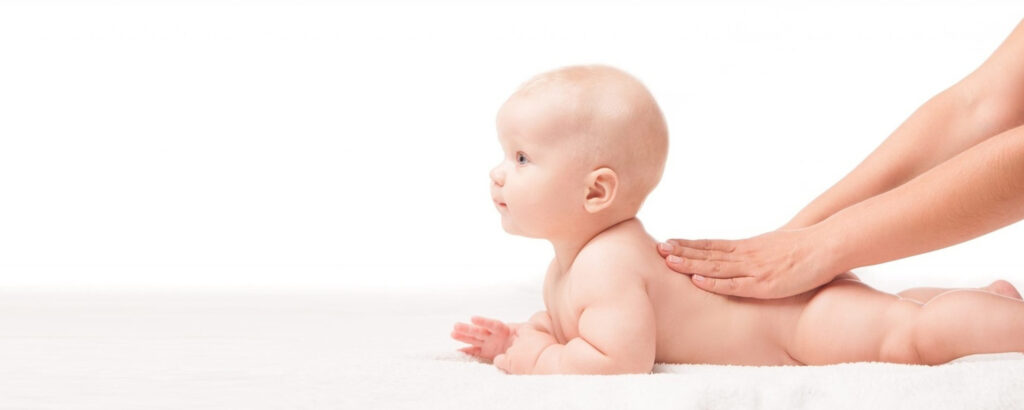
Highlights
- Massage can be done anytime you and your baby are calm
- Gentle, rhythmic strokes help babies feel relaxed
- There’s no one “right” way—being gentle is most important
- Watching your baby’s reactions is essential
- Massage becomes easier with regular practice
In This Article
- Why baby massage is beneficial
- Choosing the right moment for massage
- Setting up a soothing massage environment
- Step-by-step guide to baby massage
- Important safety reminders
- Tools and Assistance
Why baby massage is beneficial
Most babies enjoy gentle massage and respond well to calm touch. There’s no need to follow strict steps—what matters most is being present and responsive. Massage can:
- Deepen your bond with your baby
- Help your baby relax before sleep
- Ease tummy pain and fussiness
- Create emotional trust and security
- Offer partners a chance to connect meaningfully
- Be a calming activity beyond feeding and diapering
Choosing the right moment for massage
Massage doesn’t require a fixed schedule. Many families enjoy it before bath time, but it can happen whenever you and your baby are calm and not rushed. For best results:
- Make sure the room is cozy and warm
- Let your baby guide the length and focus—short sessions are often ideal
- Some babies prefer touch in specific areas rather than full-body massage
Setting up a soothing massage environment
A peaceful setup helps both you and your baby feel relaxed. Prepare by:
- Choosing a quiet, warm place in your home
- Using a stable, soft surface like a bed or towel on the floor
- Picking baby-safe oil—edible, unscented oils such as olive or coconut are great choices
- Avoiding perfumed products, which may irritate baby skin
- Taking a few deep breaths so you’re calm—your baby senses your mood
Step-by-step guide to baby massage
Start by gently talking to your baby and asking if it’s okay to begin—it encourages a sense of connection and respect.
- Undress your baby, keeping on the diaper
- Speak softly while you massage, describing your movements
- Begin with the feet and move upward
- Massage each foot, ankle, and leg with long, slow strokes
- Use circular motions on the tummy and chest
- Gently move the baby’s legs like pedaling a bike
- Stroke arms, hands, and each finger
- Finish with light touches to the face, ears, and head
- Turn baby on their tummy for gentle back and leg strokes
Important safety reminders
To keep massage safe and comfortable:
- Never leave your baby alone on high surfaces
- Avoid applying oils near the eyes, mouth, or hands
- Test a small amount of oil on your baby’s skin the first time
- Don’t use nut oils unless you’re certain there are no allergies
- Skip mustard oil—it can cause discomfort or irritation
Tools and Assistance
- Use soft towels and calm lighting to create a cozy space
- Choose edible, fragrance-free oils for sensitive baby skin
- Follow your baby’s cues—stop if they seem overstimulated or restless
- Turn massage into a regular part of your evening or bedtime routine
- Talk with a child health nurse or doctor if you’re unsure about products or technique











Please log in to leave a comment.