Highlights
- Baby walkers and exercise jumpers can delay walking development and pose safety risks.
- Babies need to spend time on the floor to develop essential walking skills.
- There are safety concerns, including falls, injuries, and access to dangerous areas.
- Parents are advised to avoid using walkers and jumpers and follow safety guidelines if they decide to use them.
In This Article
- Understanding baby walkers: What you need to know
- Exploring exercise jumpers: A parents’ guide
- The journey to walking: How babies develop their steps
- Supporting your baby’s walking development: Practical tips
- Do baby walkers and jumpers really aid walking development?
- The dangers of baby walkers and jumpers: What to watch out for
- Safety tips for using baby walkers: A must-read for parents
- Finding reliable information about baby walkers and jumpers
Understanding baby walkers: What you need to know
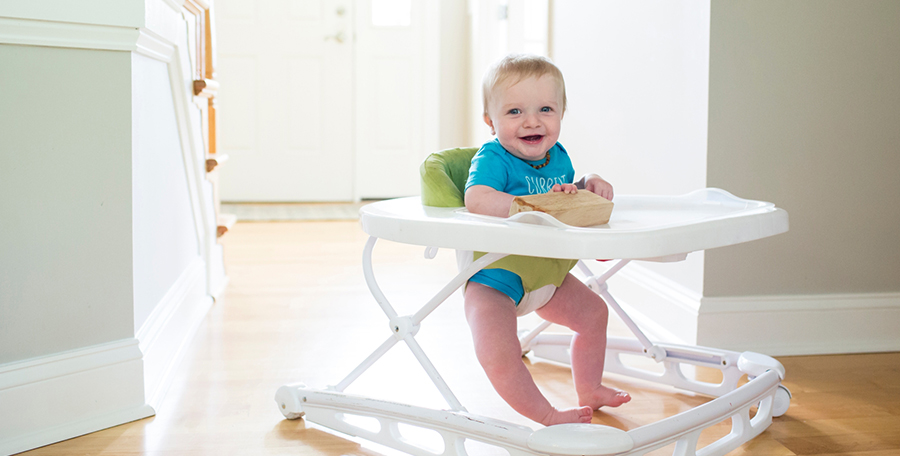
A baby walker is a circular frame on wheels that seats a baby who has not learned to walk yet.
Some people believe that baby walkers are useful for their babies, to entertain them and help teach them to walk. This is not true. Baby walkers can be dangerous and can actually delay your baby’s walking development.
Exploring exercise jumpers: A parents’ guide
An exercise jumper, also known as a jolly jumper or baby bouncer, is a device that holds a baby in a sling seat with a spring or elastic. The device either comes in a standalone frame or can be attached to a door frame.
Like a baby walker, exercise jumpers can cause accidents and delay your baby’s development.
The journey to walking: How babies develop their steps
Most babies pass the following milestones while learning to walk:
- rolling on the floor
- sitting
- crawling, creeping or scooting
- pulling themselves up to stand
- moving around furniture or other stationary objects
This means that babies need to spend plenty of time on the floor, learning and practicing these activities.
Supporting your baby’s walking development: Practical tips
Let your baby spend lots of time on the floor. It’s a safe space for your baby to learn to roll, sit, and pull themselves up to stand.
You can also place your baby close to soft furniture to help them with pulling-up.
If your baby is moving around, block off a safe area for them to play and move. You can also use a high-quality playpen or stationary activity centre.
Do baby walkers and jumpers really aid walking development?
NO — baby walkers and jumpers don’t help a baby develop their walking. In fact, walkers and jumpers can impede or delay your baby achieving these important milestones. The more time babies spend in a walker or a jumper, the more delay they experience.
Walkers and jumpers take your baby’s time away from the floor, so they miss out on practicing important, repetitive movements needed for them to reach their walking milestones.
Babies tend to use their toes when they are in a walker or a jumper, which tightens their leg muscles and Achilles tendons (the thick cord at the back of the ankle) — this interferes with normal walking development. Once out of the device, they often want to keep using their toes, which is not how babies usually learn to walk.
When babies sit and pull themselves up, they are learning how to balance. A baby doesn’t balance in a walker, delaying learning this important skill.
Being in a walker or jumper also means less time on hands and knees in a crawling or pre-crawling position. This is important for developing weight-bearing through both the pelvis and shoulders.
A variety of important movements is needed when babies are developing their walking skills, but they get fewer chances to practice these in a walker or jumper than they would on the floor.
The dangers of baby walkers and jumpers: What to watch out for
Baby walkers and exercise jumpers are considered unsafe because they can cause various accidents and injuries, including:
- falling down steps or stairs
- crashing into something sharp or hard
- tipping over while moving
- being toppled by an older sibling
- accessing electrical cords or cupboards with hazardous substances (such as cleaning supplies)
- moving quickly to dangerous areas such as fireplaces, ovens, heaters, or pools
- being able to reach hot drinks on tables or other dangerous objects
Each year, many babies are injured while using walkers and jumpers. Some sustain serious injuries caused by burns, cuts, head injuries, broken bones, poisoning, and drownings; some even die.
Exercise jumpers can also cause serious injury to your baby, including:
- falling out, causing head or limb injuries
- getting fingers trapped in the springs
- colliding with the door frame or furniture — pets or other children could also push your baby
Safety tips for using baby walkers: A must-read for parents
Baby walkers sold must comply with consumer product safety standards.
All walkers must have:
- a braking mechanism to help stop it from falling down stairs
- specific labels with clear safety instructions about blocking access to stairs, keeping the baby in view all the time, using only on a flat surface without objects to tip over, and keeping away from all objects that could burn
- prior testing to ensure it doesn’t easily tip or topple over
Parents are highly discouraged from using baby walkers. However, if you still decide to purchase one, please follow these guidelines:
- NEVER leave your baby unattended.
- ONLY use on a flat surface and block off access to steps or stairs.
- REMOVE all dangerous items from the area, such as electrical cords, hot drinks, cleaning chemicals, fires, heaters, pools, or toilets.
- MAKE SURE the walker has a lock and a braking mechanism.
- NEVER use a walker before your baby can sit or after your baby can walk.
- LIMIT your baby’s time in the walker to no longer than 15 minutes.
Tools And Assistance
- Safe Baby Products: Look for walkers and jumpers that comply with safety regulations and have braking mechanisms.
- Playtime Resources: Encourage your baby to spend time in safe play areas to support walking development.
- Guidelines and Safety Standards: Always check consumer product safety standards when selecting baby equipment.
- Support Networks: Seek advice from pediatricians or baby development specialists for personalized guidance.










Please log in to leave a comment.