Highlights
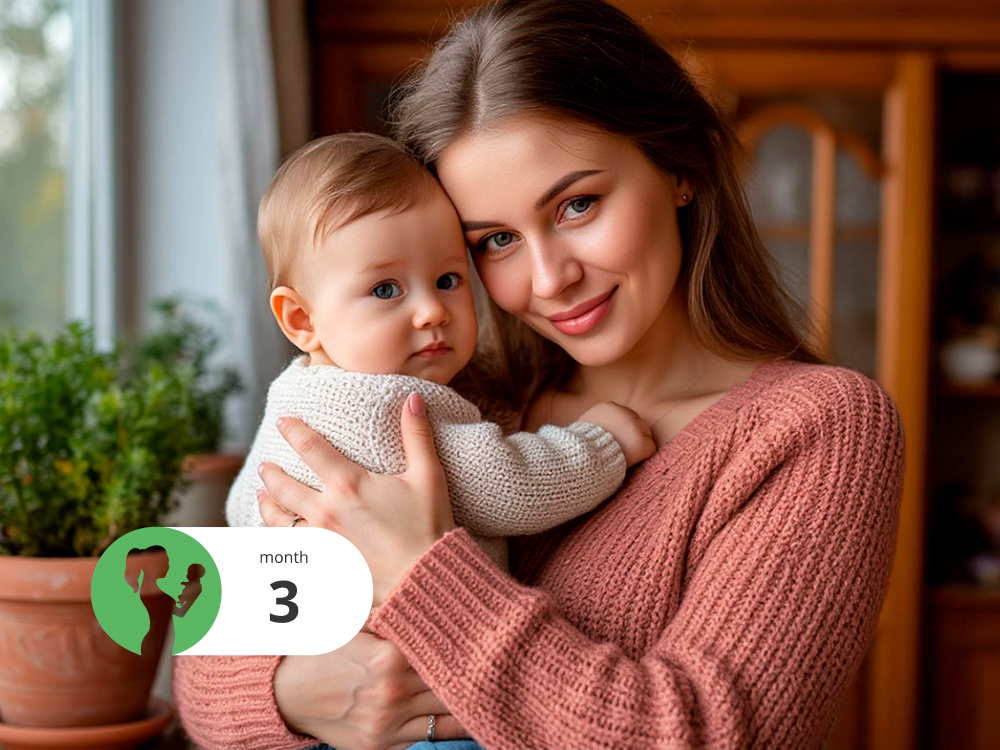
- By 3 months, your baby will have formed a strong attachment to you and respond with lots of smiles.
- Your baby will have better control of their head movements and start holding their head up while sitting.
- Your baby may roll from front to back during tummy time and start pushing up their chest with their hands.
- The posterior fontanelle (soft spot at the back of your baby’s head) will close by 3 months.
In This Article
- What can my 3-month-old do?
- How to support your baby’s development
- Signs of developmental concerns
- Tools and assistance
What can my 3-month-old do?
At 3 months, your baby will have made significant strides in both physical and social development. They will respond to you with lots of smiles and have formed a strong attachment. Their crying will decrease, allowing you to enjoy more interaction.
Physical development
Your baby will start reaching for objects, and their arm and hand muscles will develop. They will try to put things in their mouth, and they will have better control of their head movements, holding their head up while sitting.
During tummy time, they may roll from front to back, lift their head, or push up their chest. They will wave their arms and kick their legs. If held upright, they will push down on their legs when their feet touch the floor or your lap. Your baby may bat at dangling objects with closed fists and may start opening their fingers to grasp objects.
Cognitive development
Your baby will begin to show more interest in their environment. They may stare at objects and shake or rattle them, developing their sense of touch and beginning to pay attention to things for longer periods.
Social development
At this stage, babies will smile at strangers and recognize their parents by sight, smell, and voice.
Emotional development
Your baby will start to experience a range of emotions and communication. They will respond to different expressions and turn to look for you when they hear your voice. Laughing may also start at this stage. Your baby may also show interest in their fingers and toes.
Language development
Your baby will begin gurgling a lot and may try to respond when you talk to them.
How can I support my baby’s development?
Talk and read to your baby regularly to help them learn about language and conversation. Choose baby books with large, bright pictures to engage your baby—at this stage, the sound of your voice is more important than the words themselves.
Point to things around your baby and tell them their names to help enhance their vocabulary. If you’re in a bilingual home, make use of both languages.
Stimulate neck and back muscles by dangling a toy during tummy time. Offering toys for grasping will help develop their fine motor skills.
Enhance their sense of touch by using materials like fur, felt, and tissue. This will help them explore textures.
Provide cuddles, massage, and gentle movement to calm your baby and strengthen the emotional bond between you.
Signs of developmental concerns
Consult a doctor or health professional if your baby:
- Doesn’t smile by 8 weeks
- Doesn’t calm down when picked up for comfort
- Shows signs of uneven strength, with one side of their body stronger than the other
- Continues holding fingers in a tight fist or shows signs of being floppy or stiff
- Isn’t startled by sudden noises
- Is not feeding properly
Tools and Assistance
If you are worried or would like to discuss any issues with your baby’s development, the following resources may be helpful:
- Pediatricians: For professional guidance on your baby’s health and development.
- Parenting support groups: Connecting with others can offer advice and encouragement.
- Books and online resources: Find expert tips and activities to promote your baby’s development.
- Developmental specialists: For more detailed assessments and advice, consider speech therapists or occupational therapists.
If you have any concerns, don’t hesitate to consult with a healthcare professional.












Please log in to leave a comment.