Highlights
- After 12 months, breastmilk, water, and full-fat cow’s milk should be the main drinks.
- At around 6 months, babies need to start having solid foods in addition to breast milk or formula.
- You can start introducing solids when your baby can sit up with support, has good head control, and shows interest in food.
- First foods can be smooth, mashed, or have soft lumps.
In This Article
- When to start solid foods
- Introducing solids into your baby’s diet
- First foods to offer
- What drinks should I be giving my baby?
- How much should I feed my baby?
- How do I know my baby is getting enough food?
- Finger foods and self-feeding
- Foods to limit or avoid when introducing solids
When to Start Solid Foods
At 6 months, your baby will still be getting most of their nutrition from breast milk or formula. You can start to introduce solid foods when:
- Your baby can sit up with support and has good head control.
- Your baby shows interest in eating (watching and reaching out when they see food).
It’s recommended that you don’t introduce solids before 4 months of age.
Introducing Solids Into Your Baby’s Diet
Start feeding your baby solids once a day with small amounts, such as one teaspoon of pureed vegetable, fruit, or rice cereal, between milk feeds.
- From 6 to 9 months, continue to give breast milk or formula first, then solids after.
- From 9 months, you can offer solids first, then breast milk or formula.
- Around 8 to 9 months, introduce solids at breakfast, lunch, and dinner.
From 6 months, try small amounts of cooled, boiled tap water out of a sippy cup.
First Foods to Offer
Your baby’s first foods should be rich in iron, such as:
- Iron-fortified baby cereals
- Meat
- Poultry
- Fish
- Cooked tofu
- Legumes such as lentils, beans, or chickpeas
Introduce foods in any order, as long as some include iron. The texture can range from smooth to mashed or soft lumps.
Vegetables and Legumes
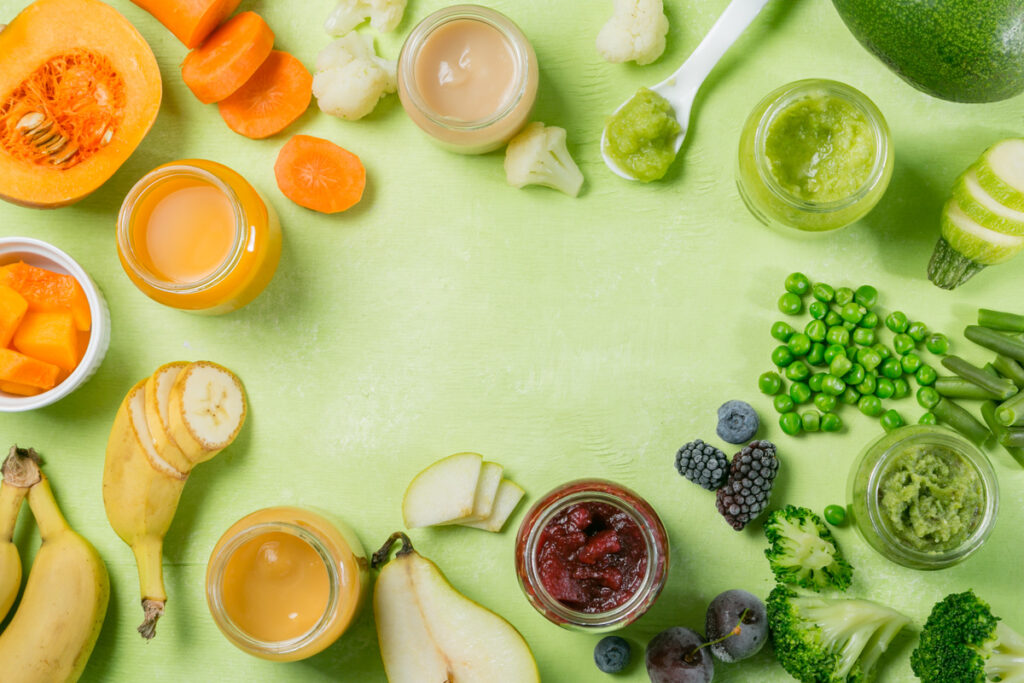
- Cooked and pureed or mashed pumpkin, carrots, potato, sweet potato, peas, broccoli, cauliflower, and zucchini.
- Gradually, you can offer chunkier textures.
Fruit
- Stewed and pureed apples, pears, peaches, apricots, and berries.
- Mashed ripe banana.
- Gradually introduce pieces of cooked fruit and grated raw apple (avoid large pieces of raw apple).
Grains and Cereals
- Fortified infant cereals (e.g., rice cereal) to start, then move to cooked rolled oats or wholegrain breakfast biscuits.
- Avoid added sugar or honey.
Meat, Fish, Poultry, Eggs, Legumes, Tofu
- Start with pureed meat, fish, poultry, eggs, legumes, or tofu.
- When your baby is ready, offer bite-sized pieces of chicken, minced meat, flaked fish, mashed tofu, legumes, and scrambled or mashed eggs.
- Avoid adding salt or offering processed meats.
Milk, Cheese, Yoghurt
- Continue formula until your baby is 12 months old, then introduce small amounts of cow’s milk into foods.
- Continue breastfeeding until at least 2 years of age.
- Choose yoghurt without added sugar.
What Drinks Should I Be Giving My Baby?
After 12 months, offer breast milk, water, and full-fat cow’s milk as the main drinks.
- Switch from formula to full-fat cow’s milk after 12 months and offer a cup, not a bottle.
- From 12 months, you can offer calcium-fortified rice milk or oat milk, but be aware that they don’t provide enough protein and vitamin B12.
How Much Should I Feed My Baby?
Babies grow at different rates, and their appetite can vary from day to day. Babies know how much to eat; offer wholesome, healthy, unprocessed foods, and follow your baby’s cues.
How Do I Know My Baby Is Getting Enough Food?
Breast milk or formula is the main source of nutrition during the first year. Gradually, your baby will build up to three meals a day, along with snacks and drinks. Offer breast milk or formula before solid foods to ensure they get the most important nutrients first.
Finger Foods and Self-Feeding
By 9 to 12 months, many babies enjoy finger foods. Some babies may start holding their own spoon. By 12 months, your baby can eat the same healthy foods your family eats, but without large amounts of hot spices.
Foods to Limit or Avoid When Introducing Solids
Limit or avoid giving your baby:
- Small, hard foods such as whole nuts and uncooked vegetables (until 3 years of age).
- Coffee, tea, and herbal drinks.
- Fruit juice.
- Honey (until 12 months to prevent botulism).
- Processed foods and sugar-sweetened drinks.
- Raw or runny eggs (due to the risk of bacteria).
- Unpasteurized milks.
- Low-fat milks, goat’s milk, sheep’s milk, soy milk, coconut milk, and almond milk (before 2 years unless recommended by your doctor).
Tools and Assistance
For more information on introducing solid foods to your baby, consider consulting with:
- Your pediatrician
- A registered dietitian
- Local parenting groups and resources












Please log in to leave a comment.