
Highlights
- Breastfeeding provides your baby with all the nutrition needed during the first 6 months of life.
- Any amount of breastfeeding offers benefits for both you and your baby.
- Breastfeeding is a learning process that you and your baby will go through together.
- Ideally, breastfeeding should begin soon after birth.
In This Article
- The Importance of Breastfeeding
- Benefits for Baby, Parent, and Family
- What Happens to Your Breasts During Pregnancy
- When and How to Start Breastfeeding
- Common Breastfeeding Challenges and Solutions
- Tools and Assistance
The Importance of Breastfeeding
Breastfeeding is the most natural and beneficial way to nourish your baby. It provides all the necessary nutrients during the first 6 months of life and helps create a loving bond between mother and child. The first milk produced by your body is called colostrum—it’s rich in fat and antibodies that are crucial for newborn immunity. As your baby grows, your breast milk adjusts to meet their changing nutritional needs.
Even short-term breastfeeding can be extremely beneficial.
Benefits of Breastfeeding
For Your Baby
Breastfeeding offers numerous benefits, including:
- Protection against infections: Breast milk helps strengthen your baby’s immune system.
- Prevention of obesity: Babies who are breastfed have a lower risk of obesity later in life.
- Reduced risk of leukemia: Some studies suggest breastfeeding can help lower the risk of leukemia.
- Protection against sudden infant death syndrome (SIDS): Breastfeeding has been linked to a reduced risk of SIDS.
For You
Breastfeeding isn’t just beneficial for your baby—it offers health benefits for you as well:
- Postpartum recovery: It helps your uterus return to its pre-pregnancy size.
- Weight loss: Breastfeeding can assist in returning to your pre-pregnancy weight.
- Reduced cancer risk: It may lower the risk of breast and ovarian cancer.
- Cardiovascular health: Breastfeeding can help reduce the risk of heart disease, high blood pressure, and stroke.
For Your Family
Breastfeeding also provides practical benefits for your family:
Convenience: You always have milk available, at the perfect temperature, and there’s no need for preparation.
Cost-effective: Breastfeeding is free, unlike formula feeding, which can be costly.
What Happens to Your Breasts During Pregnancy
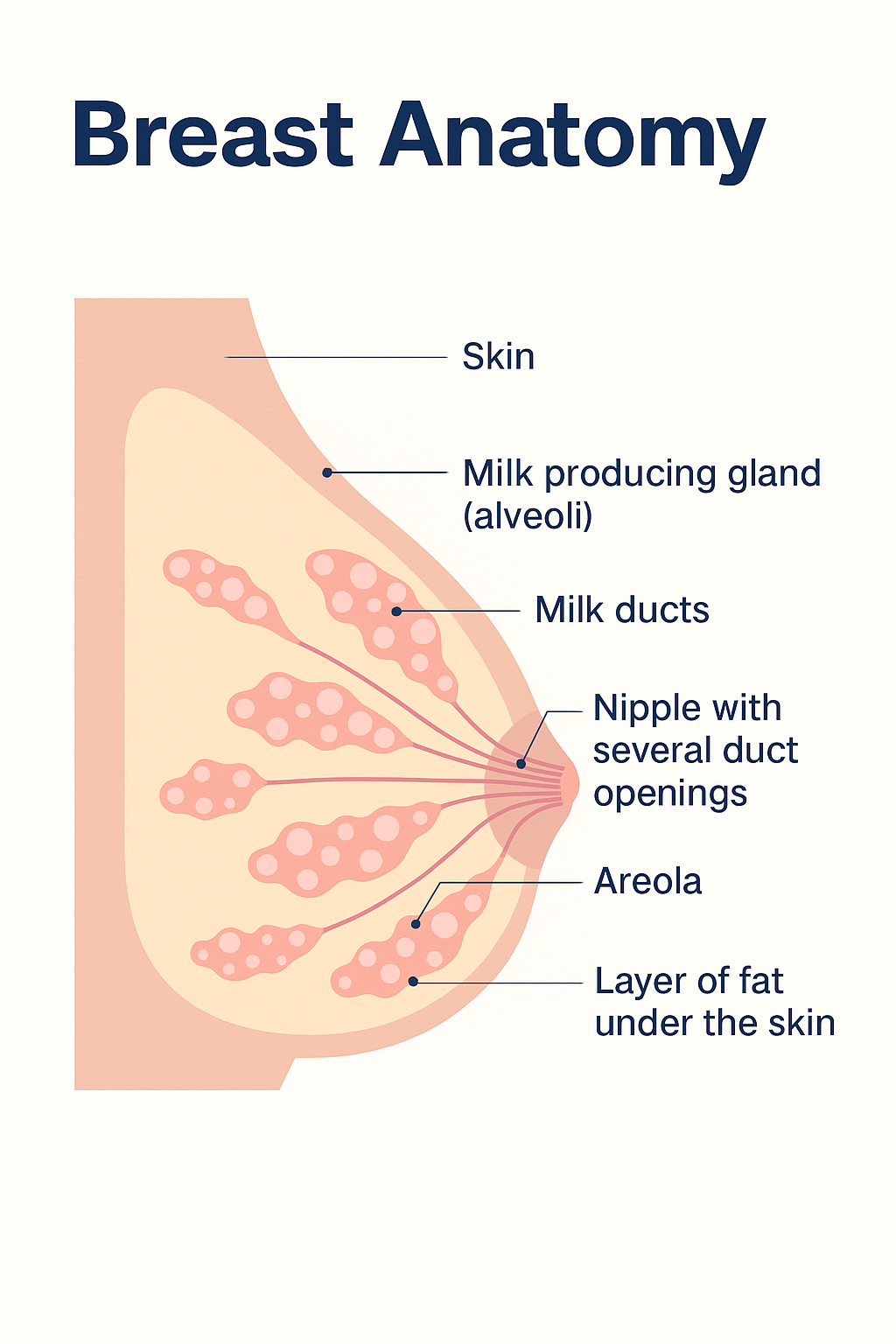
During pregnancy, your body goes through several changes in preparation for breastfeeding. Tenderness in your breasts and nipples is one of the first signs of pregnancy. These changes help your body get ready for lactation.
Common Changes Include:
- Breast enlargement: Your breasts may become larger as they prepare for milk production.
- Darkening of the nipples and areola: This makes it easier for your baby to latch during breastfeeding.
- More visible veins: Increased blood flow to your breasts makes veins more noticeable.
- Heavier breasts: Your breasts may feel fuller as they begin producing milk.
Starting around your second trimester, your breasts may begin to leak colostrum. This thick, yellowish liquid is full of nutrients and antibodies, and as your pregnancy progresses, it will gradually become lighter in color.
When and How to Start Breastfeeding
Breastfeeding should ideally begin as soon as possible after birth. Most hospitals support breastfeeding within the first hour. At birth, your baby’s stomach is very small, so they only need a small amount of milk. Early breastfeeding helps to establish a bond between you and your baby.
Skin-to-skin contact is a key component of early breastfeeding. It helps foster the bond between mother and baby and encourages natural breastfeeding instincts. This is particularly important for premature or low-birth-weight babies.
How to Get Started with Breastfeeding
- Let your baby find their way: You can let your baby lead the process (baby-led attachment) or you can gently guide them to your nipple (mother-led attachment).
- Comfortable position: Sit comfortably, supporting your back and feet. Hold your baby in a way that both of you are relaxed.
- Align your baby: Your baby’s head, shoulders, and back should be aligned. Their mouth and nose should be level with your nipple.
- Encourage a good latch: Gently stroke your nipple across your baby’s mouth to encourage them to open their mouth wide. Aim your nipple towards the roof of their mouth, ensuring a wide latch that includes part of your areola, not just your nipple.
- Relax: Once your baby starts sucking, relax your shoulders. This will help your milk flow naturally.
- Watch for cues: Your baby will show signs when they’re full or want to continue feeding. Trust their instincts, and follow their lead.
Common Breastfeeding Challenges and Solutions
Breastfeeding may seem easy, but it is a learning process for both you and your baby. In the beginning, you may experience nipple tenderness and engorgement (full, swollen breasts) until your milk supply adjusts.
Common Issues for Your Baby
- Hunger: It may take a few days for your colostrum to turn into mature milk. During this time, your baby might seem hungry and unsettled.
- Solution: Frequent feeding helps increase your milk supply and keeps your baby nourished.
- Sleepiness: Labor and birth can be exhausting for both you and your baby, and it may take a few days for them to learn how to latch properly.
- Solution: Gently wake your baby to feed and ensure they get enough milk.
- Cluster feeding: Babies often cluster-feed during growth spurts, wanting many brief feeds over a short period.
- Solution: This is normal and temporary—just let your baby feed as needed.
Common Issues for You
- Breast engorgement: Your breasts may feel swollen and heavy as your milk supply increases.
- Solution: Feeding more often helps relieve engorgement.
- Sore, cracked nipples: This often happens when your baby isn’t latched properly.
- Solution: Ensure a proper latch and seek advice from a lactation consultant if needed.
- Mastitis: This is an infection of the breast tissue that can cause pain, redness, and flu-like symptoms.
- Solution: Breastfeed frequently to help clear the infection and consult a doctor for treatment.
Resources and Support
Many common breastfeeding challenges can be overcome with proper support. If you need help or advice, you can turn to:
- Midwives or child health nurses
- Lactation consultants: These experts can help with latch issues, supply concerns, and more.
- Support groups: Connecting with other mothers can provide emotional support and practical advice.












Please log in to leave a comment.