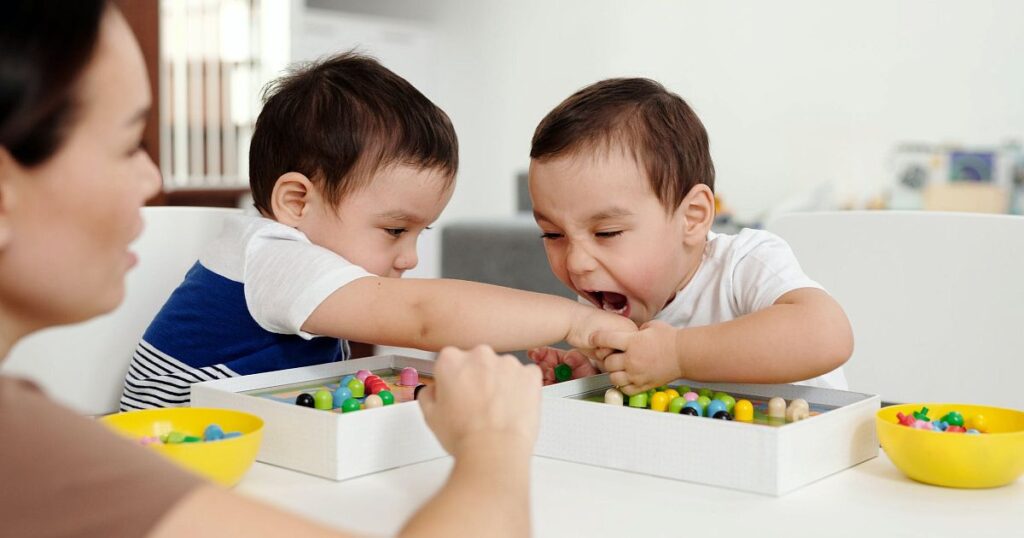
Highlights
- Biting is common in toddlers and part of normal child development.
- Children bite for various reasons, including frustration, stress, or boredom.
- If your child bites, stay calm, remove them from the situation, and explain that biting hurts and is not acceptable.
In This Article
- Reasons Toddlers Bite
- How to Handle Biting
- What to Avoid
- Biting During Breastfeeding
- When Biting Happens Out of Sight
- If Your Child Is Bitten
- Bite Wound Care
- Tools And Assistance
Reasons Toddlers Bite
Biting is a normal part of childhood development and doesn’t necessarily indicate bad behaviour.
Common reasons for biting include:
Exploration: Very young children may bite to see what happens.
Teething: Biting helps relieve discomfort when teeth are coming in.
Accidental: Young children may bite while kissing or playing.
Copying: Children may imitate behaviour they have seen.
Tiredness, hunger, or illness: Some children bite when feeling unwell.
Impulse: Young children sometimes act impulsively without considering consequences.
Boredom: Biting can be used to get attention.
Over-excitement: Some children bite when overstimulated.
Frustration: Toddlers may bite during tantrums to express frustration.
Stress: Biting can be a sign of anxiety or distress.
How to Handle Biting
Stay calm: Responding calmly helps you manage the situation better and sets a good example for your child.
Remove your child from the situation: Separate them from others to prevent further biting.
Clearly explain: Let your child know that biting hurts and they should not bite.
Adapt your reaction: If your child bites to get attention, turn away and ignore the behaviour.
Provide alternatives: Offer a teething ring if your child is teething or provide other distractions.
Encourage good behaviour: Praise your child for positive actions to reinforce good behaviour.
What to Avoid
Never bite your child back: This can teach your child that it’s acceptable to use violence.
Don’t let your child bite themselves to ‘feel’ what it’s like: This is not an effective teaching method.
Don’t shout: Yelling can confuse your child and may increase stress.
Don’t treat biting as a joke: Make sure your child understands that biting is not acceptable.
Biting During Breastfeeding
Older babies and toddlers may bite during breastfeeding due to teething, not being hungry, or becoming distracted.
Watch for signs: If sucking slows, remove your baby from the breast and try swapping sides.
Firmly say “no”: Take your baby off the breast immediately if they bite, and gently explain that biting hurts.
Teething remedies: Use teething rings or pain relievers if teething is causing the biting.
When Biting Happens Out of Sight
If you find out about your child’s biting from others, stay calm and apologize to those affected.
Understand that young children in group care settings may occasionally bite, and staff are generally experienced in handling these situations.
If Your Child Is Bitten
Feelings of frustration: It’s natural to feel upset if your child is bitten, but know that these incidents are often part of normal development.
Discuss with caregivers: Talk to staff or those in charge about the strategies they use to manage biting incidents.
Bite Wound Care
If a bite breaks the skin, seek medical attention.
For minor bites that don’t break the skin, clean the area and monitor for infection.
Tools And Assistance
If breastfeeding-related biting is a concern, a lactation consultant may be helpful.
For additional help with biting issues, consult with a professional, such as a doctor or child health nurse.
Consider speaking to a child psychologist if the behaviour persists.












Please log in to leave a comment.