Highlights
- Burns from clothing that catches fire can cause serious injury and even death.
- There are special rules for children’s nightclothes.
- All children’s nightwear sold has a label with fire danger information to help you make safer choices for your children.
- The safest choice is close-fitting nightwear with a ‘low fire danger’ label.
In This Article
- Why are there special guidelines about children’s nightclothes?
- What is the best fabric for children’s nightclothes?
- What is the best style for children’s nightclothes?
- Understanding labels
- How can I prevent children’s nightclothes from catching alight?
- What else should I consider when choosing clothing for babies and young children?
Why are there special guidelines about children’s nightclothes?
Burns from clothing that catches fire can cause serious injury and even death. There are special rules for children’s nightclothes. The labels on nightclothes can help you make safer choices for your children.
What is the best fabric for children’s nightclothes?
It’s important to be aware that almost any fabric can burn. Fabrics made with cotton and rayon burn more easily. Synthetic fibres such as nylon are slower to catch fire, but if they do, they melt and can stick to the skin. Silk and wool are more difficult to set on fire and then burn slowly. Heavier fabrics are less likely to burn than fabrics with very loose fibres, fluffy or fuzzy fabrics, faux fur, chenille, corduroy, velvet, and tassels.
If you sew your own clothes, consider using polyester. It does not burn as quickly as cotton and is suitable for nightwear. If you are using cotton, make close-fitting, ski-type pyjamas, and use polyester thread. You can also look for safety warnings on any commercial patterns you are considering using.
What is the best style for children’s nightclothes?
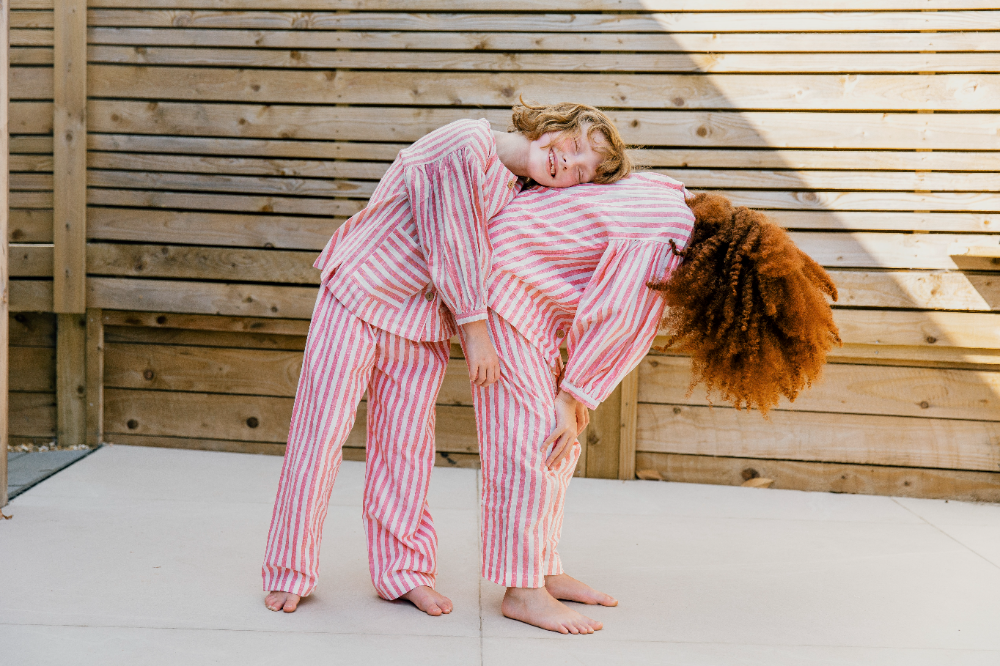
Long, loose-fitting clothing, such as nighties, pose a higher fire risk than close-fitting clothing. This is because they can easily swing away from the body and catch on fire. According to regulations, close-fitting pyjamas reduce the risk of catching fire compared with loose-fitting nightwear. Ideally, choose close-fitting nightwear with cuffs around the legs and arms, whenever possible.
Understanding labels
There are 2 labels to assist you when choosing children’s clothing:
- Low fire hazard label: This means the garment is a lower fire risk. It is either made of a fabric that burns more slowly, or that the garment is close-fitting.
- High fire hazard label: This means the garment is a high fire risk because loose clothing could be at risk from open fires or heaters. These clothes may be more suitable for summer rather than winter use.
- Some garments are so flammable that they can’t be given a label and are not allowed to be sold.
How can I prevent children’s nightclothes from catching alight?
Remember to keep your child away from all sources of fire, including:
- Open fires
- Radiators
- Heaters
- BBQs
- Candles
- Lighters and matches
- Cigarettes
Teach your child that if their clothing does catch fire, they should: STOP, DROP, COVER face, and ROLL. When you use heaters in winter, or use open fireplaces, consider using a fireguard to reduce the risk.
What else should I consider when choosing clothing for babies and young children?
Many parents enjoy choosing stylish clothing for their babies and children. When choosing clothing for your baby or young child, there are several things you should consider, including safety and practicality for daily use.
Safety
Some features in babies and children’s clothing may pose a risk of:
- Choking
- Injury from sharp edges or points
- Strangulation or entrapment
- Danger from other hazards, such as unsafe dyes or chemicals
When considering clothing for your child, here are some things to think about:
- Are all small parts or trims, such as pom poms, buttons or press-studs (‘snap fasteners’), firmly attached?
- Does the clothing have any drawstrings, cords or bows that could pose a strangulation risk?
- Is the fabric good quality? Does it have a ‘chemical’ smell?
- Does the fabric ‘shed’?
Practicality
Here are some tips for choosing practical, comfortable clothing for your child:
- Consider breathable, natural fibres such as wool.
- All-in-one outfits (‘jumpsuits’ or ‘onesies’) help keep your baby warm and allow easy access for nappy changes. Look for outfits with press-studs at the crotch or down the legs.
- Choose jumpers with boat or envelope-shaped necklines for easier dressing. Jackets with front closures (snaps or buttons) are also practical.
- Ensure socks are not too tight.
- Most children don’t need shoes until they start walking. For older children, choose comfortable, well-fitting shoes with good grip.
- Opt for bibs with Velcro closures instead of strings.
Tools And Assistance
Relevant organizations provide information about child safety. Guidelines for choosing baby clothes are available.









Please log in to leave a comment.