Highlights
- There are many different types of childhood rashes.
- Many childhood rashes are not serious.
- If your child has a rash and fever, they should see a doctor.
- If your child has a meningococcal rash, go immediately to the emergency department.
In This Article
- Meningococcal rash
- Rashes with no fever or itching
- Rashes that might be itchy
- Rashes with fever
- When should I see my doctor?
- How are common childhood rashes treated?
Meningococcal rash
If you think your child might have a meningococcal rash, go to the nearest emergency department immediately.
Rashes with no fever or itching
Milia (blocked oil glands)
Up to half of newborns develop small white spots called milia, especially on the nose. These are blocked pores. They are not itchy or contagious and usually clear up within weeks.
Erythema toxicum
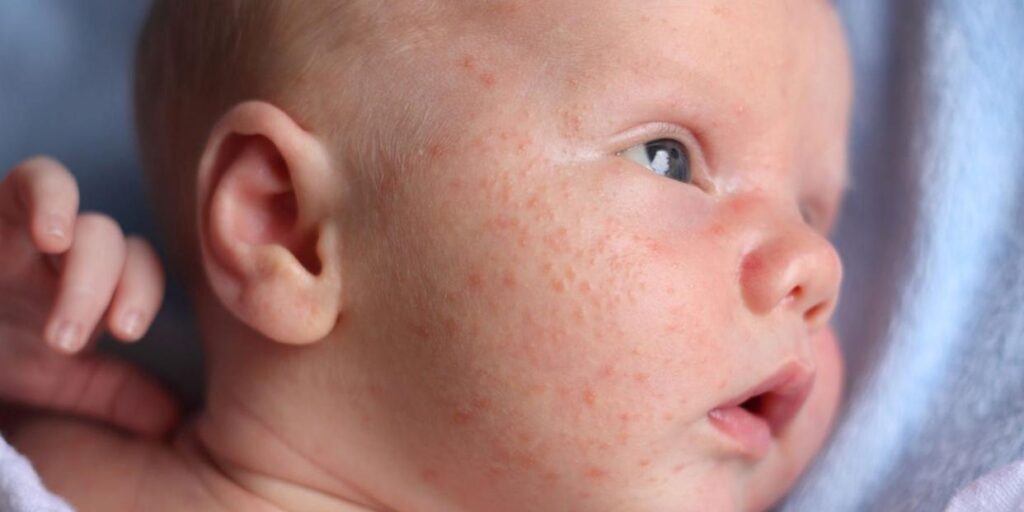
Many newborns develop a blotchy red rash called erythema toxicum. It appears between 2 days and 2 weeks after birth. Red patches or small bumps start on the face and spread. This rash is harmless and clears within a few days or a week without treatment.
Baby acne
Some babies get pimples on their cheeks and nose in the first three months. These usually disappear without treatment within a few months.
Nappy rash
Nappy rash causes red, sore, inflamed skin in the nappy area. It usually happens when urine or faeces irritate the skin.
To prevent nappy rash, keep the area clean and dry. Change nappies often and allow some nappy-free time. Applying a barrier cream, such as zinc or soft white paraffin, at each change helps protect the skin.
Persistent nappy rash may need medicated cream. Do not use talcum powder or antiseptics. If a fungal infection develops, an antifungal ointment is needed. Ask a doctor or pharmacist for advice.
Erythema multiforme (minor)
This rash is triggered by infection, medicine, or illness. It often follows a mild fever. Red spots appear on the hands, feet, arms, and legs, then spread symmetrically. The spots may become raised, blistered, or form target-like lesions.
Erythema multiforme is not contagious and usually resolves in 3 to 6 weeks without treatment.
Keratosis pilaris (‘chicken skin’)
Keratosis pilaris makes the skin rough and bumpy, like permanent goosebumps. It often appears on the upper arms and thighs. This condition is harmless and not contagious. Regular moisturising can help.
Rashes that might be itchy
Eczema (Atopic dermatitis)
Eczema is a common skin condition. It affects one in three children. It causes itchy, red, dry, cracked skin, often in the creases of knees and elbows.
Eczema usually starts before 12 months of age. It has flare-ups followed by periods with little or no rash.
Management includes avoiding irritants, moisturising, and using bath oil. Flare-ups are treated with steroid and anti-inflammatory creams as directed by a doctor.
Ringworm (tinea)
Ringworm is a common, contagious fungal infection. It causes a red, ring-shaped rash with a clear center. It can appear anywhere on the body but is most common on the scalp, feet, and groin.
Ringworm is treated with over-the-counter antifungal creams. Children should stay home from school or childcare until one day after treatment starts to prevent spreading the infection.
Prickly heat (heat rash)
Heat rash appears when a baby gets too hot in a humid environment. It looks like tiny red bumps or blisters and can be very itchy.
Cooling the baby and avoiding humidity helps prevent heat rash. It usually clears within two to three days without treatment.
Impetigo (school sores)
Impetigo is a highly contagious bacterial skin infection. It causes red sores and blisters that form a yellow crust. It is common in children aged 2 to 6 but can be dangerous for newborns.
A doctor may prescribe an antibiotic cream, ointment, or tablet. The infection should clear within 7 to 10 days. Children should stay home until the sores dry up, which usually happens a few days after treatment starts.
Hives (urticaria)
Hives cause a raised, red, itchy rash. It can appear anywhere on the body and usually disappears within a few days without treatment. Antihistamines can relieve itching.
Hives are usually not serious, but they can be a sign of an allergic reaction. If hives appear after eating or with symptoms like vomiting, dizziness, or trouble breathing, seek urgent medical attention.
Pityriasis rosea
This mild rash sometimes appears after a sore throat, cold, or fever. It starts with a single pink or tan patch on the chest or back. More red, oval patches appear over the next weeks.
The cause is unclear, and it is not contagious. The rash usually clears within a few months without treatment.
If pregnant, see a doctor if exposed to pityriasis rosea, as it can cause complications in rare cases.
Molluscum contagiosum
This viral skin infection spreads through skin contact or shared water or towels.
It causes small, round, pearly white lumps. They can be itchy. The spots usually heal within six months but may take longer.
Rashes with fever
Slapped cheek disease (fifth disease)
This viral infection affects preschool and school-age children. It causes a bright red rash on both cheeks, then a lacy rash on the body and limbs. A mild fever may occur.
Slapped cheek disease is usually mild and clears in a few days. It is contagious before the rash appears but not after.
Pregnant people should avoid exposure, as the virus can cause anaemia in unborn babies or miscarriage.
Hand, foot, and mouth disease
This mild but contagious viral illness causes a rash on the hands, feet, and blisters in the mouth. It is common in childcare settings.
Children may feel unwell, have a fever, and develop blisters. The illness lasts about 7 to 10 days. Children should stay home until all blisters dry up.
Roseola infantum
This viral infection causes cold-like symptoms and a high fever, which lasts a few days. A rash appears after the fever resolves.
The rash consists of raised pink spots that spread from the chest to the limbs. It is contagious before the rash appears but not after. The rash lasts 3 to 5 days.
Some children may have a febrile convulsion (seizure). If your child has a seizure, seek emergency help immediately.
When should I see my doctor?
Most rashes in babies are harmless and go away on their own. However, see a doctor if your child seems unwell or if you’re concerned.
Seek medical advice if your child has:
- A rash with a high fever
- Cold or cough symptoms
- Swollen neck glands
Tools and Assistance
Many rashes resolve on their own without treatment. Others may need ointments, creams, or medication. A doctor can advise on the best treatment.
For rashes with fever, paracetamol or ibuprofen (for babies over 3 months) can help. Always follow dosage instructions.
If your child is contagious, they should stay home and avoid contact with pregnant individuals.











Please log in to leave a comment.