Highlights
- Conjunctivitis is an eye inflammation caused by an infection or an allergy.
- Symptoms include eye redness, watery, yellow or green eye discharge, eyelid swelling, and a feeling like there is sand in the eye.
- Infectious conjunctivitis is highly contagious until the discharge has cleared.
- Good hygiene and avoiding sharing towels, pillows, eye drops, or eye makeup can help prevent the spread.
In This Article
- What is conjunctivitis?
- What causes conjunctivitis?
- What are the symptoms of conjunctivitis?
- What else could it be?
- What can I do to help my child?
- What treatment will my child need for conjunctivitis?
- Can my child go to school or childcare?
- When should my child see a doctor?
- Tools and Assistance
What is conjunctivitis?
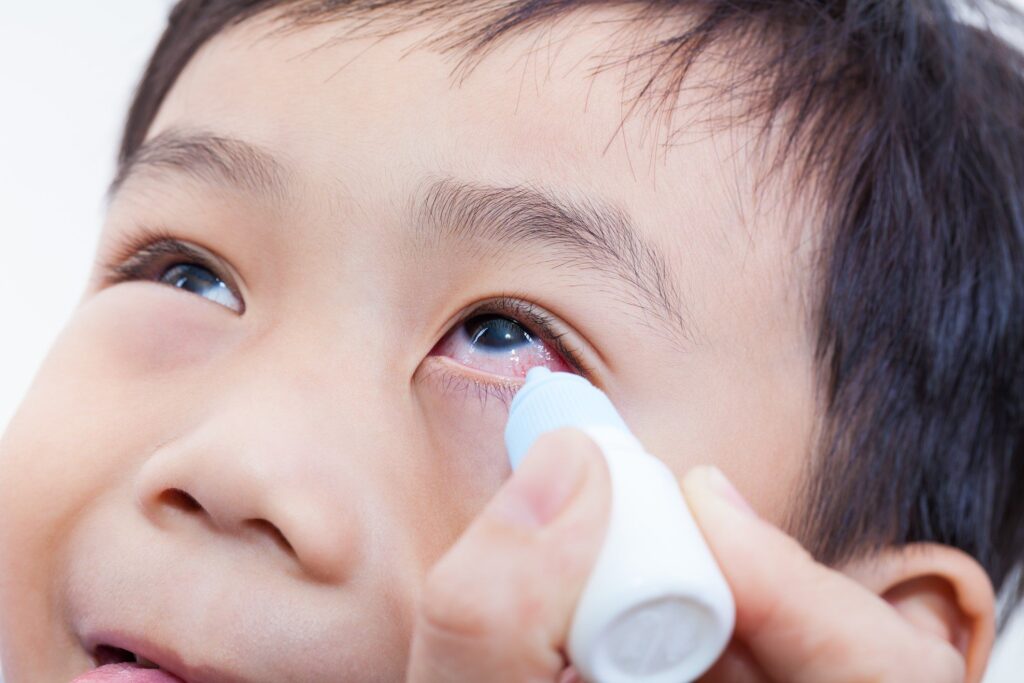
Conjunctivitis, also called ‘pink eye,’ is a common eye infection in children. If your child has conjunctivitis, they will have redness and swelling (inflammation) of the conjunctiva—the clear membrane that covers the white part of the eye and the inside of the eyelids.
What causes conjunctivitis?
There are two types of conjunctivitis—infectious and allergic. The symptoms are very similar, so it can be difficult to determine which type your child has.
Infectious conjunctivitis
This can be caused by a virus or bacteria and is highly contagious. Your child can become infected through:
- Contact with discharge from an infected person’s eyes, nose, or throat
- Contaminated fingers, surfaces, or towels
- Contaminated water, such as when swimming
Symptoms usually start 1 to 3 days after infection. Bacterial conjunctivitis may last a few days, while viral conjunctivitis can persist for 2 to 3 weeks.
Allergic conjunctivitis
This type is caused by an allergic reaction and is not contagious. If conjunctivitis is allergy-related, your child may also have other allergy symptoms, such as sneezing or an itchy, runny nose.
Allergic conjunctivitis can be a year-round issue if triggered by dust, mold, pet dander, or certain foods. If caused by pollen, symptoms may appear seasonally, depending on weather conditions.
What are the symptoms of conjunctivitis?
Symptoms of conjunctivitis include:
- Redness in the eye or inside the eyelid
- Eyelid swelling
- Watery eyes
- Sensitivity to bright lights
- Itching or a gritty feeling in the eye
- Yellow or green sticky discharge that dries into a crust during sleep
Bacterial conjunctivitis often starts in one eye but typically affects both. The eyes may have yellow discharge and a gritty sensation.
Viral conjunctivitis can affect one or both eyes, causing redness, itching, and watering.
Allergic conjunctivitis is usually accompanied by allergy symptoms like sneezing or a runny nose. The eyes are typically itchy, watery, and may lead to frequent eye rubbing.
What else could it be?
Some eye conditions may resemble conjunctivitis. Babies are sometimes born with blocked tear ducts, causing watery or sticky eye discharge. This often resolves on its own but may occasionally lead to an infection requiring treatment.
Other possible conditions include:
- A foreign object in the eye
- A corneal abrasion (scratch on the eye’s surface)
- Dry eyes
- Blepharitis (inflammation of the eyelid edges)
- More serious eye infections
What can I do to help my child?
You can gently clean their eyes. To remove discharge, wipe your child’s eye with a cotton ball soaked in warm water, moving from the inside corner outward. Use a new cotton ball for each wipe and a fresh one for the other eye.
Avoid cleaning inside the eyelid, as this may cause harm.
Artificial tears and cold compresses may help relieve discomfort.
If your child wears contact lenses, remove them until the conjunctivitis clears.
What treatment will my child need for conjunctivitis?
Treatment depends on the type of conjunctivitis.
Bacterial conjunctivitis
Bacterial conjunctivitis may require antibiotic eye drops or ointment. Drops should be applied in both eyes and continued for two days after symptoms disappear.
Viral conjunctivitis
Viral conjunctivitis does not require antibiotics and typically resolves on its own.
Allergic conjunctivitis
Allergic conjunctivitis may improve with:
- Avoiding allergy triggers
- Antihistamine eye drops or syrup (consult a doctor or pharmacist)
- Lubricating eye drops
- Allergen immunotherapy in severe cases
Can my child go to school or childcare?
If your child has infectious conjunctivitis, keep them at home until the discharge has cleared, as they remain contagious until then.
When should my child see a doctor?
Take your child to a doctor if symptoms do not improve after two days.
Return to the doctor if:
- The infection does not clear within two days of treatment
- The eyes remain red after 10 to 14 days
Seek immediate medical attention if:
- Your child has severe pain or sensitivity to light
- They have trouble seeing
- There is worsening swelling, redness, or pain around the eye
- They develop a fever or feel unwell
- There is a white spot in the eye
- They wear contact lenses and have conjunctivitis symptoms
Tools and Assistance
You can help prevent infectious conjunctivitis by practicing good hygiene.
If your child has infectious conjunctivitis, reduce the spread by:
- Washing hands frequently with soap and warm water or using alcohol-based hand sanitizer, especially after touching the eyes or applying eye drops
- Disposing of tissues or cotton balls used on the eyes
- Changing pillowcases and towels daily
- Cleaning surfaces they have touched
- Avoiding shared use of tissues, towels, facecloths, pillows, eye makeup, or eye drops












Please log in to leave a comment.