Highlights
- If a baby is not breastfeeding, they can still receive breast milk through expressing and bottle feeding.
- Breast milk can be expressed manually or with a pump.
- Expressed breast milk can be stored in the fridge or freezer.
- Pump and feeding equipment must be kept clean.
In This Article
- Understanding Expressing
- Reasons to Express
- Techniques for Expressing
- Safe Storage of Breast Milk
- Feeding Your Baby Expressed Milk
- Cleaning Expressing Equipment
- Storage Guidelines
- Tools and Assistance
Understanding Expressing
Expressing is the process of extracting milk from the breasts when a baby is not breastfeeding. This can be done manually or with a pump, which may be manual or electric. Not everyone needs to express breast milk.
Reasons to Express
Expressing breast milk can be useful in several situations, such as if a baby:
- was born prematurely
- is unwell and unable to breastfeed
- has difficulty latching or sucking effectively
- is refusing the breast
- needs to be fed when the parent is not present
- requires relief from overly full and uncomfortable breasts
Expressed breast milk (EBM) can be offered in a bottle, syringe, or cup by a caregiver. Expressing can help maintain breastfeeding if a baby temporarily refuses the breast. It can also assist with increasing milk supply or relieving engorgement.
Using expressed breast milk is an alternative to formula feeding.
Techniques for Expressing
Before expressing, wash hands with soap and water and dry them thoroughly. Find a comfortable, private space and keep a glass of water nearby.
Hand Expressing
A clean, sterilised container, bowl, or bottle is needed to collect the milk. Once milk starts flowing, hold the container under the breast.
Tips for hand expressing:
- Think about the baby to stimulate the let-down reflex and encourage milk flow.
- Massage the entire breast, working towards the nipple.
- Place the thumb and forefingers in a C shape on the breast, about 2 cm behind the nipple.
- Gently roll the nipple between the index finger and thumb, squeezing inwards toward the breast.
- Rotate the position of the fingers and thumb to ensure all milk ducts are emptied.
- Try to mimic a baby’s sucking rhythm.
- Be patient and relaxed, as it may take time for milk to flow.
Using a Pump
Various breast pumps are available, including manual and electric pumps.
- Manual pumps are suitable for occasional use.
- Electric pumps can express milk from both breasts simultaneously and can be purchased or rented.
Tips for using a breast pump:
- Follow the manufacturer’s instructions for cleaning, assembling, and using the pump.
- Practice using the pump beforehand to become comfortable with it.
- Start with low suction and increase as needed.
- Pump until the breast feels softer or milk flow stops (typically 10–15 minutes).
- If expressing is painful, seek professional advice.
- Try expressing from one breast while the baby feeds from the other.
Safe Storage of Breast Milk
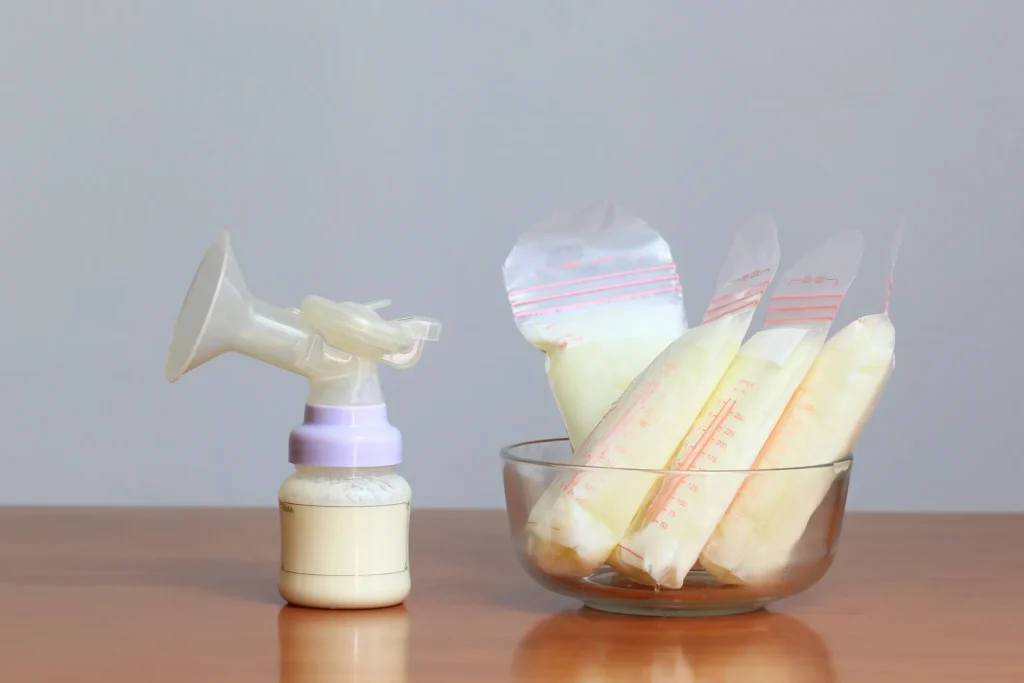
Expressed breast milk can be stored in clean glass or plastic containers, including bottles or breast milk storage bags.
Breast milk that was freshly expressed into a clean container
| At room temperature up to 26°C | No more than 6-8 hours. Use the fridge if you can. |
| In the fridge up to 5°C | No more than 72 hours. Store in the back of the fridge. |
| In the freezer | 2 weeks in the freezer section of a fridge (-15°C).3 months in a freezer with a separate door (-18°C).6-12 months in a deep freeze (-20°C). |
Breast milk that has been thawed in fridge and not warmed up
| At room temperature up to 26°C | No more than 4 hours once thawed. |
| In the fridge up to 5°C | No more than 24 hours. |
| In the freezer | Don’t refreeze breast milk which has already been thawed. |
Breast milk that has been thawed and warmed up for a feed
| At room temperature up to 26°C | Throw out what the baby doesn’t drink. |
| In the fridge up to 5°C | If the baby has not begun feeding store for up to 4 hours in fridge. |
| In the freezer | Don’t refreeze breast milk which has already been thawed. |
Feeding Your Baby Expressed Milk
A bottle is the easiest way to offer expressed breast milk to a young baby. Sterilise the baby bottle and teat before use and offer the milk when the baby is ready to feed.
Expressed breast milk can be given cold or warmed.
If a baby is accustomed to breastfeeding, they may need support to learn how to suck effectively from a bottle. Patience and a calm approach can help.
Some babies may refuse a teat but will accept expressed milk from a small cup or a teaspoon.
Cleaning Expressing Equipment
Wash all expressing equipment by hand with hot, soapy water and rinse thoroughly after each use. A dishwasher set to the hottest cycle can also be used.
Sterilisation of expressing equipment is generally not necessary if the baby was born at term and is healthy.
Storage Guidelines
Expressed breast milk can be stored in the fridge or freezer.
6 tips for storing breast milk:
- Label the container with the date and time of expression.
- Use freshly expressed breast milk for feeding whenever possible.
- Freeze milk that will not be used within 2 days.
- Always use a new container and avoid adding freshly expressed milk to already stored milk.
- Use the oldest expressed milk first.
- If a baby has started a feed, do not return the milk to the fridge or freezer.
What’s the safest way to defrost frozen breast milk?
The safest method for defrosting frozen breast milk is in the fridge. If there is not enough time, it can be defrosted by placing the container in a jug of warm water.
Tools and Assistance
For additional guidance, consider the following:
- Keep a clean, organised space for storing equipment and milk, and establish a routine that suits your needs and lifestyle.
- Speak with a healthcare professional such as a midwife, lactation consultant, or child health nurse for help with expressing techniques, pump selection, and managing milk supply.
- Community support groups, online forums, and parent education resources can also provide helpful tips and shared experiences.












Please log in to leave a comment.