Highlights
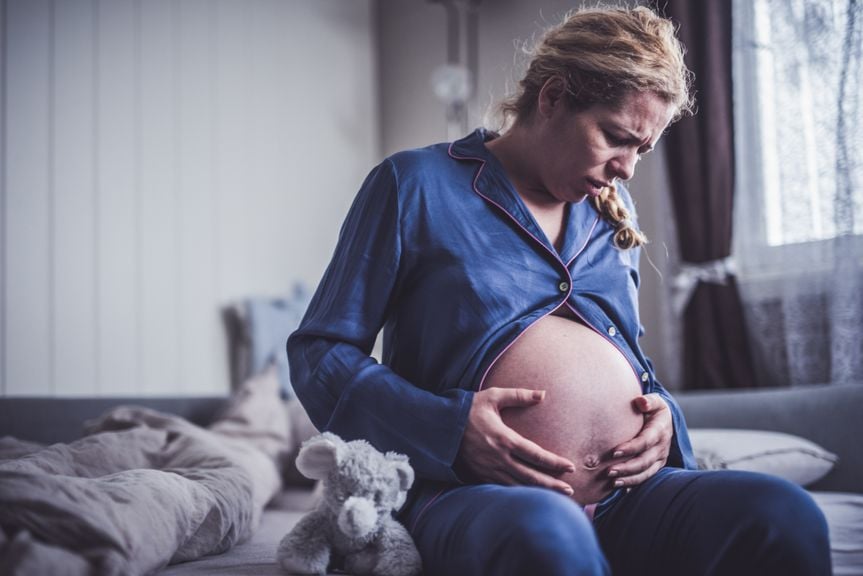
- Contractions are when the muscles of your uterus (womb) tighten and then relax during labour.
- They help open the cervix and move the baby down the birth canal.
- Braxton Hicks contractions are practice contractions that don’t open the cervix.
- You can take a warm bath or shower or use a heat pack to relieve the discomfort of contractions.
- If you are giving birth in a hospital or birth centre, you may be offered medicines or epidural anaesthesia to help ease any discomfort.
In This Article
- Understanding Contractions
- Sensations During Contractions
- Braxton Hicks: The Practice Contractions
- What to Do When Contractions Begin
- Dealing with Early Contractions
- How to Track Your Contractions
- Pain Relief During Contractions
- Tools and Assistance
Understanding Contractions
Contractions occur when the muscles in the uterus tighten and then relax.
During a contraction, the uterus tightens to help dilate (open) the cervix and move the baby downwards during the first stage of labour.
Contractions can happen at any time during pregnancy, but they are usually not noticeable in the early stages. They become stronger, more regular, and more painful as labour progresses.
A contraction often feels like a wave that starts at the top of the uterus and moves downward. If you place your hand on your abdomen during a contraction, you may feel the abdomen harden and then soften as the contraction ends.
As labour progresses, contractions become more frequent and intense. The pain typically eases between contractions. Contractions continue until the cervix is fully dilated to about 10 cm—wide enough for the baby to be born.
Sensations During Contractions
People experience contractions in different ways. They can start as a sensation similar to menstrual cramps in the lower abdomen. Some may feel dull lower back pain that does not go away, or pain in the inner thighs that radiates down the legs.
At first, contractions may be short and spaced up to 30 minutes apart. As labour continues, they become stronger and closer together. Eventually, contractions last up to a minute and occur every 2 to 3 minutes.
Braxton Hicks: The Practice Contractions
Braxton Hicks contractions can happen throughout pregnancy, though they may not be noticeable until the second trimester. These contractions help prepare the uterus for labour but do not cause the cervix to open.
Braxton Hicks contractions are sometimes referred to as ‘false labour’ because they can be strong and uncomfortable but do not lead to actual labour and birth.
It is possible to distinguish between Braxton Hicks contractions and real contractions because Braxton Hicks contractions tend to be irregular and may stop when you change positions or walk around, whereas real contractions become more regular and persistent.
| Braxton Hicks contractions | Contractions | |
|---|---|---|
| irregular and short (usually lasting for 30 seconds) | may start as irregular, but will become regular and last longer as they continue | |
| usually uncomfortable but not painful | usually more painful as they progress | |
| walking does not make them stronger | walking may make them stronger | |
| lying down may make them go away | lying down does not make them go away | |
| do not get stronger | get stronger as they progress | |
| do not get closer together | get closer together as they progress |
What to Do When Contractions Begin
When contractions begin, it is not always necessary to go straight to a medical facility. If the pregnancy has been normal and there are no complications, it is possible to stay at home and rest during the early stages of labour. If a homebirth is planned, it is important to notify the attending midwife.
Seek medical attention immediately if:
- The waters break (note the time, colour, and amount of fluid).
- Contractions become painful and regular (2 or more contractions in 10 minutes).
- A doctor or midwife has advised early hospital admission.
- A caesarean birth has been planned.
- A medical condition requires close monitoring during labour.
- There is a noticeable change in the baby’s movements.
Call emergency services if:
- Labour is progressing quickly, and there is a risk of not reaching medical assistance in time.
- There is heavy vaginal bleeding.
- Severe headache or blurred vision occurs (possible signs of pre-eclampsia).
Dealing with Early Contractions
If contractions or other signs of labour occur before week 37 of pregnancy, seek medical advice immediately and go to a hospital.
Babies born before week 37 are considered premature. While some people experience early contractions without giving birth prematurely, medical assessment is necessary to determine the next steps.
How to Track Your Contractions
To track contractions, measure the time from the beginning of one contraction to the beginning of the next. It is also important to note the duration of each contraction. A watch, clock, or a contraction timer app can be used for this purpose.
Real labour: Contractions become more regular, stronger, and closer together.
False labour: Contractions remain irregular and eventually stop.
In the early stages of labour, real contractions last about 30 seconds but gradually increase in duration and intensity, lasting up to 75 seconds. False labour contractions tend to vary in length and strength.
Pain Relief During Contractions
There are several ways to ease contraction pain.
Non-medicine strategies include:
- Spending time in a warm bath or pool.
- Applying hot or cold packs to the abdomen or lower back.
- Taking warm showers.
- Acupuncture.
- Massage, hypnosis, and other relaxation techniques.
Medical pain relief options include:
Epidural analgesia – medication injected into the epidural space in the spine for stronger pain relief.
Nitrous oxide gas – an inhaled pain reliever.
Morphine – an injected pain relief medication.
Tools and Assistance
- Contraction Timers: There are many apps available to track the timing and duration of contractions. These tools allow you to easily measure the length and frequency of each contraction, which can be helpful in determining when to go to the hospital or birthing center.
- Warm Bath or Shower: Taking a warm bath or shower is a natural pain-relief method. The heat can help relax muscles, reduce tension, and ease the discomfort of contractions.
- Heat Packs: Using heat packs on your lower back or abdomen can help relieve pain. These are portable and easy to apply, offering localized relief during contractions.
- Massage: Massaging the lower back or other areas of discomfort can help alleviate pain. Some people find this particularly helpful during contractions, and a birth partner or doula can assist in providing soothing massage.
- Breathing Exercises and Relaxation Techniques: Deep breathing exercises, hypnobirthing, and other relaxation techniques can help reduce the pain of contractions and help you stay calm and focused during labour.
- Supportive Birth Partner: Having a supportive birth partner can be invaluable in helping you manage contractions. They can assist with breathing techniques, provide emotional support, and offer physical relief such as back rubs or helping you change positions.
- Pain Relief Options: In a medical setting, there are various pain relief options such as epidural analgesia, morphine injections, and nitrous oxide gas. These options can be discussed with your healthcare provider ahead of time, so you are prepared for pain management during labour.
- Birth Ball: Using a birth ball can help you stay mobile during labour, alleviate pressure on your back and pelvis, and assist with optimal positioning of the baby.
- Acupuncture: Some people find acupuncture or acupressure helpful for pain relief during labour. Acupuncture can help with relaxation and may reduce the pain intensity of contractions.
- Prenatal Classes: Attending prenatal classes can provide helpful education about labour, pain relief options, and ways to manage contractions. It’s a great opportunity to learn about comfort measures and to prepare mentally and physically for the birth.











Please log in to leave a comment.