Highlights
- Regular breastfeeding or formula feeding is important for your baby’s healthy weight gain from birth.
- Regular weight checks help you and your health team monitor your baby’s growth.
- Your healthcare provider will record your baby’s weight and measurements in their health record.
- Some babies may not gain enough weight, for example, if they don’t feed well or have medical issues.
- Typically, healthy full-term newborns double their birth weight by 4 months and triple it by around a year.
In This Article
- How Is My Baby’s Weight Measured?
- Understanding Your Baby’s Birth Weight
- What to Expect in the First Months
- Factors That Affect Weight Gain
- Typical Weight Gain Patterns in Babies
- Tracking Your Baby’s Growth
- What To Do If Weight Gain Slows Down
- When to Seek Medical Advice
- Tools and Assistance for Parents
How Is My Baby’s Weight Measured?
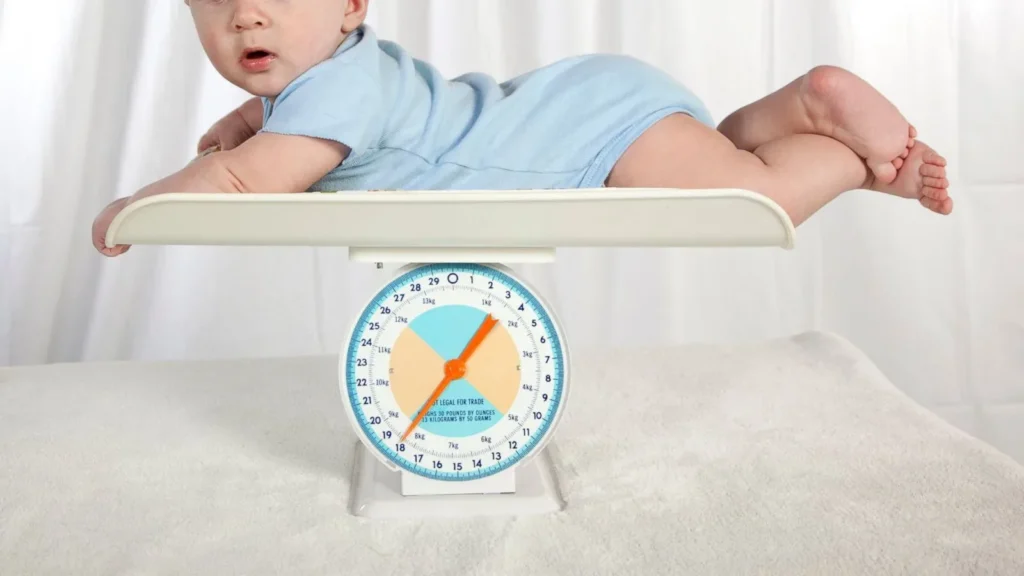
Your baby’s weight is measured regularly at their health checks using a special baby scale. Your health provider will also measure their length and the size of their head (head circumference).
Babies are usually weighed at these times (although some babies will need more frequent checks):
- at birth
- during their first 2 weeks
- once a month up to 6 months
- every 2 months from 6 to 12 months
- every 3 months after their first birthday
Understanding Your Baby’s Birth Weight
Your baby’s birth weight will depend on how close they were born to their due date. Babies born before their due dates are often smaller, while babies born after their due date are often larger.
Your baby’s birth weight can also be affected by:
- Birth order — first babies can be smaller than future siblings
- Gender — male babies are often larger
- Your general health and any pregnancy complications
- Your health and diet before and after birth
- If your baby is a twin or triplet — babies of multiple births are often smaller
- Your and your partner’s height and weight
If your baby is born significantly smaller or larger than average, they may be monitored more closely to check for possible problems.
What to Expect in the First Months
From birth, your baby needs breast milk or infant formula to have the right nutrition and good weight gain. It is normal for breastfed babies to receive small amounts of colostrum (early breastmilk) in their first few days. Mature breastmilk then provides all the nutrients they need to help them grow.
It is normal for babies to lose some weight after they are born. Healthy babies can lose up to 10% of their birth weight in the first week after being born and return to their birth weight after 2 to 3 weeks with regular feeding.
Factors That Affect Weight Gain
Many factors can affect your baby’s weight gain. Some babies might not take in enough nutrients due to difficulties with:
- breastfeeding
- formula preparation
- a structural problem, such as a cleft palate
Other babies may not gain enough weight because of problems the parents may experience, such as poverty, mental illness, or social difficulties.
Some babies have difficulty absorbing food, for example, those with an allergy to cow’s milk. Others may need more calories than other babies of a similar age and weight because of a chronic illness such as congenital heart disease.
Typical Weight Gain Patterns in Babies
All babies grow differently, but there are guidelines for healthy weight gain.
A useful guide is that most healthy, full-term newborn babies double their birth weight by 4 months.
- Male babies‘ weight will triple in about 13 months.
- Female babies‘ weight will triple in about 15 months.
However, all babies grow at their own pace. Infant growth between the ages of 0 and 2 years is usually calculated using growth standards. Infant growth charts allow health professionals to compare your baby’s growth with that of all other babies of the same age and sex.
Growth milestones are adjusted for premature babies. Premature babies’ growth is considered based on their corrected age rather than their chronological (birth) age.
Tracking Your Baby’s Growth
Weighing your baby regularly helps you know if they are healthy and growing well.
Your baby’s weight and other measurements will be recorded in your baby’s health record by your healthcare practitioner.
This record helps health professionals check your baby’s growth and development against babies of the same age and sex.
Your baby’s weight and length are plotted on a graph that shows normal weights and lengths for babies at different ages. This shows how your baby is growing between check-ups.
What To Do If Weight Gain Slows Down
Your baby’s weight gain might slow down because:
- your baby starts to sleep more and feeds less often
- you or your baby become ill
- your breast milk supply changes (there are different reasons this might happen)
If you’re worried, see your doctor, nurse, or midwife for advice.
When to Seek Medical Advice
If your baby is having feeding difficulties or isn’t gaining weight at the expected rate, you should see your doctor.
Tools and Assistance for Parents
There are a number of tools and resources to assist parents with monitoring their baby’s weight and ensuring healthy growth:
- Growth charts: These are widely used by healthcare professionals to track your baby’s growth, comparing their height and weight with the averages for other babies of the same age and sex.
- Health records: Your healthcare provider will maintain a record of your baby’s weight, length, and head circumference. These records help track growth over time and ensure your baby is developing properly.
- Breastfeeding and formula feeding guidance: Healthcare providers can give specific advice on the best practices for breastfeeding or formula feeding to ensure your baby is receiving enough nutrition for proper growth.
- Support groups and services: Many hospitals and healthcare centers offer parenting classes, support groups, and individual consultations that can help you manage any feeding or growth concerns.
- Pediatric care services: Regular visits to your pediatrician or family doctor will help ensure that any potential issues with weight gain or nutrition are detected early and properly addressed.












Please log in to leave a comment.