Highlights
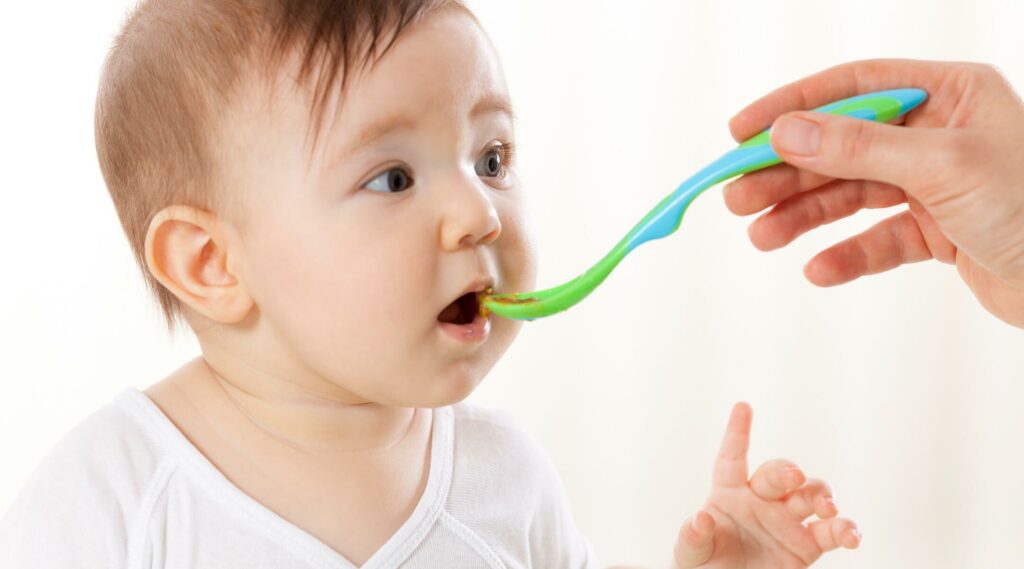
- Solid foods should be introduced around 6 months of age.
- Start with small amounts of soft, iron-rich, pureed foods.
- Baby food can be offered in any order.
- Babies will need more nutrients like iron, zinc, and protein as they grow.
In This Article
- When to Start Introducing Solid Foods
- Why Delay Solid Foods Until 6 Months?
- Signs Your Baby is Ready for Solids
- Breastfeeding and Bottle Feeding Duration
- Introducing Allergy Foods to Your Baby
- How to Begin Introducing Solids
- What is Baby-Led Weaning?
- Best Foods and Textures for Starting Solids
- Why Variety Matters in Baby’s Diet
- Helpful Tips for Introducing Solid Foods
- Foods to Avoid for Your Baby
- When to Start Offering Water to Your Baby
- Vegetarian or Vegan Diet for Your Baby
- Store-Bought vs Homemade Baby Food
- Tools and Assistance
When to Start Introducing Solid Foods
Babies need breast milk or infant formula for their first 6 months. By around 6 months, babies need more iron and nutrients. Start solid foods at around 6 months, and avoid solids before 4 months. Babies show readiness for solids when they can sit upright and show interest in food.
Why Delay Solid Foods Until 6 Months?
Babies need to develop the ability to move food around in their mouth and swallow. Before 4 to 6 months, babies have a reflex that pushes food out of their mouth. Giving solids too early can interfere with milk consumption and lead to choking risks.
Signs Your Baby is Ready for Solids
Your baby is ready for solids when they:
- Can sit upright without support.
- Seem hungry after milk feeds.
- Show interest in food.
- Open their mouth for a spoon.
Breastfeeding and Bottle Feeding Duration
Continue breastfeeding or formula feeding until 12 months. After 12 months, offer water and cow’s milk in a cup. Breastfeeding can continue as long as you and your baby are happy.
Introducing Allergy Foods to Your Baby
Common allergy foods include peanut butter, cow’s milk, wheat, eggs, fish, shellfish, tree nuts, sesame, and soy. Start offering allergy foods before 12 months to reduce the chance of allergies. Consult a doctor if concerned about food allergies.
How to Begin Introducing Solids
Start with iron-rich solids, in any order. Continue breastfeeding or formula feeding until at least 12 months. Solids can be introduced at any time of day, but mid-morning is ideal.
What is Baby-Led Weaning?
Baby-led weaning involves letting your baby feed themselves. Offer small food portions that they can pick up and eat themselves. Ensure foods are soft enough for your baby to eat safely.
Best Foods and Textures for Starting Solids
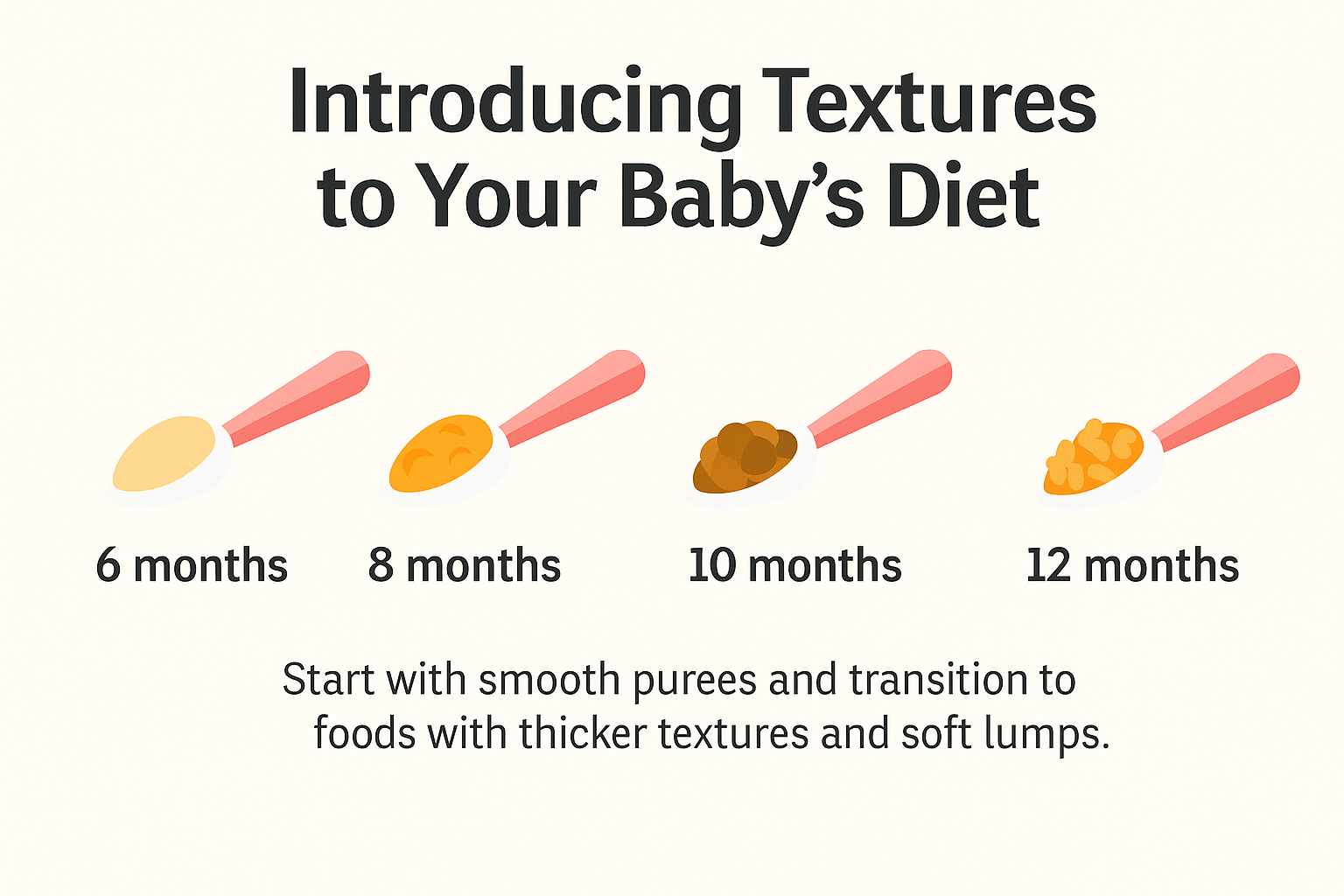
Iron-fortified cereals, pureed meats, cooked vegetables, mashed fruits, and dairy. Start with smooth purees, then move to mashed or chopped foods as your baby grows. Offer finger foods when your baby is ready.
Why Variety Matters in Baby’s Diet
Aim for a variety of colours, textures, and tastes in your baby’s food. Avoid adding salt or strong spices to food. Offer fresh, homemade food where possible, and try different tastes.
Helpful Tips for Introducing Solid Foods
Offer breast milk or formula before solids until 9 months, then after solids. Be responsive to your baby’s hunger and fullness cues. Give your baby time to practice eating and let them make a mess. Always supervise your baby when eating to prevent choking.
Foods to Avoid for Your Baby
Avoid whole grapes, hard vegetables, honey (under 12 months), whole nuts, popcorn, and raw egg. Do not add salt, sugar, or other additives to your baby’s food.
When to Start Offering Water to Your Baby
After 6 months, offer cooled boiled water in a sippy cup at mealtimes.
Vegetarian or Vegan Diet for Your Baby
Vegetarian and vegan diets can be safe as long as they provide sufficient energy and nutrients, especially iron. Speak to a dietitian before starting a vegetarian or vegan diet for your baby.
Store-Bought vs Homemade Baby Food
Homemade food allows you to know exactly what your baby is eating. Store-bought food is convenient, but check labels for sugar and salt content. Homemade food can help your baby get used to family meals and is more affordable.
Tools and Assistance
- Speak to your healthcare provider or a dietitian for personalized advice on introducing solids.
- Visit trusted parenting websites for tips and recipes for introducing solid foods.










Please log in to leave a comment.