Highlights
- Babies usually start crawling when they are between 7 and 12 months old.
- Before they can crawl, babies develop skills like head and arm control, sitting up without support, rolling over, and holding their weight on their arms and legs.
- Playing with your baby during tummy time from birth as part of their daily routine can help them learn to crawl.
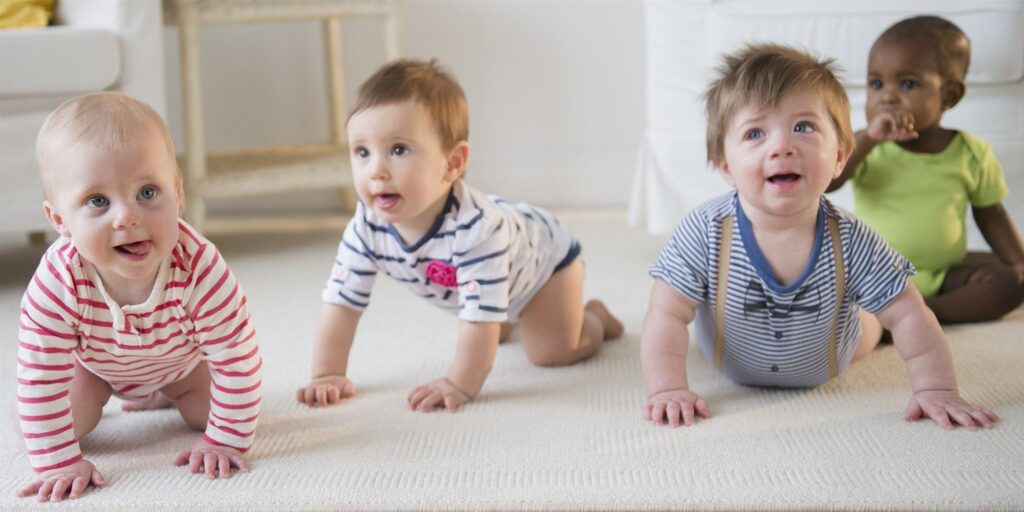
- Babies can have different crawling styles, including hands and knees crawling, commando crawling, bum shuffling, and crawling backward — all of which are normal.
- Before your baby starts to crawl, make your home safe by moving obstacles out of their way and removing dangerous items such as choking hazards and hot drinks.
In This Article
- Why Crawling Is Important
- How Crawling Skills Develop
- Understanding Crawling Styles
- How to Support Your Baby’s Crawling
- When to Ask for Help
- Tools And Assistance
Why Crawling Is Important
Crawling is an important skill for babies to learn and is a big milestone in their development. Each baby will crawl when they are ready, in their own unique way. Crawling allows them to explore their surroundings and develop coordination and strength.
Babies usually start crawling between 7 and 12 months old. They are typically able to get into a crawling position on their hands and knees between 6 and 9 months. By around 9 months, many babies will be rolling and commando crawling, though this timeline can vary.
How Crawling Skills Develop
Crawling is a new skill that builds on earlier developmental milestones. Before babies can crawl, they develop skills such as:
- controlling their head
- moving their arms
- sitting up with and without support
- rolling over from front to back and back to front
- holding their own weight through their arms and legs
All of these abilities help babies gain the strength and coordination needed for crawling and, eventually, walking.
Understanding Crawling Styles
Most babies crawl on their hands and knees, but not all babies use the same crawling style. Other common crawling styles include:
- shuffling on the tummy (commando crawling)
- sliding along on the bottom (bum-shuffling)
- crawling backward instead of forward
Each baby develops at their own pace, and these variations are normal.
How to Support Your Baby’s Crawling
There are many ways to encourage your baby to crawl. Providing space to move, encouraging them to reach for objects, and offering praise can help motivate them. Babies respond well to excitement in your voice and facial expressions.
Tummy Time Tips
Tummy time involves placing your baby on their stomach as part of their daily play routine. This helps strengthen the head, neck, back, and leg muscles needed for crawling.
To make tummy time enjoyable:
- Try it in different locations, such as indoors on a mat or outdoors on a blanket.
- Talk and sing to your baby while they are on their tummy.
- Start tummy time from birth and gradually increase the duration (from 10 seconds to 10 minutes as they grow).
- Always supervise your baby during tummy time.
Floor Play Ideas
Play is an important way for babies to learn. Playing on the floor together can help strengthen their muscles. Activities like moving objects from side to side in front of their face or turning the pages of a picture book encourage movement.
Encouraging Reaching
Placing a favourite toy or object just out of reach can motivate your baby to stretch, reach, and eventually move toward it. Reaching across the midline (from left to right and vice versa) is particularly beneficial for motor development.
Creating a Safe Space
Ensure your baby has a safe space to explore by removing obstacles and potential hazards. Keep dangerous items out of reach, such as:
- small objects that could be choking hazards
- cords that could pose a strangulation risk
- hot drinks and other burn hazards
Why to Avoid Baby Walkers
Baby walkers do not help babies learn to crawl or move more quickly. In fact, they can delay crawling and are associated with injuries.
When to Ask for Help
Not all babies crawl—some go straight to walking and skip crawling altogether. However, if your baby is 12 months or older and has not started crawling or if you have concerns about their development, consult a healthcare professional for advice.
Tools And Assistance
If you’re looking for extra support to help your baby with their crawling development, here are some tools and services that might help:
- Child health nurse or pediatrician — They can assess your baby’s development and provide guidance tailored to your child’s needs.
- Occupational or physiotherapists — These professionals specialize in motor development and can suggest exercises to support crawling.
- Parenting helplines — Many regions have helplines where trained staff can answer your questions or refer you to services.
- Early childhood centers — Local centers often offer group play sessions and parent support programs that focus on motor skills and development.
- Parenting websites and apps — Reputable sources such as government health websites, child development organizations, and parenting apps can offer activity ideas and milestone trackers.
Remember, every baby develops at their own pace. If you ever feel unsure or concerned, reaching out for professional advice is always a good idea.









Please log in to leave a comment.