Highlights
- If a baby doesn’t pass the test, further assessments are available.
- The newborn hearing test helps detect hearing loss in babies shortly after birth.
- Early detection of hearing issues is crucial for speech, language, and emotional development.
In This Article
- Purpose of the Newborn Hearing Test
- Timing of the Hearing Test
- How the Hearing Test is Conducted
- Getting the Results
- Steps to Take if There’s a Problem
- Will My Baby Need Future Tests?
- Cost of the Hearing Test
- Do All Babies Need the Hearing Test?
Purpose of the Newborn Hearing Test
The newborn hearing test is a routine health check offered to babies shortly after birth. It is designed to detect hearing loss in newborns. Early detection of hearing loss is essential for ensuring proper speech and language development, as well as social and emotional growth.
The test helps identify congenital hearing loss. Early detection allows for timely interventions to support development.
Timing of the Hearing Test
The hearing test is typically done before your baby leaves the hospital, ideally within the first two days after birth. It can be done as early as 6 hours after birth. If you leave the hospital early, the test can still be done as an outpatient or through a home visit by a qualified nurse. The test should be completed within 1 month for healthy babies or by 3 months for premature or sick babies.
How the Hearing Test is Conducted
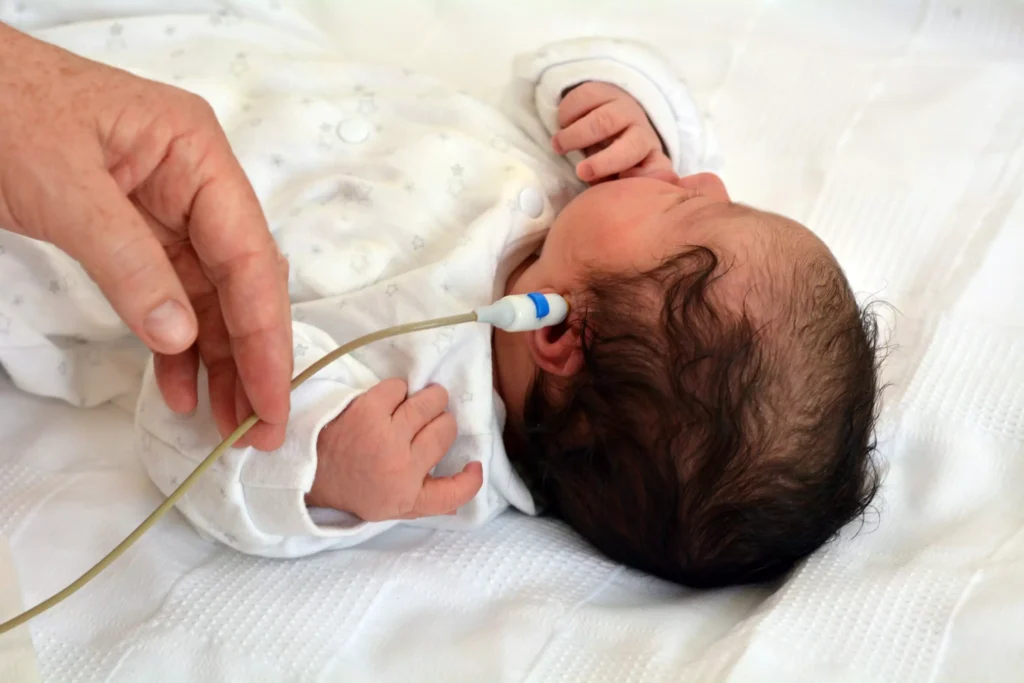
The hearing test is usually performed at the bedside while you and your baby are still in the hospital. The screener will explain the test and ask for your consent.
- AABR (Automated Auditory Brainstem Response): Ear cups play a soft clicking sound, and sensors are placed on your baby’s forehead, neck, and shoulder to measure responses from the auditory nerve. This test is quick, painless, and can be done while the baby is sleeping or feeding.
- TEOAE (Transient Evoked Otoacoustic Emissions): A probe is placed in the ear canal to emit soft sounds. This test is also quick and painless.
Getting the Results
The results are provided immediately after the test. If the results are unclear, a second test may be conducted within 12 to 24 hours.
Steps to Take if There’s a Problem
If your baby does not pass the hearing test, a repeat test will be scheduled. If the baby still does not pass, they will be referred for a diagnostic audiology assessment by a hearing specialist (audiologist), typically when the baby is 4 to 6 weeks old.
Will My Baby Need Future Tests?
Risk factors for hearing loss: Babies who pass the initial hearing test but have risk factors may need further assessments. Risk factors include:
- Family history of hearing loss
- Significant head injury or congenital disorders
- Infections such as meningitis or rubella
- Severe jaundice or certain medications
If no risk factors are present, additional testing is not typically required once the baby has passed the hearing test. If you are concerned about your baby’s hearing, consult a doctor or pediatrician for a hearing assessment.
Cost of the Hearing Test
The hearing test is generally free for babies eligible for government health programs.
Do All Babies Need the Hearing Test?
In general, all newborns should undergo hearing testing. However, the test may be delayed or avoided in certain situations, including if:
- Your baby was born prematurely (less than 34 weeks gestational age)
- Your baby is medically unwell or undergoing treatment for jaundice
- Your baby is on a ventilator or in an incubator
- There are concerns about malformations of the face or ear
In rare cases, the test may not be recommended.
Tools and Assistance
- Hearing Screening Equipment
The newborn hearing test uses tools like AABR and TEOAE to detect hearing loss. These non-invasive devices provide quick and accurate results. - Audiology Services
If your baby doesn’t pass the test, an audiologist will conduct further assessments to determine the extent of hearing loss and guide treatment. - Pediatric Consultation
Pediatricians can help address any hearing concerns and refer you for additional testing if necessary. - Parent Support Groups
Connecting with other parents who have dealt with hearing loss can offer support and advice. - Early Intervention Programs
Programs for babies with hearing loss provide speech therapy, language support, and assistive devices to foster development.








Please log in to leave a comment.