Highlights
- Your period happens once a month and is a normal part of the menstrual cycle.
- Ovulation is when an egg is released from an ovary and waits to be fertilized.
- In a typical 28-day menstrual cycle, ovulation occurs around day 14.
- There are signs that can help you track and predict ovulation, including changes to your body temperature and vaginal discharge.
- Having sex in the days leading up to and the day of ovulation will increase your chance of conceiving.
In This Article
- Menstruation
- Ovulation
- Likely Conception Window
- Predicting Ovulation
- Ovulation Calculators and Kits
- Additional Considerations for Conception
- When to See a Doctor
- Tools and Assistance
Menstruation
Menstruation, or having a period, happens about once a month and is when you bleed from your vagina. Each month, the lining of the uterus thickens in preparation for pregnancy. If you don’t conceive, the excess lining of the uterus comes away and flows out through your vagina. It is a normal part of the menstrual cycle.
The average length between periods is 28 days, but every person’s cycle is different and can change from month to month. Some may have a cycle of around 21 days, while others can be up to 38 days.
You can work out the length of your menstrual cycle by counting the days from the first day of your period until the first day of your next period.
Ovulation
The ovaries are two glands in the female body that produce eggs and release hormones that control the menstrual cycle.
Ovulation happens when an egg is released from one of the ovaries and travels down the fallopian tube, where it waits to be fertilized by sperm.
Likely Conception Window
You are most likely to conceive during the five days before ovulation, along with the day you ovulate. Sperm can live up to five days inside the body, so if you have sex up to five days before your egg is released, you can get pregnant.
After ovulation, the egg can only survive for 12 to 24 hours. After this time, the chance of getting pregnant is virtually zero until the next menstrual cycle.
Your chances of getting pregnant are highest in the three days leading up to and including ovulation.
Predicting Ovulation
Ovulation usually happens about halfway through the menstrual cycle—around 14 days before the first day of the next period in a typical 28-day cycle. However, the exact time can vary.
Signs of ovulation can be subtle, but tracking certain changes can help predict the fertile window.
Changes in Mucus
Around the time of ovulation, vaginal discharge may become clear, stretchy, and slippery—similar to egg whites. After ovulation, when the chances of becoming pregnant drop, discharge often becomes cloudy and thick or disappears entirely.
Changes in Body Temperature
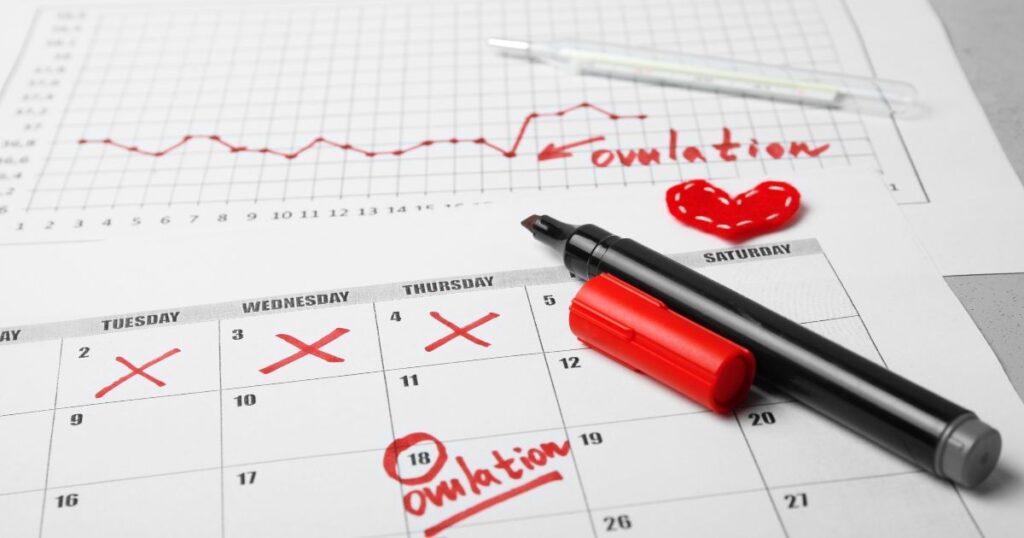
After ovulation, body temperature may increase slightly by about half a degree Celsius. If using temperature tracking to determine fertility, a special thermometer should be used to measure temperature every morning before getting out of bed. Recording the readings daily on a graph or spreadsheet can help identify patterns over time. The most fertile days are typically two to three days before the rise in temperature.
Other Signs
Other possible signs of ovulation include mild abdominal cramps, breast tenderness, or increased sex drive. However, these are not the most reliable methods for predicting fertility.
Ovulation Calculators and Kits
Ovulation calculators and kits can also help predict ovulation.
- Online Ovulation Calculators: These tools use the date of the last period and cycle length to estimate the most fertile days.
- Home Ovulation Predictor Kits: Available at pharmacies, these test for a rise in luteinizing hormone (LH) levels in urine. Testing should begin a few days before the expected ovulation day. A positive result indicates ovulation will likely occur within the next 24 to 36 hours.
Doctors can also arrange blood tests to check progesterone levels, which can help confirm ovulation.
Additional Considerations for Conception
If trying to get pregnant, consider the following:
- Taking a folate supplement
- Maintaining a healthy diet
- Ensuring vaccinations are up to date
Most healthy couples will conceive within a year of trying.
When to See a Doctor
If under 35 years old and trying to conceive for a year without success, consider seeing a doctor to discuss options.
If over 35, it may be helpful to see a doctor after trying to conceive for six months, as fertility decreases with age.
A doctor should also be consulted if there is a history of:
- Heavy periods (menorrhagia) or periods lasting longer than seven days
- Endometriosis
- Hormonal disorders, such as polycystic ovarian syndrome (PCOS)
- Any other concerns that may affect fertility
There are several tests available to assess potential fertility issues.
Tools and Assistance
When trying to conceive, using various tools and assistance options can enhance your understanding and improve your chances of success. Here are some helpful tools:
- Fertility Trackers: These are apps or physical devices that help track menstrual cycles, ovulation signs, and body temperature. By tracking this data over time, they can predict your most fertile days and assist in planning intercourse to increase your chances of conception.
- Ovulation Kits: Home ovulation predictor kits are available for use at home and can help track changes in hormone levels, identifying the most fertile days. By detecting a rise in luteinizing hormone (LH), these kits provide insight into when ovulation will occur, giving you a better chance to conceive.
- Basal Body Temperature Thermometers: Specialized thermometers help you track your body temperature every morning before getting out of bed. A slight increase in temperature can indicate that ovulation has occurred, helping you predict your fertile window with more precision.
- Fertility Charts: You can use paper or digital charts to record your temperature, cervical mucus changes, and other signs of ovulation. Over time, patterns will emerge, making it easier to pinpoint your most fertile days.
- Consultation with Fertility Specialists: If you’re not conceiving after several months of trying, it may be helpful to consult with a fertility specialist. They can provide tests and treatments, such as hormone level evaluations, ultrasound assessments, and even fertility procedures.
- Support Groups and Counseling: For those who are experiencing challenges in their fertility journey, support groups or counseling can provide emotional support. Connecting with others going through similar experiences can help reduce stress and provide comfort during the process.
For personalized advice or further guidance, it’s always recommended to speak with a healthcare provider. They can assist with understanding your individual needs and recommend the best tools and methods to help you conceive.










Please log in to leave a comment.