
Highlights
- Postnatal depression is common, affecting up to 1 in 5 new mums and 1 in 10 new dads.
- Common symptoms of postnatal depression include low mood, changes in sleep and appetite, and feelings of hopelessness.
- Unlike ‘baby blues’, postnatal depression lasts longer, is more severe and doesn’t usually go away without help.
- Your doctor or healthcare nurse can give you advice about support and treatment that may be right for you.
- If you are struggling, ask for help. It’s important to seek help if you think you may have postnatal depression — this is a common condition, and there’s no need to feel ashamed.
In This Article
- What Is Postnatal Depression
- Postnatal Depression vs Baby Blues
- Postnatal Anxiety vs Depression
- Risk Factors for Postnatal Depression
- Signs and Symptoms of Postnatal Depression
- Diagnosis of Postnatal Depression
- The Edinburgh Postnatal Depression Scale (EPDS)
- Treatment for Postnatal Depression
- Postpartum Psychosis
- Tools and Assistance
What Is Postnatal Depression
Many new parents feel tired or overwhelmed, but postnatal depression is different. In postnatal depression, feelings of sadness, numbness or hopelessness last longer, are more severe and affect your ability to cope with and enjoy your daily life. A low mood is also often accompanied by physical symptoms such as trouble sleeping and changes in appetite or eating habits. Postnatal depression can last for a long time, and usually gets worse if it’s not treated.
Postnatal depression is common, affecting about 1 in 5 mums and 1 in 10 dads in the first year after they have a baby, but that doesn’t mean it’s normal. If you are struggling with depression, there’s lots of support available to help you get back to enjoying life and your new baby.
Postnatal Depression vs Baby Blues
About 4 out of 5 new mums experience ‘baby blues’ in the first week or so after having a baby. These feelings are usually due to the hormonal changes that happen after during pregnancy and birth. If you have ‘baby blues’, you may feel moody, anxious, tearful or have difficulty sleeping. Although these feelings can be challenging, they usually pass quickly on their own with no special treatment.
In postnatal depression, your symptoms last longer than 2 weeks, may be more severe and often interfere with your ability to function normally. Unlike ‘baby blues’, postnatal depression doesn’t usually go away on its own. This can be especially tough to cope with when you are recovering from birth and have a new baby to look after.
It can be hard to know if what you’re feeling is normal or might be the start of something more serious. If you’re not sure, it’s a good idea to check in with your doctor or child health nurse.
Postnatal Anxiety vs Depression
Both anxiety and depression are more common after the birth of a baby. Many people who have postnatal anxiety will have postnatal depression at the same time. Some symptoms are similar, but anxiety and depression are different conditions that may need different treatments. In postnatal depression, your mood is usually affected, while in postnatal anxiety, you will have feelings of worry or fear that are difficult to control. In both conditions, you may struggle to cope with your daily activities.
Risk Factors for Postnatal Depression
There are risk factors that increase your chance of developing postnatal depression:
- a history of depression or mental illness
- previous pregnancy losses
- a difficult pregnancy or birth
- a baby who is unwell or difficult to settle
- a history of physical, sexual or emotional abuse
- a lack of social support
Having one or more of these risk factors does not necessarily mean that you will develop postnatal depression.
If you have any of these risk factors, make sure you have enough practical and psychological support during your pregnancy and after your baby’s birth. This can help to reduce your chance of developing depression and help you to cope better if you do become unwell.
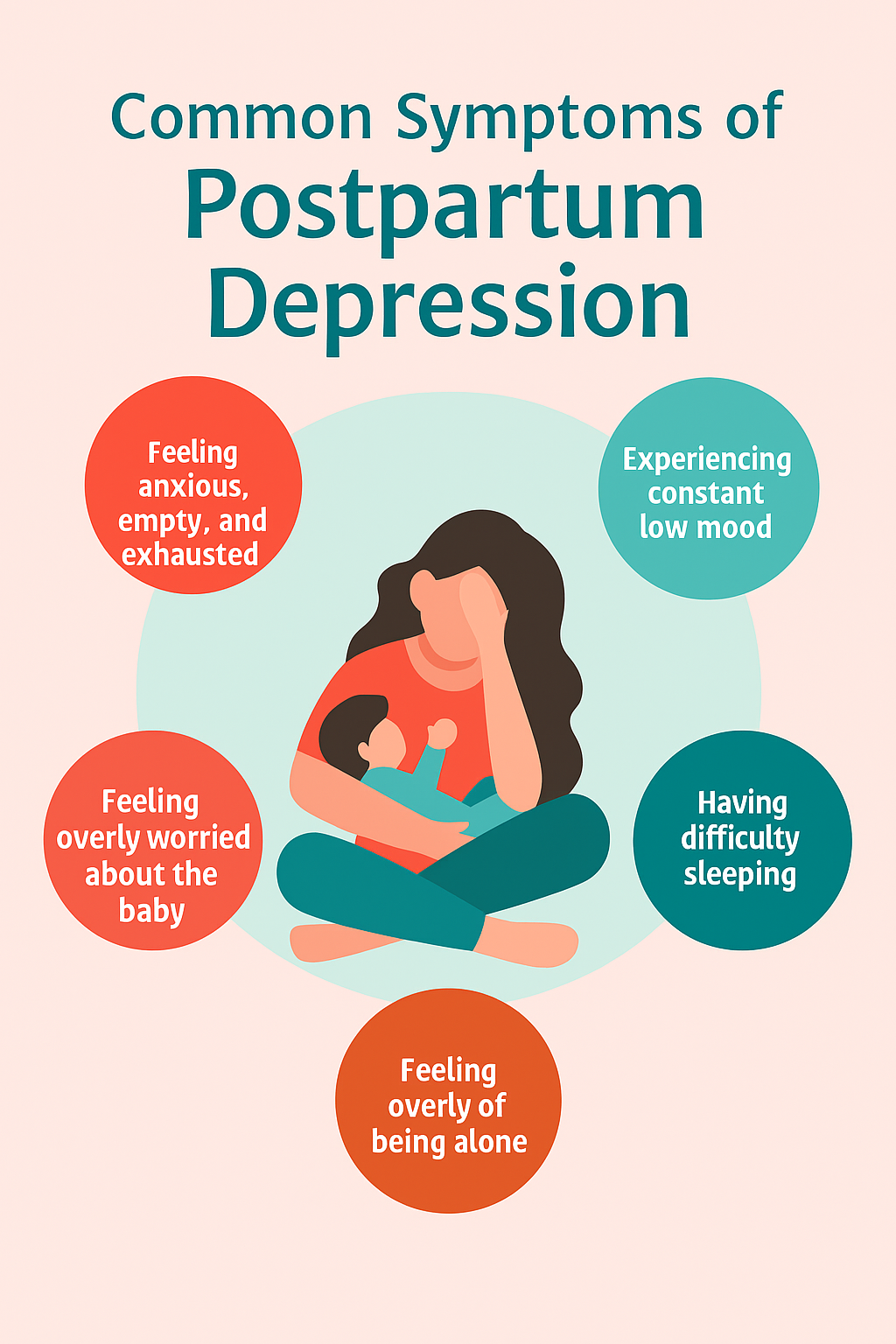
Signs and Symptoms of Postnatal Depression
People will experience postnatal depression differently, but many people will have similar symptoms or difficulties. It’s a good idea to be aware of the common signs of postnatal depression since they are often missed or dismissed as a normal part of life with a new baby.
Common signs of postnatal depression you might notice include:
- thoughts of harming yourself or your child
- feeling low or not feeling anything (feeling numb)
- feeling hopeless or worthless
- losing interest in others, including your new baby
- sleeping too much, or having difficulty sleeping
- changes in appetite, together with weight loss or weight gain
- difficulty coping with daily activities
Diagnosis of Postnatal Depression
If you notice symptoms of postnatal depression, it’s important to seek professional help. Your doctor or healthcare provider may ask about how you’ve been feeling, give you a questionnaire to complete, and possibly speak with your partner, if you have one. They may also conduct a physical examination.
Being honest about how you’re feeling will make it easier for your doctor or nurse to provide the support and treatment you need. Remember, postnatal anxiety and depression are very common, and there’s no shame in seeking help.
The Edinburgh Postnatal Depression Scale (EPDS)
The Edinburgh Postnatal Depression Scale (EPDS) is a questionnaire used to help identify people who may have postnatal depression or anxiety. It consists of 10 statements about how you’ve been feeling. For each statement, you select the response that best matches your feelings over the past 7 days. Each response corresponds to a score, and if your total score is over 13 points, it’s recommended that you seek help from your doctor or healthcare provider, as this may indicate postnatal depression.
It’s a good idea to complete the EPDS with your doctor or healthcare provider, who can provide additional information and support. The EPDS can also be completed at home via various online platforms.
However, it’s important to note that the EPDS alone cannot diagnose postnatal depression. Only a trained healthcare professional can assess your symptoms, provide a diagnosis, and recommend appropriate treatment.
Treatment for Postnatal Depression
If your symptoms are mild, additional support from family, friends, your doctor, or healthcare provider may be sufficient. If your symptoms are more severe, your doctor may recommend psychological therapies or antidepressant medication. Your doctor will discuss the benefits and potential risks of treatment options, especially in regard to the effects of medication on breastfeeding.
Taking care of both your physical and mental health is crucial when dealing with postnatal depression. Some helpful self-care practices include:
- Accepting practical help and emotional support from loved ones
- Eating a balanced and healthy diet
- Staying active with regular physical exercise
- Planning for regular and restful sleep
- Using relaxation techniques such as deep breathing and muscle relaxation
While managing postnatal depression can be challenging, asking for and accepting help from family and friends is essential. Taking care of yourself is beneficial not just for your well-being, but also for your new baby and the rest of your family.
Postpartum Psychosis
Postpartum psychosis is a rare but serious mental health condition that occurs soon after childbirth. In this condition, a person loses touch with reality and may experience confusion, severe agitation, delusions (false, distressing beliefs), and hallucinations (hearing or seeing things that are not there). Symptoms often appear quickly and can be alarming for both the person affected and their loved ones.
Postpartum psychosis is considered a psychiatric emergency and requires immediate medical attention. If you or someone you care about is experiencing these symptoms, seek help immediately to ensure safety and well-being.
Tools and Assistance
If you or your partner is experiencing symptoms of postnatal depression or psychosis, it’s important to seek support:
- Talk to your partner or a trusted person
- Consult your doctor or healthcare provider for guidance
- Reach out to mental health support services or helplines available in your area
You are not alone. With the right support, postnatal depression and anxiety are treatable, and recovery is possible.












Please log in to leave a comment.