Highlights
- Comfort: Consider how comfortable the pram is for your child, as they will spend a lot of time in it.
- Practicality: Choose a pram that is easy to push and steer. Look for different folding options that may be better for fitting your pram in your car.
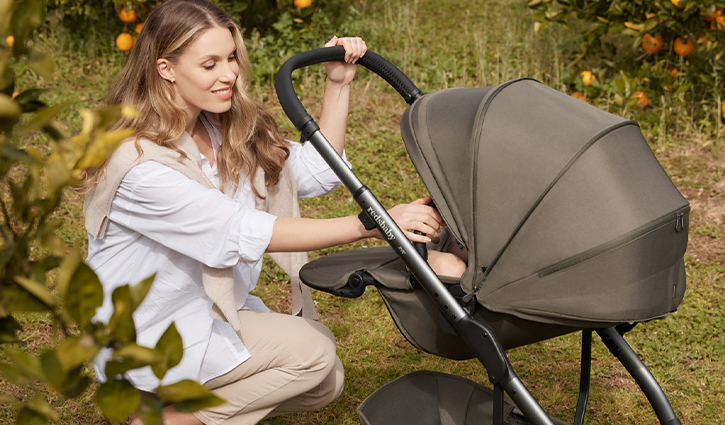
- Sun protection: A canopy made of mesh with an Ultraviolet Protection Factor (UPF) of 50+ is ideal.
In This Article
- Choosing a Comfortable and Practical Pram
- Buying a Second-hand Pram
- Safe Use of a Pram or Stroller
- Temperature and Ventilation Considerations
Choosing a Comfortable and Practical Pram
- Comfort: Think about how comfortable the pram is for your child, as they will spend a lot of time in it.
- Practicality: Choose a pram that is easy to push and steer. Look for different folding options that may be better for fitting your pram in your car, for example.
- Sun Protection: A canopy made of mesh with an Ultraviolet Protection Factor (UPF) of 50+ is ideal.
Buying a Second-hand Pram
Second-hand prams should also comply with safety standards.
When considering a second-hand pram, make sure that:
- There are no signs of wear and tear.
- The harnesses, brakes, and tether strap are all working properly.
- Any information and safety warning labels are still present and legible.
- Instructions for safe set-up of the pram are available.
- The pram can be fixed by the original manufacturer if needed.
- Check if the pram has been recalled. You can check for recalled baby and kid products on the product safety website.
Safe Use of a Pram or Stroller
- Always strap your child into the pram when you go out.
- Apply the brakes when you take your hands off the handle.
- Use the tether strap to secure the pram to your wrist when you’re walking or jogging.
- Not all strollers are suitable for activity, so if you’re a runner, make sure to find one specifically designed for running.
- Never leave your baby unsupervised in a pram or stroller. They are not a substitute for a safe cot.
- Avoid placing heavy bags on the pram or stroller handles, as this can cause the pram to tip over, especially when you are lifting your child out. Place bags in the tray underneath the pram instead.
Temperature and Ventilation Considerations
Make sure you allow for adequate ventilation. If your pram does not have a canopy, you can cover it with a moist muslin cloth. You should check the cloth and re-wet it every 20 minutes.
Do not cover the pram with a dry cloth to keep the sun off your baby. On hot days, the temperature under a pram canopy can be up to 4 degrees hotter than outside. This can be dangerous for your child.
Waterproof plastic rain covers can reduce airflow and increase humidity inside the pram.
Tools And Assistance
When selecting a pram or stroller, consider consulting your healthcare provider or a baby product specialist for guidance on what best suits your child’s needs. Additionally, you can explore local parenting groups or online forums to share advice and recommendations from other parents who have used similar products.











Please log in to leave a comment.