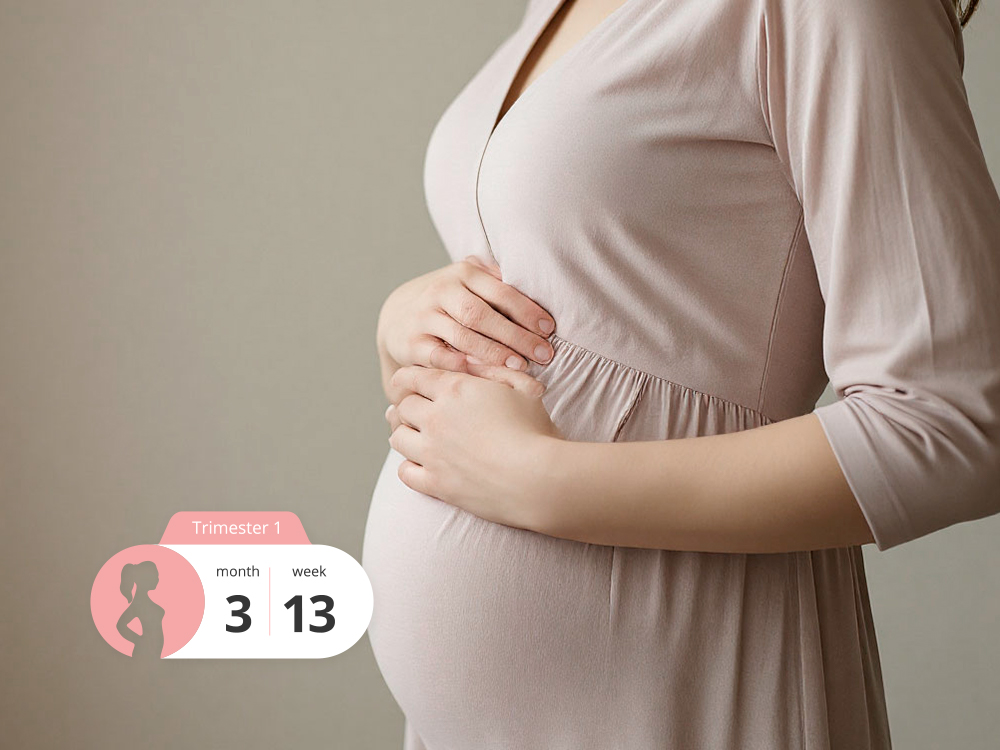
Highlights
- Marks the start of the second trimester (weeks 13–27).
- Miscarriage risk drops significantly compared to the first trimester.
- Most early symptoms (nausea, vomiting, fatigue) begin to ease.
- The uterus rises higher in the pelvis, reducing bladder pressure.
- The fetus is about 7–8 cm long and weighs around 20–28 g.
- Facial features become more defined; the baby can suck, swallow, and move.
- Prenatal screening (ultrasound + blood tests) is crucial at this stage.
- Expectant parents may notice emotional stability and higher energy levels.
In This Article
- Maternal Physical and Emotional Changes
- Digestive and Circulatory Adjustments
- Fetal Growth and Organ Development
- Common Discomforts and Possible Concerns
- Vaginal Discharge and Bleeding
- Ultrasound and Screening in Week 13
- Immune System and Infections
- Intimacy and Emotional Well-being
- Nutrition and Hydration
- Lifestyle and Preventive Care
- Tools and Assistance
Maternal Physical and Emotional Changes
By week 13, many women feel a noticeable improvement in overall well-being:
- Nausea and vomiting decrease as hormone levels stabilize.
- Energy levels rise, reducing constant fatigue.
- Mood becomes more balanced, as anxiety about early pregnancy decreases.
- The uterus enlarges, moving higher in the pelvis and starting to show a visible baby bump.
- Skin changes: increased pigmentation (linea nigra, darkened areolas), stretch marks, and possible acne.
- Breast tissue continues preparing for lactation, sometimes with tenderness or swelling.
Digestive and Circulatory Adjustments
- Digestive system: Slower bowel activity due to progesterone can cause bloating, constipation, and heartburn.
- Circulatory system: Blood volume expands, sometimes leading to low blood pressure, dizziness, or mild headaches.
- Respiratory changes: Increased oxygen demand may cause mild breathlessness during activity.
- Urinary system: Pressure on the bladder decreases compared to early weeks, but increased urination may persist due to higher fluid circulation.
Fetal Growth and Organ Development
At 13 weeks, the fetus resembles a small but fully formed human.
- Size and weight: 65–78 mm long, 14–28 g.
- Skeletal system: Bones begin to harden, especially in arms and legs.
- Digestive system:
- The gallbladder produces bile.
- The pancreas releases insulin.
- The intestines move into their proper position.
- Nervous system:
- Brain cells multiply rapidly.
- First grooves of future brain folds appear.
- Facial muscles allow basic expressions.
- Circulatory system: The heart beats ~160 times per minute, circulating 20+ liters of blood daily.
- Movements: Although still not felt by most women, the baby is actively kicking, stretching, and swallowing amniotic fluid.
- Reflexes: Sucking, swallowing, and grasping begin.
- Genitalia: External sex organs develop and can sometimes be identified on ultrasound.
Common Discomforts and Possible Concerns
While most symptoms ease, new sensations may appear:
- Leg cramps (calf muscles) → may indicate calcium or magnesium deficiency.
- Headaches and dizziness → linked to blood volume changes or dehydration.
- Lower back pain → due to posture changes and weight redistribution.
- Uterine tension or cramps → normal in mild, short episodes, but concerning if persistent.
- Thrush (candidiasis) → itching, discharge, and discomfort due to lowered immunity.
Seek medical advice if:
- Pain is strong or persistent.
- There is bleeding or fluid leakage.
- Severe headaches or vision problems occur (could indicate hypertension or preeclampsia later).
Vaginal Discharge and Bleeding
- Normal discharge: clear, white, without odor, may increase in volume.
- Abnormal discharge: thick, yellow/green, or with odor → possible infection.
- Bleeding: may signal placenta previa, detachment, or cervical trauma. Immediate medical care is required.
Ultrasound and Screening in Week 13
The first-trimester screening is usually performed between weeks 11–13.
- Ultrasound checks:
- Nuchal translucency (to detect chromosomal abnormalities).
- Fetal anatomy (spine, limbs, heart, facial features).
- Placenta and amniotic fluid levels.
- Baby’s sex may sometimes be seen.
- Blood tests:
- Progesterone – pregnancy support.
- hCG – confirms ongoing pregnancy health.
- Alpha-fetoprotein (AFP) – screening for chromosomal or neural tube anomalies.
- Estradiol – placental function and risk of miscarriage.
Immune System and Infections
At this stage, the immune system is naturally suppressed to protect the fetus. This increases susceptibility to:
- Colds and flu (avoid crowded places, wash hands frequently).
- Urinary tract infections (drink enough fluids, seek early treatment).
- Candidiasis (common, treatable under medical supervision).
Fever above 38°C (100.4°F) requires medical attention, as high temperatures may harm fetal development.
Intimacy and Emotional Well-being
- Intimacy is generally safe if there are no complications such as placenta previa, cervical issues, or bleeding.
- Many couples notice improved sexual desire in the second trimester due to higher energy and comfort.
- Open communication and gentle caution are recommended.
Nutrition and Hydration
- Focus on whole foods: fruits, vegetables, lean proteins, whole grains.
- Calcium and vitamin D: essential for bone development.
- Iron-rich foods: prevent anemia.
- Folic acid: continues to protect against neural tube defects.
- Hydration: 1.5–2 liters of water daily.
- Avoid alcohol, unpasteurized dairy, raw fish, and undercooked meat.
Lifestyle and Preventive Care
- Clothing: switch to maternity wear to avoid pressure on the belly.
- Exercise: safe options include walking, yoga, and swimming. Avoid high-impact sports.
- Mental health: relaxation techniques, music, or prenatal meditation can reduce stress.
- Prenatal classes: recommended to prepare physically and emotionally.
Tools and Assistance
- Professional counseling if experiencing anxiety or mood swings.
- Pregnancy tracking apps with week-by-week development info.
- Prenatal yoga and exercise programs.
- Support groups (online or local).
- Nutrition planners tailored for pregnancy.
- Prenatal courses offered by clinics and hospitals.











Please log in to leave a comment.