Highlights
- Beginning of the second trimester, often associated with greater comfort and stability.
- Energy levels typically increase as nausea and fatigue subside.
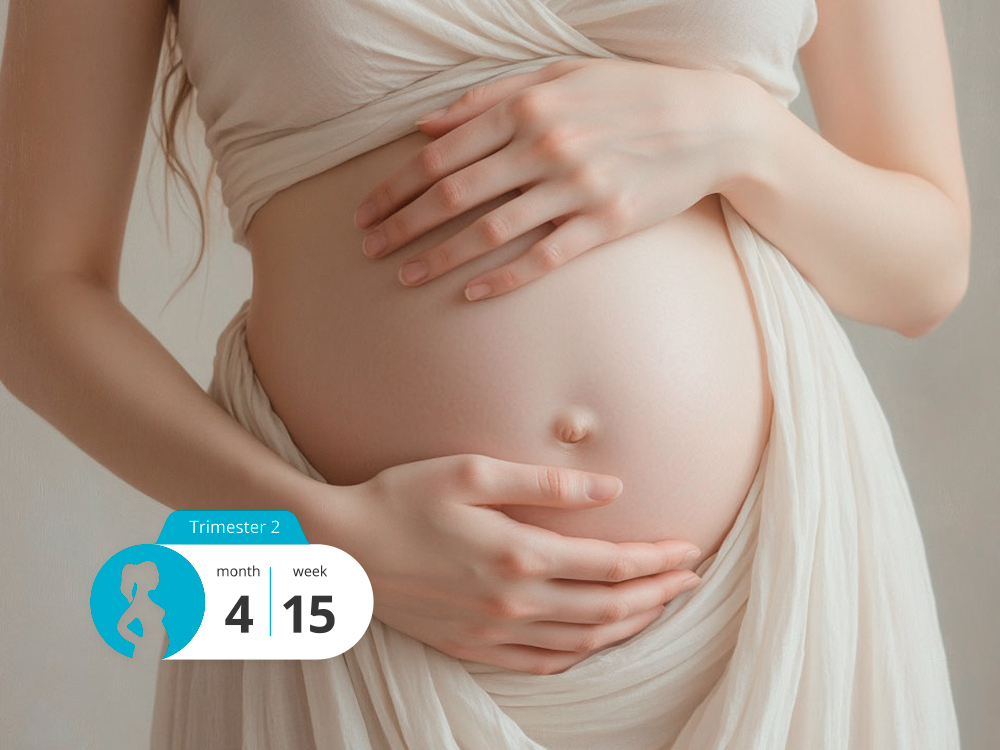
- The uterus is growing and has moved higher in the abdomen, visibly changing body shape.
- The fetus is about the size of an orange: ~10 cm in length, ~50 g in weight.
- Major organ systems are functioning, including the kidneys, bladder, and gallbladder.
- Brain and nervous system development is accelerating, with early coordination of movement.
- Skin pigmentation changes, breast changes, and weight gain are common maternal signs.
- Screening tests such as the triple test are recommended at this stage.
In This Article
- Maternal Symptoms and Physical Changes
- External Appearance and Skin Changes
- Fetal Development at 15 Weeks
- Multiple Pregnancy (Twins)
- Possible Discomforts and Warning Signs
- Vaginal Discharge and Bleeding
- Ultrasound at 15 Weeks
- Laboratory Tests and Screenings
- Intimacy During the Second Trimester
- Nutrition and Weight Management
- Lifestyle and Emotional Well-being
- Tools and Assistance
- Questions to Ask Your Doctor
Maternal Symptoms and Physical Changes
The second trimester often brings relief from the most unpleasant early pregnancy symptoms. While energy levels rise, certain discomforts may persist:
- Circulatory changes: Increased blood volume may cause dizziness, low blood pressure, or occasional headaches.
- Nasal congestion: Hormonal changes lead to swelling of nasal passages, sometimes called “pregnancy rhinitis.”
- Shortness of breath: The uterus pushes against the diaphragm, making deep breaths more difficult.
- Breast changes: Growth continues, with possible colostrum production.
- Weight gain: Most individuals gain 2–4 kg by this stage, depending on pre-pregnancy weight.
External Appearance and Skin Changes
- The abdomen becomes more prominent as the uterus rises about 7 cm above the pubic bone.
- Hormonal influence can cause linea nigra, freckles, or melasma (“mask of pregnancy”).
- Hair and nails may grow faster due to hormonal stimulation.
- Stretch marks (striae) may begin forming on the abdomen, breasts, and hips.
Fetal Development at 15 Weeks
At this stage, the fetus has a more human-like appearance and continues rapid growth:
- Size and weight: ~10 cm, ~50 g.
- Cardiovascular system: Heart beats ~150 bpm, circulating 23+ liters of blood daily.
- Nervous system: Neural connections allow for more controlled movements; fetus may respond to external stimuli.
- Musculoskeletal system: Bones are hardening, muscles strengthen; calcium demands increase.
- Digestive system: Gallbladder produces bile, and the fetus swallows amniotic fluid, practicing digestion.
- Urinary system: Kidneys produce urine several times daily.
- Sensory development: Eyes respond to light through eyelids; ears can detect muffled sounds.
- Gender differentiation: External genitalia are more defined, and in many cases can be seen on ultrasound.
Multiple Pregnancy (Twins)
For twin pregnancies, the same developments occur, but growth can be slightly smaller due to shared resources.
Mothers carrying twins often experience:
- Faster abdominal growth.
- Increased fatigue and need for rest.
- Higher nutritional demands (especially protein, iron, and folic acid).
Possible Discomforts and Warning Signs
- Abdominal pain: Usually from uterine growth, but persistent cramps may indicate complications.
- Leg cramps: Often due to calcium or magnesium deficiency.
- Back pain: Caused by postural changes and weight distribution.
- Urinary discomfort: Could indicate urinary tract infection (UTI).
- Headaches: Should be monitored, especially if linked to high blood pressure.
Seek immediate care if experiencing severe abdominal pain, heavy bleeding, fever, or sudden swelling.
Vaginal Discharge and Bleeding
- Normal discharge: Clear or white, mild odor, slightly increased volume.
- Concerning signs: Yellow/green, foul-smelling, or cottage cheese-like discharge → possible infection.
- Bleeding: May indicate placental issues, threatened miscarriage, or other complications.
Urgent medical consultation is necessary in case of bleeding.
Ultrasound at 15 Weeks
Ultrasound may be performed to:
- Confirm growth and development.
- Measure head, abdominal, and femur size.
- Assess amniotic fluid and placental health.
- Sometimes determine fetal sex, depending on position.
Laboratory Tests and Screenings
- Triple test: Measures AFP, hCG, and estriol for chromosomal abnormalities.
- Blood pressure monitoring for preeclampsia risk.
- Urine tests for protein and infections.
- Additional genetic screenings if indicated.
Invasive diagnostic tests (amniocentesis, chorionic villus sampling) may be recommended in high-risk cases.
Intimacy During the Second Trimester
Most healthcare providers consider sexual activity safe during the second trimester unless contraindications exist (placenta previa, cervical insufficiency, risk of miscarriage).
Nutrition and Weight Management
- Prioritize protein, calcium, iron, omega-3 fatty acids, and fresh produce.
- Avoid raw fish, unpasteurized dairy, and high-mercury fish.
- Limit caffeine to <200 mg per day.
- Stay hydrated (about 2 liters of water daily).
Weight gain should be monitored:
- Normal BMI → 0.5 kg per week.
- Underweight → slightly more.
- Overweight → slightly less.
Lifestyle and Emotional Well-being
- Exercise: Walking, swimming, and prenatal yoga improve circulation and reduce back pain.
- Sleep: Left-side sleeping improves blood flow to the uterus.
- Emotional balance: Mood swings may persist; mindfulness or prenatal support groups can help.
Tools and Assistance
- Pregnancy tracking apps (BabyCenter, What to Expect, Ovia).
- Smart devices (blood pressure monitors, weight trackers).
- Prenatal yoga videos and guided meditation apps.
- Support forums and local pregnancy classes.
- Dietary calculators for tracking calorie and nutrient intake.
Questions to Ask Your Doctor
- How do I recognize early signs of preterm labor or complications?
- Is my weight gain appropriate for 15 weeks?
- Which exercises are safe at this stage?
- Do I need additional supplements (calcium, vitamin D, iron)?
- Should I undergo the triple test or other genetic screenings?
- What are safe medications for colds, headaches, or allergies during pregnancy?












Please log in to leave a comment.