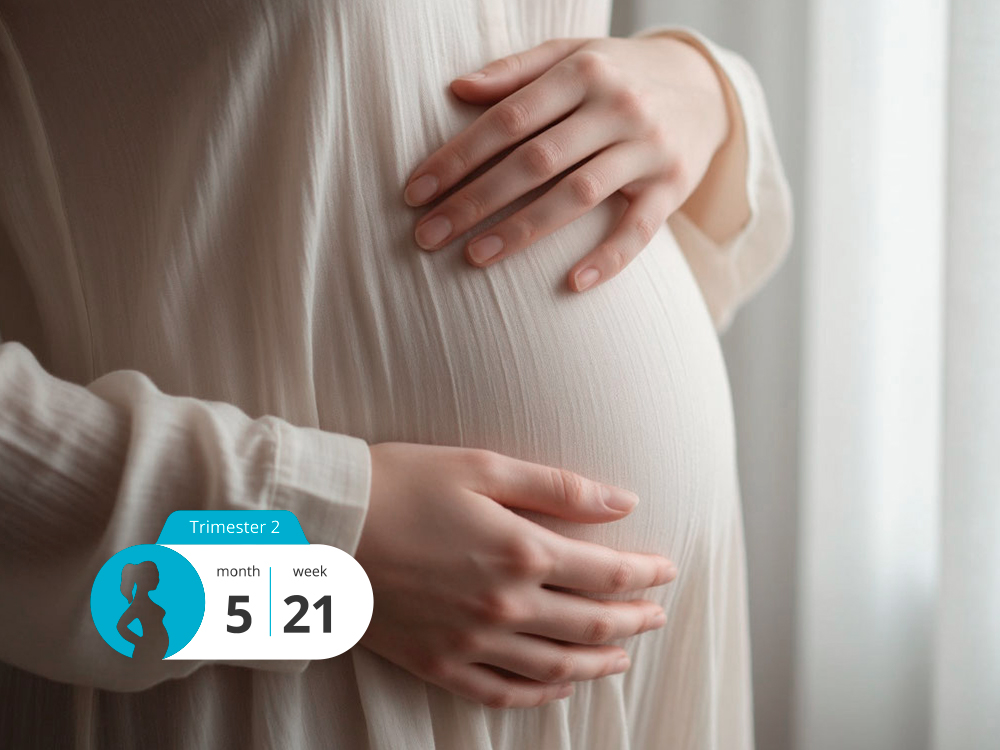
Highlights
- Mid-pregnancy milestone: the fetus’s endocrine system becomes active.
- Fetus measures approximately 27 cm and weighs 310–370 g.
- Digestive, urinary, and immune systems function efficiently.
- Mothers may feel first pronounced fetal movements.
- Uterus growth can cause digestive discomfort, back pain, leg cramps, and stretch marks.
- Focus on nutrition, physical activity, and regular medical check-ups is essential.
In This Article
- Fetal Growth and Development
- Fetal Movements
- Maternal Sensations
- Abdominal Changes
- Common Discomforts and Warnings
- Recommended Examinations and Tests
- Ultrasound at 21 Weeks
- Nutrition and Vitamins
- Physical Activity
- Sexual Activity During Pregnancy
- Tools and Assistance
Fetal Growth and Development
At 21 weeks, the fetus undergoes rapid internal maturation:
- Endocrine System: Pituitary, pineal, thyroid, pancreas, and adrenal glands begin hormone production, stimulating growth and organ development.
- Immune System: Passive immunity begins, with maternal antibodies passing through the placenta.
- Digestive & Urinary Systems: Fully functional; the fetus swallows amniotic fluid (~0.5 liters/day) and processes it through the urinary tract.
- Blood Formation: Spleen produces red and white blood cells; blood type and Rh factor can be determined.
- Vestibular System: Well-developed, allowing active movement — rolling, flipping, and preferred positions.
- Taste: Taste buds are forming; the fetus can distinguish flavors of amniotic fluid based on the mother’s diet, developing early food preferences.
- Skin & Fat: A thin fat layer appears, reducing transparency; sebaceous glands produce vernix to protect skin and aid birth.
- Growth: Fetus reaches ~27 cm in length and 310–370 g in weight.
- Sensory Development: Hearing begins, while eyes are still forming under closed eyelids.
Fetal Movements
- First noticeable kicks, rolls, and stretches often occur around this week.
- The fetus interacts with the uterine walls and umbilical cord.
- Sleep-wake cycles begin, sometimes misaligned with maternal activity — nighttime movements are common.
- Speaking, singing, or gentle interaction can soothe the fetus, as it responds to familiar voices.
Maternal Sensations
- Emotional Stability: Early pregnancy nausea has passed; moods are generally positive.
- Digestive Discomfort: Heartburn caused by uterine pressure on the stomach; constipation may lead to hemorrhoids.
- Appetite: Increased nutritional needs from fetal growth may trigger cravings. Moderation is key.
- General Well-being: Most women feel stable with minor inconveniences.
- Abdominal Changes: The belly becomes rounder; fetal movements are visible and palpable.
Abdominal and Bodily Changes
- Uterus is approximately 1 cm above the navel, with fundal height ~21 cm.
- Internal organs shift, leading to frequent urination, mild shortness of breath, and digestive changes.
- Skin care: Stretch mark prevention with creams or gels is recommended.
- Clothing: Loose-fitting clothes and comfortable shoes reduce pressure on the abdomen.
- Support belts: Can relieve back strain and maintain proper posture.
Common Discomforts and Warnings
- Abdominal pain: Stretching of ligaments or rare uterine contractions. Severe or persistent pain requires medical attention.
- Back, leg, and head discomfort: Caused by posture shifts, swelling, or pressure on nerves.
- Vaginal discharge: Normal discharge is colorless and odorless. Creamy or foul-smelling discharge may indicate infection.
- Preterm labor warning signs: Contractions, abdominal pain, and vaginal bleeding require urgent medical care.
Recommended Examinations and Tests
- Routine check-ups: At least once a month, including urine and blood tests.
- Triple test: Measures hCG, estriol, and alpha-fetoprotein to assess risk of chromosomal abnormalities or hereditary conditions.
- Ultrasound: Monitors fetal growth, placental maturity, amniotic fluid levels, and fetal anatomy. Gender determination is usually accurate at this stage.
Nutrition and Vitamins
- Diet influences fetal taste development. Healthy choices include:
- Lean meats, fish, eggs, dairy
- Fresh vegetables and fruits
- Whole grains and legumes
- Natural juices and nuts
- Avoid fried, overly salty, spicy foods, processed products, alcohol, coffee, and carbonated drinks.
- Salt and sugary foods should be limited to prevent excessive weight gain and edema.
- Prenatal vitamins should only be taken under medical supervision.
Physical Activity
Safe activities for 21-week pregnant women:
- Prenatal yoga (strengthens muscles, improves posture, and supports breathing)
- Aquafitness or swimming (reduces swelling and stress on joints)
- Group aerobics for expectant mothers
- Light gym exercises (with supervision)
Precautions: Stop exercising if experiencing dizziness, fatigue, pain, or discomfort. Resume only after full recovery.
Sexual Activity
- Safe unless restricted by medical conditions such as multiple pregnancy, preeclampsia, low or excess amniotic fluid, or cervical complications.
- Comfortable positions and gentle contact are recommended to avoid pressure on the abdomen.
Tools and Assistance
Support networks: Online forums, prenatal classes, and local mother groups for emotional and practical assistance.
Pregnancy apps: Track fetal growth, maternal weight, and health metrics.
Prenatal exercise programs: Yoga, swimming, or group fitness tailored for pregnancy.
Nutrition guides: Meal plans supporting healthy weight gain and nutrient intake.
Medical monitoring: Regular doctor visits, blood pressure, urine, and lab tests.











Please log in to leave a comment.