Highlights
- The fetus weighs around 500 grams and measures 25–30 cm.
- The baby’s central nervous system and brain are actively developing, enabling controlled movements.
- Maternal body changes include increased appetite, breast sensitivity, and mild edema.
- Regular prenatal check-ups and ultrasounds are essential at this stage.
- Safe physical activity and balanced nutrition are key for both mother and baby.
In This Article
- Maternal sensations and body changes
- Fetal development at 22 weeks
- Fetal movements and interactions
- Common discomforts and potential complications
- Nutrition and vitamin recommendations
- Physical activity guidelines
- Sexual health during pregnancy
- Prenatal tests and ultrasound examinations
- Tips for expectant mothers
Maternal Sensations at 22 Weeks
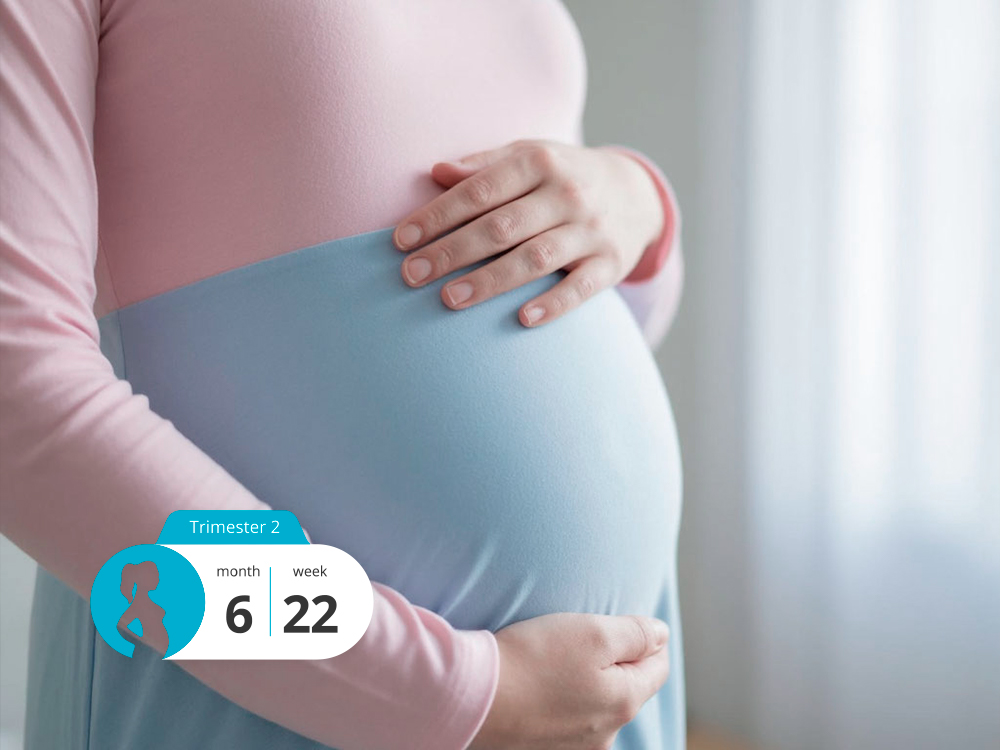
By the 22nd week of pregnancy, most women experience a sense of calm and optimism. Maternal-fetal bonding becomes stronger through subtle movements and touch. The baby’s kicks and turns are now clearly felt, allowing the mother to communicate with the baby and sense its activity or mood.
Some common maternal experiences include:
- Increased appetite and gradual weight gain (around 400 grams per month is recommended).
- Heightened breast sensitivity.
- Frequent urination due to pressure on the bladder.
- Mild swelling in hands and feet.
- Constipation, which may occasionally lead to hemorrhoids.
Despite these minor discomforts, overall wellbeing typically improves as early pregnancy symptoms such as nausea and fatigue subside, while late-pregnancy heaviness has not yet begun. The 22nd week is generally a comfortable time for travel, social activities, and interaction with the baby.
Physical Changes
- Weight gain of approximately 5–7 kg since conception.
- Stronger hair and nails; improved facial skin tone.
- Occasional leg cramps may indicate calcium deficiency.
- Increased blood volume may cause mild anemia, requiring iron supplements.
- Stretch marks may appear on the abdomen and thighs.
- Mild lower back discomfort due to the growing uterus (positioned about 2 cm above the navel).
Fetal Development at 22 Weeks
At 22 weeks, the fetus weighs approximately 350–500 grams and measures 25–30 cm. Key developments include:
- Rapid accumulation of body fat beneath the skin, smoothing the body and increasing plumpness.
- Hair growth (lanugo) covering the head, protecting the vernix caseosa, the protective coating on the baby’s skin.
- Active maturation of brain and central nervous system, allowing purposeful movements like grabbing, sucking fingers, and touching the face.
- Functional development of hearing; the baby responds to sounds and voices.
- Formation of sweat glands, lungs, digestive organs, and reproductive organs.
- The heart beats at approximately 160 beats per minute.
- The liver is active in processing toxins.
- Facial features such as eyebrows, eyelashes, and fingernails continue to develop.
- Bone tissue strengthens, and the spine continues forming. Adequate maternal calcium intake is crucial at this stage.
Size comparison: The baby is about the size of a zucchini – 19 cm long, weighing approximately 350 grams.
Fetal Movements
Movements become stronger and more coordinated. The baby can turn, roll, kick, and tap the placental wall. These movements are a source of joy and reassurance for parents, signaling good health.
Common Discomforts and Potential Issues
Pain and Sensations
- Lower back pain: Caused by the shift in center of gravity due to uterine growth. Stretching exercises and flat, supportive footwear are recommended.
- Rectal pain or itching: Pressure on pelvic vessels may cause hemorrhoids; dietary adjustments can help.
- Abdominal pain: Severe or persistent pain should prompt immediate medical consultation.
- Headaches: Often linked to elevated blood pressure.
Vaginal Discharge
- Normal discharge: clear and odorless.
- Warning signs: blood or dark brown spots (placental abruption), watery discharge (amniotic fluid leakage), or curd-like discharge with odor (possible infection).
Cold or Flu
- Avoid high fever (above 38°C) to prevent fetal neurological complications.
- Use safe remedies: hydration, herbal teas, saline nasal rinses, and rest.
- Consult a healthcare provider for appropriate treatment.
Preterm Labor Risks
- Symptoms: severe abdominal pain, uterine contractions, vaginal bleeding, nausea, or vomiting.
- Immediate hospital attention is necessary if these signs occur.
Nutrition and Vitamins
Dietary Recommendations
- Prioritize calcium-rich foods: dairy, beans, almonds, spinach.
- Include iron sources: apples, green vegetables, eggs, liver, dried fruits.
- Eat vegetables and fruits for vitamins and fiber.
- Avoid alcohol, caffeinated beverages, soft drinks, fried, excessively salty or spicy foods.
- Eat frequent small meals to avoid discomfort and support fetal growth.
Vitamins
- Consult a healthcare provider before taking any prenatal vitamins.
- Supplements may be prescribed based on maternal nutritional needs.
Physical Activity
Safe exercise options:
- Prenatal yoga (stretching and breathing)
- Aqua aerobics (reduces swelling, supports circulation)
- Group prenatal aerobics
- Gym exercises with guidance
Important: Stop exercising if feeling weak, dizzy, or in pain. Resume only when fully stabilized.
Sexual Health
- Sexual activity is generally safe at 22 weeks if there are no complications.
- Avoid positions that put pressure on the abdomen.
- Discomfort or pain should prompt temporary cessation and consultation with a specialist.
Prenatal Tests and Ultrasound
- Routine visit: measure belly and blood pressure, check fetal heartbeat.
- Blood and urine tests: monitor maternal and fetal health.
- Hormonal tests: hCG, free estriol, alpha-fetoprotein.
- Ultrasound: assesses fetal organs, size, placental position, amniotic fluid, and can reveal gender with high accuracy.
Ultrasound images at 22 weeks show fetal growth, limb positions, and facial features.
Tools and Assistance
- Educational resources for nutrition, exercise, and stress management.
- Pregnancy tracking apps (weekly updates on fetal development).
- Prenatal classes for childbirth and early childcare preparation.
- Support networks: online forums, parent communities, and healthcare hotlines.
- Maternity pillows, compression stockings, and abdominal support belts.











Please log in to leave a comment.