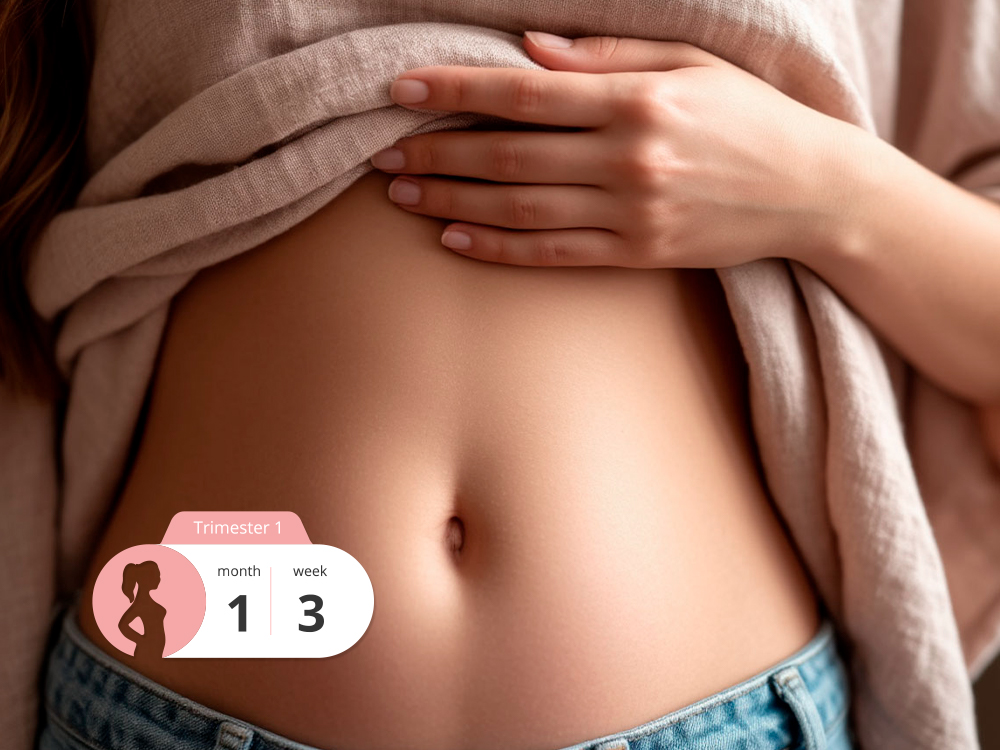
Highlights
- Pregnancy can be calculated in two ways: obstetric age (from the first day of the last menstrual period) and embryonic age (from conception).
- At Week 3 by obstetric dating, conception may just occur around the end of this week.
- Early symptoms are usually minimal, but some individuals may experience mild changes such as breast tenderness, increased sensitivity to smells, or slight mood shifts.
- The embryo is still microscopic, often called a zygote or blastocyst, and is preparing for implantation.
- Rare but important complications at this stage include ectopic pregnancy and early miscarriage.
- Nutrition, lifestyle choices, and prenatal vitamins play a critical role in supporting healthy development.
In This Article
- Two Ways of Counting Pregnancy Weeks
- Biological Events at Week 3
- Possible Symptoms and Sensations
- Embryo Development
- Potential Complications
- Bodily Changes and Breast Sensitivity
- Vaginal Discharge at Week 3
- Temperature Fluctuations
- Ultrasound and Medical Tests
- Sexual Activity During Early Pregnancy
- Nutrition and Lifestyle Recommendations
- Key Takeaways
- Tools and Assistance
Two Ways of Counting Pregnancy Weeks
Pregnancy length is measured either by obstetric dating or embryonic dating.
- Obstetric dating begins on the first day of the last menstrual period (LMP).
- Embryonic dating begins at the actual moment of fertilization.
Because ovulation usually occurs about 14 days after the start of the menstrual cycle, embryonic age is approximately two weeks shorter than obstetric age. For example, an embryo at Week 22 (embryonic) corresponds to Week 24 (obstetric).
In most clinical settings and pregnancy calendars, the obstetric system is used.
Biological Events at Week 3
During the third obstetric week, ovulation typically occurs, and if fertilization takes place, the sperm penetrates the egg to form a zygote. The zygote undergoes rapid cell division and develops into a blastocyst, which travels through the fallopian tube toward the uterus for implantation.
The embryo at this point is 0.1–0.2 mm in size and nourished not by the placenta yet but by the yolk sac.
Possible Symptoms and Sensations
Most individuals do not feel significant changes during this week, but some may experience:
- Mild abdominal cramping similar to menstrual discomfort.
- Increased breast sensitivity and swelling.
- Heightened sense of smell or altered food preferences.
- Light spotting due to implantation (though not always present).
- Fatigue, drowsiness, or slight nausea as early hormonal changes begin.
Embryo Development
- Chromosomal sex is determined at fertilization: sperm carrying an X chromosome results in a female, while sperm carrying a Y chromosome results in a male.
- Rapid cell division continues, with the blastocyst eventually implanting in the uterine lining.
- The embryo is not yet visible on ultrasound.
Potential Complications
Ectopic Pregnancy
In rare cases, implantation occurs outside the uterus (commonly in the fallopian tube). Warning signs may include:
- Localized abdominal pain (left or right side).
- Increasing intensity of discomfort.
- Vaginal bleeding.
- Pain worsening during gynecological examination.
Early medical intervention is essential to prevent complications, and modern treatments often preserve future fertility.
Missed Miscarriage
A non-developing pregnancy may result from genetic abnormalities, infections, or lifestyle factors. Medical evaluation is necessary if pregnancy symptoms suddenly decrease or disappear.
Early Pregnancy Loss (Miscarriage)
Characterized by vaginal bleeding, severe abdominal pain, and cramping in the lower back. Urgent medical attention is required to ensure safety.
Bodily Changes and Breast Sensitivity
Hormonal changes increase blood supply to breast tissue, leading to swelling, tenderness, and darkening of the areolae. These early changes prepare the body for future lactation.
Vaginal Discharge at Week 3
Normal discharge should be clear or whitish and odorless.
- Light spotting may indicate implantation bleeding.
- Heavier bleeding or clots require medical evaluation.
Temperature Fluctuations
- Basal body temperature may remain elevated at around 37°C (98.6°F).
- A slight increase in body temperature is considered normal.
- Fever above 37.5°C (99.5°F) may indicate infection and requires medical consultation.
Ultrasound and Medical Tests
- At Week 3, ultrasound is usually not informative, since the embryo is too small to be detected.
- The main reason for an ultrasound at this stage would be to rule out ectopic pregnancy in case of concerning symptoms.
- Laboratory tests, such as hCG measurement, may confirm early pregnancy.
Sexual Activity During Early Pregnancy
Sexual activity is not contraindicated during early pregnancy if both partners are comfortable and no medical restrictions are present. Emotional sensitivity and physical changes should be taken into account.
Nutrition and Lifestyle Recommendations
- Begin or continue taking folic acid (vitamin B9) for neural tube development.
- Eat a balanced diet rich in fresh vegetables, fruits, whole grains, lean proteins, and dairy.
- Avoid alcohol, smoking, recreational drugs, and excessive caffeine.
- Limit processed foods, fried and spicy meals, and high-sugar products.
- Stay physically active with light exercises such as walking, swimming, yoga, or pilates.
- Reduce stress and prioritize adequate rest.
Key Takeaways
- Week 3 of pregnancy by obstetric dating marks the potential moment of conception.
- Early symptoms may be minimal or absent, though hormonal changes are already beginning.
- The embryo is microscopic and not yet visible on ultrasound.
- Healthy nutrition, folic acid supplementation, and avoidance of harmful substances are critical.
- Awareness of possible complications, such as ectopic pregnancy, ensures timely medical intervention.
Tools and Assistance
- Ovulation Predictor Kits (OPKs) – To identify the fertile window.
- Basal Body Thermometers – For cycle tracking and early detection of conception.
- Pregnancy Tests – To confirm pregnancy after a missed period.
- Prenatal Vitamins – Containing folic acid, vitamin D, and iron.
- Medical Guidance – Early consultation with a healthcare provider if pregnancy is confirmed.
- Support Networks – Online communities, counseling, or partner involvement for emotional support.











Please log in to leave a comment.