Highlights
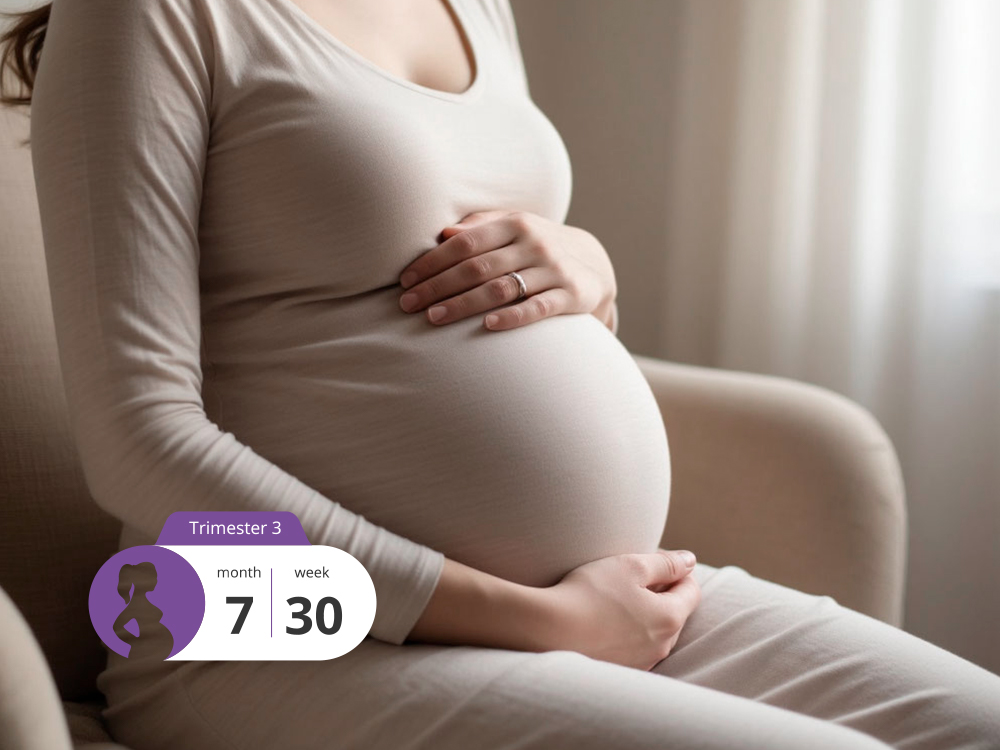
- Marks the third trimester and 7th month of pregnancy.
- Fetus weighs 1.3–1.4 kg and measures around 38 cm.
- Brain and nervous system continue to develop, with early memory and sensory responses.
- Fetal movements are more restricted; monitoring is essential.
- Recommended to begin prenatal leave and focus on preparation for birth.
In This Article
- Pregnancy Timeline: 30 Weeks in Months
- Fetal Development: Size, Weight, and Function
- Fetal Movements and Behavior
- Maternal Changes and Symptoms
- Nutrition and Supplements
- Physical Activity and Exercise
- Ultrasound and Prenatal Monitoring
- Preparation for Labor and Birth
- Warning Signs and When to Seek Help
Pregnancy Timeline: 30 Weeks in Months
- 30 weeks corresponds to 7 months of pregnancy.
- Approximately 210 days since conception.
- Around 10 weeks remain until delivery.
- This stage marks a transition into the final stretch of pregnancy, where preparation for birth and rest become priorities.
Fetal Development at 30 Weeks
- Weight: 1,300–1,400 g
- Length: ~38 cm
- Almost all major organ systems are fully formed: lungs, brain, digestive system, kidneys, immune system.
- Fetus can regulate body temperature and respond to light, sound, and touch.
- Movements are more constrained; the baby mostly stretches, kicks, and moves arms and legs rather than rolling.
- Brain development continues with gyri and sulci formation, and sensory pathways mature.
- Fetus may start to remember voices and respond to music or familiar sounds.
- Eyes can open and focus; the baby may hiccup occasionally.
Fetal Movements and Behavior
- Movements are important indicators of fetal well-being.
- Normal pattern: approximately 10 movements in 12 hours.
- Mothers should monitor movements daily; decreased activity may indicate fetal distress.
- Position changes are limited, but the fetus still practices grasping, stretching, and flexing limbs.
- Some babies respond to external stimuli: voices, music, and gentle abdominal touch.
Maternal Changes and Symptoms
- The uterus is large, pressing on organs and causing frequent urination, heartburn, and mild shortness of breath.
- Braxton-Hicks contractions may occur: short, irregular tightening of the abdomen, generally harmless.
- Common symptoms:
- Fatigue and mild weakness due to increased oxygen demand
- Back pain and pelvic discomfort from the growing uterus
- Swelling in legs and feet, varicose veins
- Hemorrhoids in some cases
- Emotional changes: anxiety, anticipation, and occasional mood swings are normal.
Nutrition and Supplements
- Focus on small, frequent meals with protein, calcium, iron, vitamins, and fiber.
- Recommended foods:
- Lean meats, fish rich in omega-3
- Eggs and dairy products (milk, yogurt, cheese)
- Whole grains, legumes, fruits, and vegetables
- Adequate water intake (~1.5–2 liters/day)
- Supplements may include:
- Prenatal vitamins with folic acid and iron
- Calcium and vitamin D for bone and teeth development
- Omega-3 fatty acids for brain and eye development
Physical Activity and Exercise
- Recommended activities:
- Prenatal yoga or pilates for flexibility and stress relief
- Aquatic exercise to reduce joint pressure and swelling
- Light walking for cardiovascular health and mood improvement
- Avoid heavy lifting or high-impact exercises.
- Rest whenever tired; physical activity should be gentle and comfortable.
Ultrasound and Prenatal Monitoring
- Routine ultrasound: 30–32 weeks, evaluates:
- Fetal growth, organ development, and position
- Placenta maturity and amniotic fluid levels
- Uterine size and myometrium condition
- Breech presentation may still occur; prenatal exercises can help with rotation.
- Routine check-ups:
- Blood pressure, weight, and urine tests
- Fetal heart rate monitoring
- Optional cardiotocography if there are concerns about fetal well-being
Preparation for Labor and Birth
- Prenatal courses:
- Breathing and relaxation techniques
- Positions for labor and pushing strategies
- Newborn care and breastfeeding guidance
- Pack hospital bag and prepare essential items for mother and baby.
- Maintain emotional connection with baby: talk, sing, and play music.
Warning Signs
Seek immediate medical attention for:
- Strong, regular contractions or severe abdominal pain
- Vaginal bleeding or fluid leakage
- Sudden swelling, severe headache, or vision changes (possible preeclampsia)
- Decreased fetal movements over several hours
Key Recommendations
- Prioritize rest and sleep, avoid overexertion
- Maintain a healthy diet and hydration
- Continue light physical activity
- Track fetal movements daily
- Attend prenatal visits and screenings regularly
- Focus on mental and emotional preparation for childbirth
At 30 weeks, pregnancy enters a stage of intense fetal growth, maternal adaptation, and preparation for delivery. The focus should be on balanced rest, monitoring fetal well-being, and creating a positive, calm environment for both mother and baby.
Tools and Assistance
- Pregnancy tracking apps and fetal movement logs
- Prenatal yoga, pilates, and aquatherapy programs
- Maternity belts and comfortable, supportive clothing
- Telemedicine consultations with obstetricians
- Online childbirth, breastfeeding, and parenting courses
- Guides for hospital bag packing and newborn essentials











Please log in to leave a comment.