Highlights
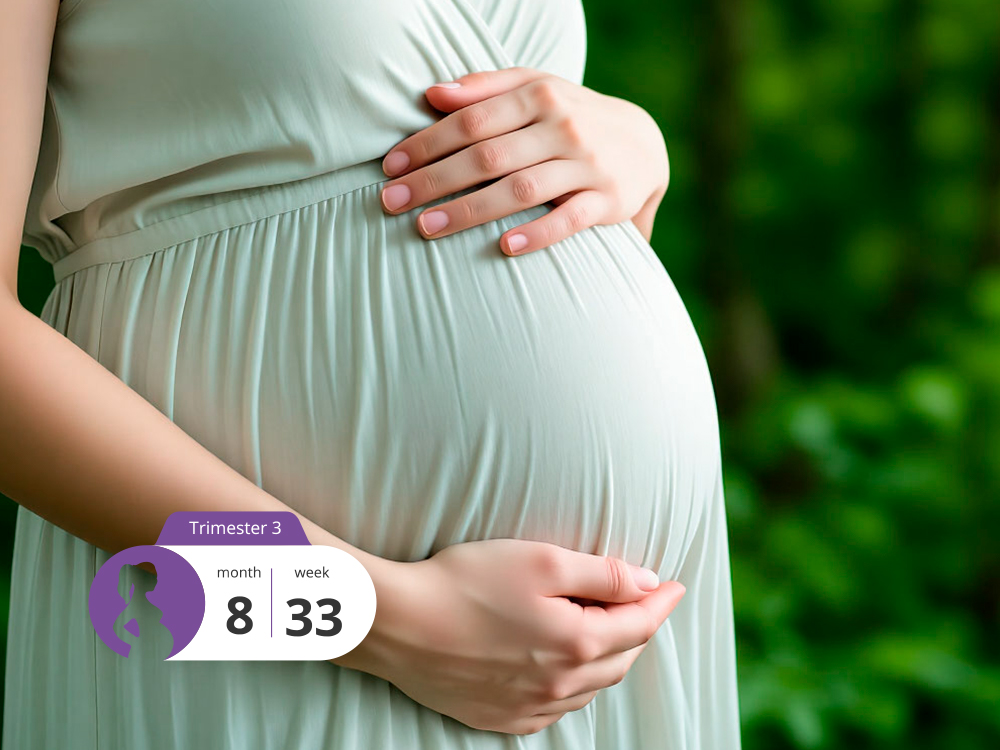
- Marks the beginning of the 9th month of pregnancy.
- Fetus weighs approximately 2 kg and measures 44 cm.
- Brain development is complete; neural connections continue to mature.
- Lungs and kidneys are fully functional; baby can produce surfactant and eliminate waste.
- Baby usually assumes a head-down position in preparation for birth.
- Maternal body experiences increased fatigue, back pain, swelling, and emotional fluctuations.
- Preparation for birth, nutrition, rest, and monitoring remain essential.
In This Article
- Pregnancy Timeline: 33 Weeks in Months
- Fetal Development: Size, Weight, and Organ Maturation
- Maternal Changes and Physical Symptoms
- Fetal Movements and Bonding
- Common Discomforts and Potential Complications
- Warning Signs and Labor Preparation
- Nutrition, Vitamins, and Hydration
- Physical Activity and Self-Care
- Prenatal Testing and Ultrasound
- Intimacy During Late Pregnancy
Pregnancy Timeline: 33 Weeks in Months
- 33 weeks marks the first week of the 9th month of gestation.
- Approximately 56 days remain until the expected due date.
- This period is ideal for physical and emotional preparation for birth, setting up the nursery, and acquiring baby essentials.
- It’s also important to spend quality time with loved ones and enjoy positive experiences.
Fetal Development at 33 Weeks
- Weight: ~2 kg
- Length: ~44 cm
- Fetal size comparison: Pineapple
- Baby may feel cramped due to limited space but continues to move, stretch, and kick.
- Brain formation is complete; neural connections continue to mature for critical cognitive functions.
- The heart is strong, and blood vessels thicken.
- Kidneys fully function, allowing the baby to excrete waste.
- Lungs are ready for independent breathing; alveoli are mature.
- Muscles strengthen, and subcutaneous fat accumulation continues.
- Vernix caseosa increases, facilitating an easier passage through the birth canal.
- Baby is usually in a head-down position, preparing for birth.
- Most of the time, the baby sleeps; during wakeful periods, they may suck their thumb, hiccup, and move actively.
Maternal Changes and Physical Symptoms
- Physical activity becomes more challenging; long walks, shopping, or household tasks may feel tiring.
- Common discomforts include back pain, swelling, shortness of breath, and frequent urination.
- Uterus experiences Braxton Hicks contractions, preparing the body for labor.
- Breast changes continue: tingling, sensitivity, and preparation for lactation.
- Increased sweating, fatigue, dizziness, and sleepiness are common.
- Emotional fluctuations may intensify, particularly for women experiencing pregnancy complications or anxiety about labor.
- Regular communication with a healthcare provider and support from loved ones is recommended.
Abdominal Size and Physical Adaptation
- The belly reaches its highest point; it may soon start descending into the pelvic area, easing pressure on the diaphragm.
- Skin stretching is significant; moisturizing creams help prevent stretch marks.
- The growing uterus compresses the bladder, leading to frequent urination.
- Digestive organs shift, potentially causing heartburn, nausea, or vomiting.
- Mobility is reduced; careful walking and wearing comfortable shoes are advised to avoid falls or injuries.
Common Discomforts and Potential Complications
- Pelvic and sacral pain due to ligament stretching and pelvic expansion.
- Back and leg pain from increased body weight and pressure.
- Hemorrhoids and rectal discomfort due to constipation.
- Upper abdominal discomfort from fetal movements.
- Fever over 38°C requires immediate medical attention.
Warning Signs and Labor Preparation
- Vaginal discharge with a large volume of clear mucus may indicate the loss of the mucus plug and imminent labor.
- In such cases, remain calm and contact medical services for safe hospital admission.
- Preterm labor is generally manageable with proper neonatal care.
Intimacy During Late Pregnancy
- Sexual activity is usually safe unless restricted for medical reasons.
- Couples should consult their healthcare provider if concerned about preterm labor risks.
Recommendations for Expectant Mothers
- Monitor blood pressure, swelling, and nausea; seek medical attention for any alarming changes.
- Prepare a hospital bag and carry essential documents at all times.
- Maintain daily walks and light physical activity.
- Stay healthy by promptly addressing colds or infections.
- Spend quality time with family and partner to reduce stress and stabilize emotions.
- Prioritize a balanced daily routine, including rest, exercise, and adequate sleep (8–9 hours per night).
Nutrition and Vitamins
- Consult your healthcare provider regarding nutrient deficiencies.
- Focus on fresh fruits, vegetables, lean proteins, whole grains, and soups.
- Minimize processed, fried, sugary, and salty foods; avoid alcohol and strong coffee.
- Avoid overeating; pregnancy does not require “eating for two.”
- Prenatal vitamins may be prescribed based on blood tests to ensure adequate levels of calcium, iron, folic acid, and essential vitamins.
Physical Activity
- Regular light exercise maintains physical health, strengthens muscles, and supports circulation.
- Recommended activities:
- Prenatal aerobics or swimming
- Yoga for pregnant women
- Breathing exercises
- Kegel exercises
- Daily walks
- Avoid overexertion, heavy lifting, and prolonged inactivity.
Prenatal Testing and Ultrasound
- At 33 weeks, regular check-ups are advised twice a week.
- Routine procedures include:
- Blood and urine tests
- Swabs if necessary
- Monitoring blood pressure, weight, and abdominal measurements
- Fetal heart rate checks
- Additional tests may be required for pregnancy complications.
- Third-trimester ultrasound assesses:
- Fetal growth and position
- Placenta and amniotic fluid
- Cervix condition
- Confirmation of fetal sex
- Results help plan delivery method, and exercises may be suggested to adjust fetal position if needed.
At 33 weeks, the fetus is well-developed and preparing for birth, while the mother continues to face physical and emotional challenges. Proper rest, nutrition, light exercise, and medical monitoring are crucial for the health of both mother and baby.
Tools and Assistance
- Pregnancy tracking apps and fetal movement logs
- Maternity support belts and comfortable clothing
- Telemedicine consultations with obstetricians
- Prenatal classes and breathing exercises
- Hospital bag and newborn essentials checklist
- Relaxation techniques and mindfulness resources












Please log in to leave a comment.