Highlights
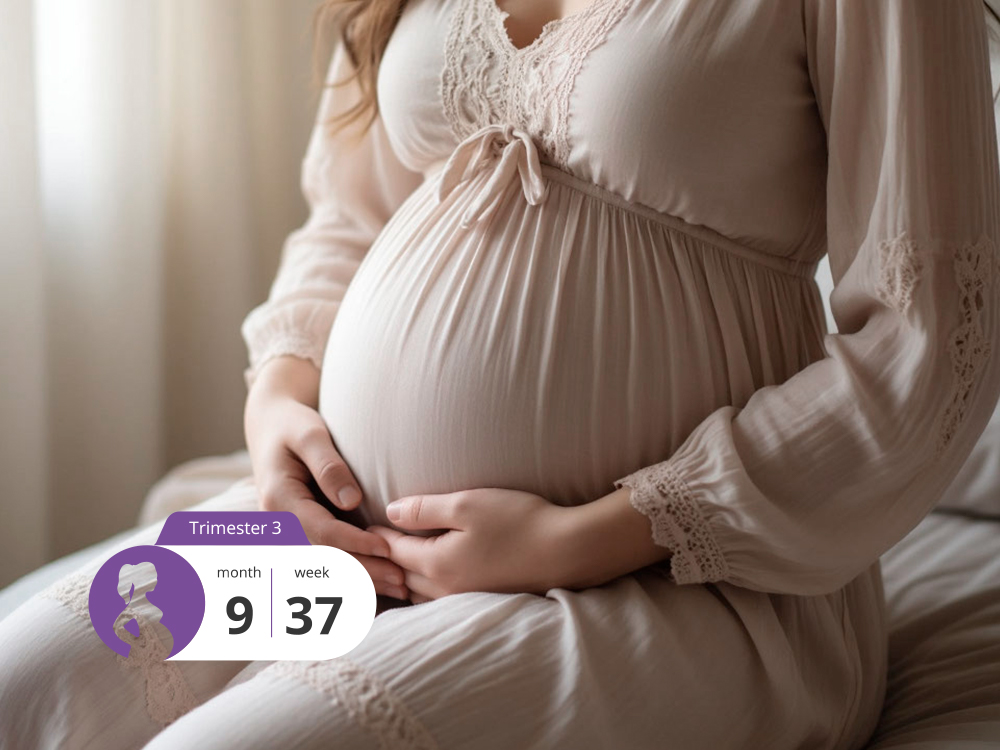
- Marks the start of the tenth month of gestation.
- The baby is full-term and ready for birth; survival outside the womb is typically safe.
- Average baby size: ~48 cm in length, ~3 kg in weight.
- Common maternal changes: abdomen dropping, increased Braxton Hicks contractions, frequent urination, mild weight loss, improved breathing, and reduced heartburn.
- Signs of labor: mucus plug discharge, stronger contractions, rupture of membranes.
- Ongoing monitoring: fetal movements, nutrition, hydration, and physical activity.
In This Article
- Gestational Age and Duration
- Fetal Development at 37 Weeks
- Maternal Physiological Changes
- Signs of Impending Labor
- Common Discomforts
- Vaginal Discharge and Warning Signs
- Labor at 37 Weeks
- Fetal Movements Monitoring
- Potential Complications
- Recommended Tests and Examinations
- Nutrition and Hydration Guidelines
- Physical Activity Recommendations
- Intimacy and Psychological Well-being
- Tools and Assistance
Gestational Age and Duration
Using obstetric calculations, 37 weeks marks the beginning of the tenth month of pregnancy. Although commonly believed to be nine months, a full-term pregnancy lasts about 40 weeks. Gestational age is counted from the first day of the last menstrual period, not from conception. On average, about three to four weeks remain until the estimated due date.
Fetal Development at 37 Weeks
- Full-term status: The baby’s organs and systems are developed for independent life outside the womb.
- Positioning: The fetus usually rotates head-down (vertex position), occupying most of the uterine space. Movement is limited; the baby sleeps most of the time.
- Size and growth: Average weight ~3 kg, length ~48 cm. Daily weight gain is around 14 grams.
- Lungs: Fully developed; the baby practices breathing movements by swallowing amniotic fluid. Upon birth, the lungs expand and begin oxygen exchange.
- Placenta: Beginning of placental aging may slightly reduce nutrient and oxygen transfer.
- Skeletal system: Bones are strong; cranial bones remain soft for safe passage through the birth canal.
- Digestive system: The baby swallows amniotic fluid, forms meconium, which will be excreted in the first days after birth.
- Sensory development: Eyesight, hearing, and brain coordination are fully functional; the baby can respond to sounds and light stimuli.
Maternal Physiological Changes
- Abdomen dropping: The uterus moves lower into the pelvis, relieving pressure on the diaphragm and stomach. This can reduce heartburn and shortness of breath.
- Urination: Increased frequency due to bladder pressure.
- Weight: Minor loss (up to 1–1.5 kg) can occur as edema decreases.
- Blood circulation: Expanded blood volume can cause hot flashes, sweating, and fatigue.
- Sleep difficulties: Finding a comfortable position is challenging; anxiety about labor contributes to insomnia.
Signs of Impending Labor
- Braxton Hicks contractions increase in frequency and intensity but are usually mild.
- Mucus plug discharge: Clear or slightly blood-tinged; signals cervical preparation.
- Abdomen dropping: Baby settles into the pelvis, creating visible changes.
- Cervical changes: Shortening and gradual dilation detectable by a healthcare provider.
- Digestive and urinary symptoms: Increased bowel movements and urination.
Common Discomforts
- Back, pelvic, and sacral pain due to ligament stretching and joint softening.
- Leg and arm pain from edema.
- Abdominal discomfort caused by Braxton Hicks contractions.
- Fatigue and breathlessness due to body changes and increased blood volume.
Vaginal Discharge and Warning Signs
- Normal discharge: Increased, colorless, odorless.
- Warning signs: Blood, mucus clots, or foul-smelling discharge requires immediate medical attention.
Labor at 37 Weeks
- Considered early-term for single pregnancies; safe for multiples.
- Labor indicators:
- Discharge of the mucus plug
- Regular contractions every 5 minutes
- Rupture of membranes
- Immediate response: Stay calm, contact emergency services, and head to the hospital with a prepared bag.
Fetal Movements Monitoring
- The baby should move ~10 times in 12 hours.
- Fewer or excessive movements require consultation.
- Reduced activity may indicate imminent labor.
Potential Complications
- Severe edema, nausea, vomiting, high blood pressure may indicate preeclampsia or late pregnancy toxicosis.
- Early detection and hospitalization are crucial to prevent risks to mother and baby.
Recommended Tests and Examinations
- Blood and urine tests to monitor maternal health.
- Vaginal swabs if needed (e.g., candida testing).
- Monitoring of weight, blood pressure, uterine size, and fetal heart rate.
- Palpation to determine fetal position.
- Cardiotocography (CTG) to assess fetal well-being and uterine tone.
- Ultrasound if indicated: check fetal growth, amniotic fluid, placenta maturity, cord position.
Nutrition and Hydration Guidelines
- Eat balanced, small, frequent meals (6–7 times/day).
- Include protein and iron sources: meat, poultry, fish, legumes, nuts.
- Consume fruits and vegetables rich in vitamins A, C, folate, and potassium.
- Dairy for calcium, protein, and vitamins.
- Whole grains and starchy vegetables for energy.
- Avoid alcohol, excessive sugar, fatty and salty foods.
- Drink up to 0.8–1 L of liquids daily, avoiding excessive citrus or herbal teas that may induce uterine contractions.
Physical Activity Recommendations
- Moderate, safe exercises:
- Prenatal yoga
- Aquatherapy or swimming
- Walking at least 1 hour/day
- Avoid heavy lifting or strenuous activity.
- Pay attention to body signals; stop exercises if pain or contractions occur.
Intimacy and Psychological Well-being
- Sexual activity is generally safe if comfortable and consensual.
- Focus on stress reduction and relaxation to ease labor preparation.
- Nest-building behavior (organizing home) is normal; avoid overexertion.
- Talk to the baby; interaction strengthens emotional bonding.
Practical Tools & Assistance
- Pregnancy tracking apps to monitor symptoms and fetal activity.
- Support belts and pillows to relieve back and pelvic pressure.
- Compression wear to manage swelling.
- Relaxation techniques: meditation, deep breathing, prenatal massage.
- Hospital bag checklist and pre-packed newborn essentials.
- Telehealth or on-call OB consultations for urgent concerns.
Tools and Assistance
- Fetal movement tracking apps to monitor kicks and activity
- Maternity support pillows for sleeping and sitting comfort
- Compression socks or sleeves to reduce leg swelling
- Prenatal yoga and breathing exercises for relaxation and labor preparation
- Hospital bag checklist with newborn essentials and personal items
- Telehealth consultations for urgent concerns
- Relaxation techniques: meditation, warm baths, gentle stretches











Please log in to leave a comment.