Highlights
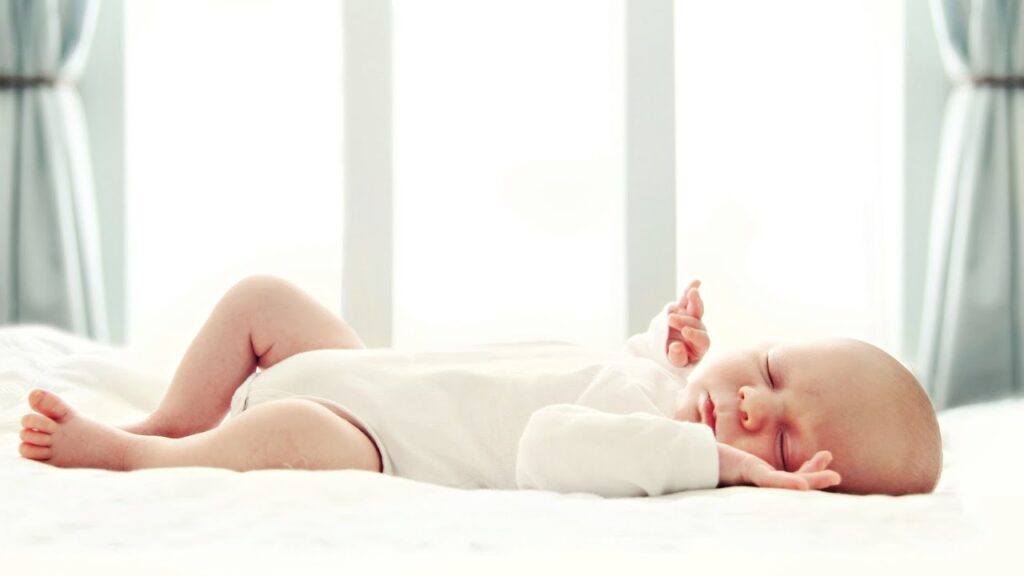
- Sleep is very important for the growth and development of your baby.
- Different babies may have different sleep patterns.
- Babies’ sleep cycles differ from adult sleep cycles, with more ‘active’ or REM sleep.
- As your child grows, their sleep patterns will change.
In This Article
- The role of sleep in baby’s development
- Understanding how baby sleep is different
- What typical baby sleep looks like at different ages
- Supporting healthy sleep routines
- Tools and Assistance
The role of sleep in baby’s development
Sleep is very important for your baby’s growth and development. It helps to form and improve their:
- Attention span
- Mood
- Language skills
- Learning skills
- Motor skills
Understanding how baby sleep is different
Every person has a sleep cycle where their type of sleep changes. Adults’ sleep cycles are usually about 90 minutes. Babies’ sleep cycles are usually about 40 minutes, so they tend to wake up more often.
There are 2 different kinds of sleep:
- Rapid eye movement (REM) sleep — also called ‘active’ or ‘light’ sleep
- Non-REM sleep — also called ‘deep’ or ‘quiet’ sleep
Adults and adolescents tend to have more non-REM sleep, where they lie still and breathe deeply. Meanwhile, babies are naturally lighter sleepers. They will spend more of their sleeping time in REM sleep instead of non-REM sleep. This is because REM sleep is important for:
- Brain development
- Memory formation
In REM sleep, babies may:
- Breathe shallowly
- Twitch their arms and legs
- Flutter their eyes under their eyelids
- Make noises
Babies can be easily woken up from REM sleep. As your baby grows, they will have less active sleep and more deep sleep.
What typical baby sleep looks like at different ages
Babies are little individuals, so they’re all different. Some take long day naps while others only have quick naps. Some wake up frequently through the night while others may sleep through or wake up only occasionally.
Try not to spend too much time comparing how your baby sleeps with other babies.
Their sleep patterns can also change a lot in their first year. The information below is a general guide. Don’t worry if your baby’s sleep is different.
Birth to 3 months
Newborns sleep on and off through the day and night. They start their sleep cycle, and spend most of their sleeping time, in ‘active’ sleep.
The total amount of sleep varies between babies — it can be from around 11 to 19 hours a day.
Sleep patterns in newborn babies are mostly affected by the need to be fed. They will wake up when they are hungry. Some babies will wake up more frequently than others, depending on their:
- Metabolism
- Stomach size
- Rate of brain growth
Your baby will usually sleep in short stretches because of hunger, and the need to be changed regularly. They will usually wake up every 1 to 3 hours.
At around 4 to 8 weeks, your baby’s sleep will start to respond more to light and dark, rather than hunger.
After 8 weeks old, they might also begin to sleep for longer.
Between 3 to 6 months
At 3 to 6 months of age, your child will start to have less ‘active’ sleep and more ‘deep’ sleep. They will begin to enter deep sleep at the start of their sleep cycles.
Your baby might sleep for a total of 10 to 18 hours. During the day, they might have a few naps — up to 2 hours each.
At night, some babies will sleep up to 8 hours, while others will still wake up.
At this age, your baby’s sleep patterns will be more impacted by light and dark.
Between 6 to 12 months
From about 6 months old, your baby’s sleep patterns will become more like yours.
They’ll sleep up to a total of 10 to 16 hours a day. During the day they may have 2 to 4 hours sleep, with a longer sleep at night for up to 12 hours.
At this age, your child may experience:
- Physical development, such as learning to crawl
- Emotional development, such as overcoming separation anxiety
- Social development
This can affect their sleep. They may feel worried about being away from you at night. It may take them longer to fall asleep or cause them to wake up more. Your baby may need settling back to sleep.
After 12 months
By 12 months old, most babies tend to sleep better. Your baby might be sleeping for around 9 to 15 hours a day. They will sleep less during the day and longer at night.
Toddlers aged 1 to 3 years may still take a nap during the day. Many toddlers also wake up during the night.
Your child might have nightmares, which usually happen during ‘active’ sleep. You might need to help them get back to sleep.
Their sleep patterns may continue to change as they develop.
Supporting healthy sleep routines
Regular daytime and bedtime routines can help your baby fall asleep and stay asleep. You can help your newborn to learn to sleep more at night by:
- Exposing them to light and playing with them during the day
- Providing a dim and quiet environment at night
If you are worried that your child’s sleep is being disrupted, you can visit your doctor or maternal child health nurse.
You can learn more about safe sleeping and sleep hygiene for babies.
Tools and Assistance
- Explore routines that match your baby’s natural sleep cues rather than forcing a fixed schedule.
- Try keeping a sleep diary to track your baby’s sleep–wake cycles.
- Adjust lighting and noise levels at different times of day to encourage healthy sleep patterns.
- Offer comfort through physical closeness if your baby is experiencing separation anxiety.
- Speak to a healthcare provider if your baby is consistently waking or sleeping unusually little or a lot.











Please log in to leave a comment.