Highlights
- Writing and drawing skills begin developing in toddlerhood and build through early childhood
- Most children start making marks around age 2
- Scribbles evolve into shapes, outlines, and eventually letters
- Free drawing fosters creativity and motor skills
- Safe, non-toxic materials are essential
- Encouragement and freedom are more important than perfection
In This Article
- The Role of Early Mark-Making
- Spotting the First Signs of Interest
- Understanding Your Child’s Readiness
- Creating an Inspiring Drawing Environment
- Choosing the Right Art Materials
- Safety First: What Parents Should Know
- Top 10 Ways to Support Your Toddler’s Drawing Skills
- Tools and Assistance
The Role of Early Mark-Making
Learning how to write and understand words is an essential life skill that develops from infancy and builds gradually during the preschool and primary years.
In the early years, a toddler’s scrawl and basic attempts at drawing and writing are important building blocks in how they communicate.
Spotting the First Signs of Interest
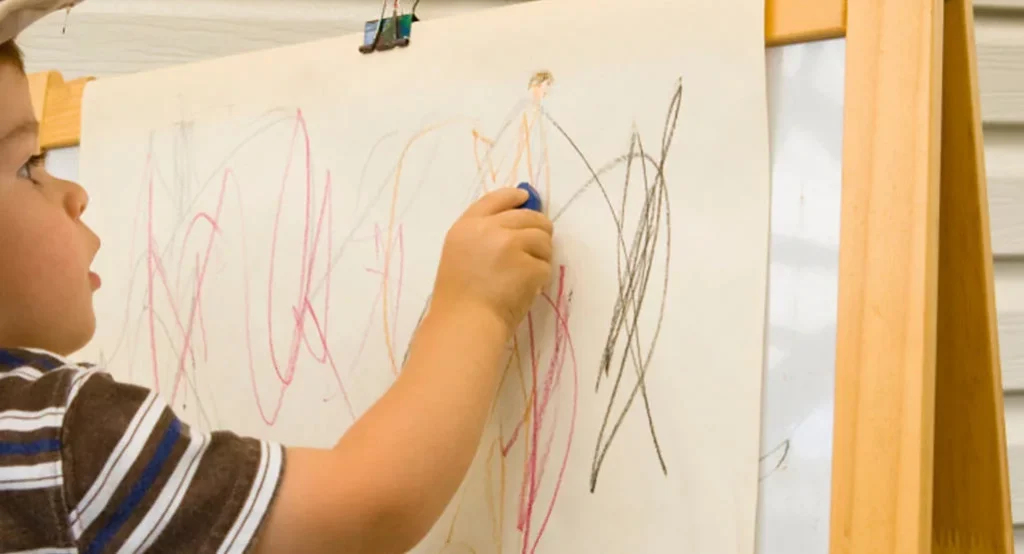
Most toddlers show an interest in making marks on paper with crayons or pencils from around 2 years of age. At first, they often scribble with lots of lines, dots, and circles, but don’t yet create recognizable pictures.
Toddlers may begin with simple drawing activities, often experimenting with crayons and pencils in ways that include holding them in their whole hand or using their fist. Seeing others use writing tools (like making lists or writing letters) can also inspire toddlers to mimic these actions.
Understanding Your Child’s Readiness
Handwriting requires a complex set of skills including:
- Fine motor skills
- Concentration
- Language
- Memory
Children develop these skills at different rates, with some periods of rapid development followed by times of consolidation.
A clue that your toddler may be ready to draw is their interest in holding a crayon or pencil and making attempts to draw. Gradually, they’ll learn to control their hand movements more precisely.
If your child is unsure, you can model drawing for them, showing how to hold the crayon and draw simple lines. Early on, focus on allowing them to draw freely without restricting their creativity, as the most important goal at this stage is to have fun.
Creating an Inspiring Drawing Environment
Support your toddler’s learning by providing different surfaces for drawing, such as:
- Paper, cardboard, blackboards, or sand
- Crayons, pencils, paints, chalk, or sticks
Large sheets of paper or cardboard on a wall allow toddlers to practice using both large muscle groups and fine motor skills. Drawing in this way also supports balance and depth perception.
Handwriting builds over time, and your child’s early scribbles will eventually progress to shapes like circles and basic outlines, followed by letters and words. Between 2 and 3 years old, many children start to recreate images from memory, which may not be recognizable to others but hold meaning for the child.
Choosing the Right Art Materials
There are no set rules. Some children may prefer the immediate effect of using paint, while others may enjoy writing with crayons or pencils. If you’re concerned about mess, painting outdoors or in a designated area is an option.
Safety First: What Parents Should Know
Consider the materials you provide for drawing and writing. Ensure that all items are non-toxic and safe in case they are ingested. Always supervise your toddler when they use paints or crayons, as they might try to taste them. Teach your toddler where it is and isn’t appropriate to draw, such as on walls or furniture, and store materials safely when they are done.
Top 10 Ways to Support Your Toddler’s Drawing Skills
- Provide access to drawing materials like paper, an easel, crayons, pencils, paints, and chalk.
- Use good-quality crayons and pencils with a higher color-to-wax ratio.
- Position the drawing surface so your toddler can easily reach and use it.
- Encourage older siblings to share their drawing materials.
- Offer smaller crayons or pieces of chalk to promote a tripod grip, which helps with pencil control.
- Let your toddler draw freely and avoid directing them too much or criticizing their efforts.
- Encourage play with toys that involve squeezing or threading (e.g., playdough, beads) to build hand muscles.
- Offer a variety of colors and name them as you show them to your toddler.
- Start with one thick crayon and expand from there rather than overwhelming your toddler with choices.
- Limit screen time to encourage more physical and creative activities. Recommended screen time is no more than one hour per day for toddlers aged 2 to 5.
Tools and Assistance
- Books and Educational Games
Interactive books or games that promote hand control and creativity can make learning fun while helping your child build essential skills. - Child Development Specialist
If you’re concerned about your child’s progress with writing and drawing, a child development specialist or pediatrician can help assess their fine motor skills and provide strategies to support their learning. - Occupational Therapy
If your toddler struggles with coordination or has difficulty holding writing tools, occupational therapy can be beneficial. An occupational therapist can work with your child on developing the necessary motor skills for drawing and writing. - Creative Learning Tools
Invest in high-quality, age-appropriate drawing materials that help stimulate creativity and motor development. Tools like thicker crayons, washable markers, and different types of paper can encourage your toddler’s progress. - Developmental Milestone Charts
These charts help track your child’s progress in areas like motor skills and creative expression. They can guide your expectations and help you notice when extra support might be helpful. - Parenting Workshops and Classes
Workshops focusing on early childhood learning often include expert advice and fun, interactive ways to support development at home.










Please log in to leave a comment.