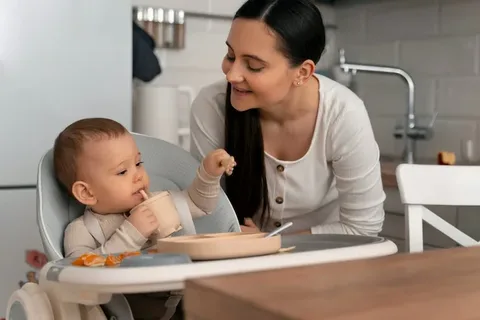
Highlights
- Learning to feed themselves is an important part of toddler development.
- Babies usually start to feed themselves with their fingers at about 6 months old.
- You can help your child learn to feed themselves by having family meals and letting them make choices about food.
- As your child is learning to feed themselves, it’s normal for them to make a mess.
- You can manage mess by using a bib or placing plastic under your child’s highchair.
In This Article
- Why is it important for toddlers to feed themselves?
- When will my toddler be ready to feed themselves?
- How can I help my toddler learn to feed themselves?
- How do I deal with mess and accidents?
- When should I seek help?
- Tools and Assistance
Why is it important for toddlers to feed themselves?
Learning to feed yourself is a basic life skill that starts in infancy. Letting your toddler feed themselves helps them develop their hand-eye coordination and fine motor skills. It is also important to acknowledge that they can make their own choices.
When will my toddler be ready to feed themselves?
When you start feeding your baby solid foods at around 6 months old, they will start to learn what is involved with feeding. By about 6 to 9 months old, babies will start to finger feed. By the toddler years, your child will have had many meals and lots of chances to watch people eating. At this age, they may want to have more control over their eating. However, every child is different. You can spoon feed your baby and give them finger foods as they learn to feed themselves.
How can I help my toddler learn to feed themselves?
Give your child control
Letting your child make decisions about food will help them develop their independence. When giving your baby a selection of food, let them decide:
- What they want to eat
- How much they want to eat
This is known as ‘baby-led weaning’. Follow your toddler’s cues and teach them to listen to their body. If they are full and don’t want to eat anymore, don’t force them to finish their plate. This can form unhealthy eating habits. Let your baby explore new foods, tastes, and textures at their own pace. Be patient and kind as your toddler develops eating skills.
Eat as a family
Eating as a family is important so that your child can enjoy family time and see others enjoying different foods. Your toddler will learn about feeding by watching others eat. This can help with fussy eating. Be sure to set a good example for healthy food choices. Try to time mealtimes for when your toddler is not too tired, so that they eat well.
When including your toddler in mealtimes:
- Prepare your toddler’s meals from the same foods as the rest of the family
- Position your toddler’s highchair or booster seat at the table so they can watch you eat
- Place bowls of food on the table so that each person can serve themselves, to teach your toddler about portion sizes
Using cups and utensils
Toddlers need a lot of practice to learn how to drink from a cup and use cutlery. Breastfeeding or drinking from a bottle is a very different action to drinking from a cup or a sip cup with a straw. Your toddler might make a mess while they’re learning to drink from a cup. Your child should start learning to drink from a cup at around 6 months old. Give your toddler plastic, child-sized cutlery to practice with. By around 12 months old, your toddler should be able to hold a spoon by themselves.
How do I deal with mess and accidents?
When feeding, it’s normal for toddlers to make a mess. Playing with food is your baby’s way of learning about food. Try not to invest too much emotional energy into your toddler’s messy eating. Otherwise, they may learn that this is a way of getting attention. To manage mess, you can:
- Place a plastic sheet underneath your child’s highchair to catch spills
- Feed them outside in warmer months
- Use bibs to protect clothing from spilled food
When should I seek help?
You should seek help from your doctor or child health nurse if your toddler:
- Is not growing or you have any concerns with their development
- Looks pale or has no energy
- Is drinking more than 3 serves of milk each day, which can fill them up and reduce their appetite for other food
- Is not chewing and only eating pureed or very soft foods
Tools and Assistance
- Child-Sized Utensils: Providing your toddler with plastic, child-sized cutlery can help them practice using spoons and forks. Make sure the utensils are easy for little hands to hold.
- Highchair or Booster Seat: A sturdy, adjustable highchair or booster seat positioned at the table is essential for mealtimes. It helps your child learn to sit properly and observe others eating.
- Bib and Plastic Sheets: To manage mess, use bibs to protect your child’s clothing and place plastic sheets under their highchair to catch food spills.
- Baby-Led Weaning Resources: If you’re exploring baby-led weaning, look for books, online articles, and support groups that offer tips and guidance on how to let your toddler make their own food choices.
- Parenting Apps: Many apps provide tips and track milestones, including feeding habits, to ensure your child is on track with self-feeding and other developmental stages.
- Consult with a Pediatrician: If you’re concerned about your toddler’s eating habits, growth, or development, consult your pediatrician. They can offer personalized advice and identify any potential concerns.










Please log in to leave a comment.