Highlights
- Wait until your child shows signs of readiness for toilet training. This usually happens between 18 months and 3 years.
- Be patient and relaxed when you start. Praise your child for progress, and don’t make a big deal about accidents.
- Start by putting your child on the toilet or potty regularly. Over time, they will be able to tell you when they need to go.
- Teach good hygiene practices. Help them wipe, flush, and wash their hands.
- It takes longer for your child to stay dry at night than during the day.
In This Article
- When should I start toilet training my child?
- How will my child show they’re ready for toilet training?
- Do I start with the potty or toilet?
- How do I toilet train my child?
- Are there any differences between toilet training males and females?
- How should I manage toilet training if my child goes to childcare?
- What should I do if toilet training isn’t working?
- When should my child be dry at night?
- Tools And Assistance
When should I start toilet training my child?
There is no set age for starting toilet training. Wait until your child shows signs of readiness.
Most children are ready between 2 to 3 years old. Some may be ready as early as 18 months. Don’t rush the process.
Choose a calm time when your household is free of other distractions. Summer may be a good time, as fewer layers of clothing make it easier.
How will my child show they’re ready for toilet training?
Your child may be ready when they:
- Know when they are about to wee or poo.
- Can tell you after they’ve wet or soiled their nappy.
- Stay dry for at least 2 hours or wake up dry after a nap.
- Become irritated by wearing a wet or dirty nappy.
- Have predictable times for pooing.
- Show interest in others using the toilet.
Your child should also be able to:
- Pull their pants up and down.
- Follow simple instructions.
- Sit comfortably in one position for a while.
Do I start with the potty or toilet?
Some parents find that using a potty is a gentler way to start. You can place it where your child can easily access it.
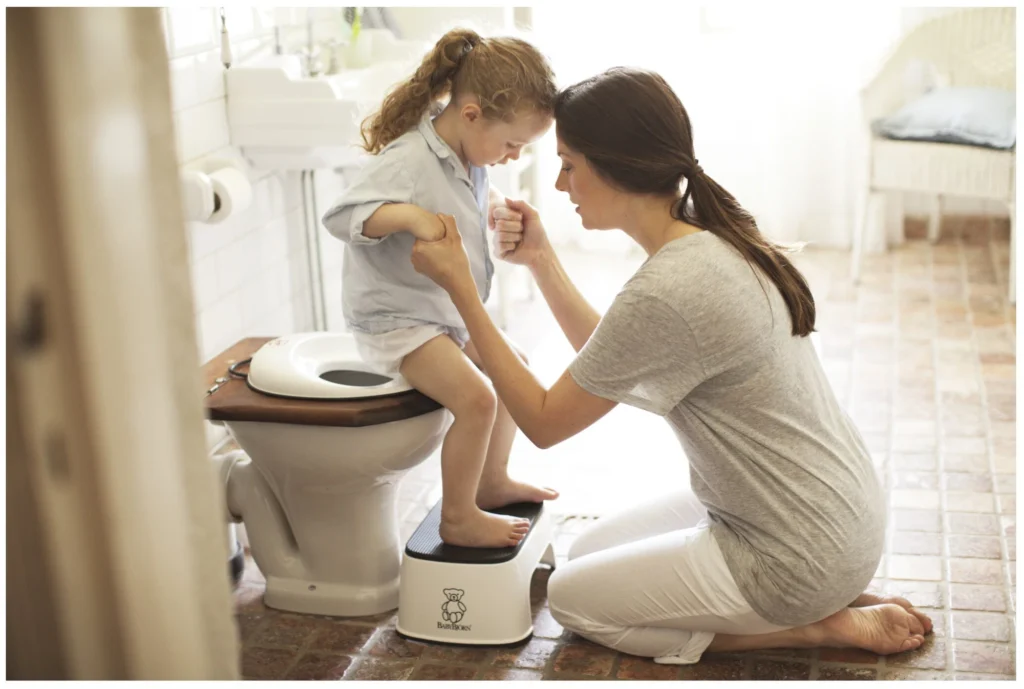
If you prefer not to empty a potty, your child can use the toilet. Make sure they can easily climb onto the toilet with a step or stool. A toddler toilet seat can help them feel secure.
How do I toilet train my child?
Getting started:
- Let your child watch you use the toilet if you feel comfortable. This helps them understand the process.
- Teach them the words they will need, such as ‘wee’ and ‘poo’.
- Dress your child in clothes that are easy to remove.
- Buy enough underpants for your child. Absorbent training pants are also an option.
- Stay home for the first few days of training if possible.
- Remove any dangerous items from the bathroom.
Taking your child to the toilet:
- Sit your child on the toilet or potty for a few minutes at a time.
- Take them to the toilet 20 to 30 minutes after meals, naps, and at regular intervals.
- Once they get used to it, you can ask if they need to go.
- Praise them for every effort. Even sitting on the toilet is an achievement.
- Help your child learn how to wipe, flush, and wash their hands.
Are there any differences between toilet training males and females?
- Boys can sit or stand for wees. Starting them off sitting may be easier. Over time, you can teach them to stand.
- Teach boys to shake their penis to remove drops of urine.
- Girls should be taught to wipe from front to back to avoid infections.
How should I manage toilet training if my child goes to childcare?
- Talk to the staff about how you’re managing toilet training at home. This helps ensure consistency between home and childcare.
- Show your child where the toilet is at childcare and explain any differences.
- Pack extra nappies, underpants, and clothes for your child in case of accidents.
What should I do if toilet training isn’t working?
- Be patient. Toilet training can take a few weeks for some children, but not all children learn at the same pace.
- Expect accidents. Don’t make a big deal about them, as it can cause anxiety.
- If your child regresses, it may be due to a change or illness.
Here are things to avoid:
- Don’t pressure your child to be trained by a certain age.
- Don’t punish your child for accidents.
- Avoid constipation by ensuring your child drinks plenty of water and eats enough fruit and vegetables.
- If your child isn’t progressing after about 4 weeks, wait until they are older.
- Consult your doctor if your child is not toilet trained by age 4.
When should my child be dry at night?
Nighttime dryness takes longer than daytime dryness. Children develop bladder control at different ages.
Some children stay dry at night by age 3, and most by age 5. It’s normal for some children to wet the bed until they are older.
If your child is still wetting the bed after age 7 or 8, consult your doctor.
Tools And Assistance
If you need additional help with toilet training, the following resources may be useful:
- Pediatrician: If you’re concerned about your child’s readiness or toilet training progress, a pediatrician can provide guidance.
- Childcare staff: Collaborate with childcare staff to ensure consistency in toilet training approaches.
- Training pants: Absorbent training pants can be helpful during the transition.
- Books and videos: There are several child-friendly books and videos available that can help your child understand the process of toilet training.
- Support groups: Connecting with other parents through online forums or support groups can provide reassurance and tips for toilet training.










Please log in to leave a comment.