Highlights
- Drowning occurs when liquid, usually water, enters the lungs and blocks breathing.
- Never leave a child alone near water — always maintain close, visual supervision.
- Even minor drowning incidents require medical assessment.
- Parents should learn CPR for infants and children to respond in emergencies.
In This Article
- Understanding Drowning
- How to Prevent Drowning in Children
- Common Places Where Drowning Can Happen
- What to Do If Your Baby Swallows Water
- Responding to a Drowning Incident
- Water Safety at Home
- Pool Safety Tips
- Safety at Beaches, Lakes, and Rivers
- When Your Baby Starts Crawling
- Using Flotation Devices
- Teaching Your Child to Swim
- Tools And Assistance
Understanding Drowning
Drowning is when liquid (usually water) is inhaled into the lungs and prevents a person from breathing.
Drowning can either be fatal (drowning resulting in death) or non-fatal, when the person survives.
Previously, a non-fatal drowning was referred to as a near-drowning. Other terms, such as delayed drowning, wet drowning, dry drowning, passive/silent drowning or secondary drowning, were used to describe any illness or injury after a drowning. These terms are no longer used.
Anyone who has non-fatal drowning should be seen by a healthcare professional for a medical assessment.
How to Prevent Drowning in Children
Constant and close adult supervision is key to keeping children safe in and around water to prevent them from drowning. Supervision means keeping constant visual contact with your child and keeping them within arm’s reach at all times.
Never assume someone will watch children when they are in and around water at parties and other gatherings. Always make sure there is a responsible and sober adult supervising children at events.
Drowning is silent — your child won’t scream if they are drowning. Drowning is quick and you don’t have much time to react.
Babies who fall into water are very quiet. They don’t have the awareness to call out for help when they’re at risk of drowning. If they’re in a pool or large body of water, they sink to the bottom quickly and their lungs fill with water.
Toddlers have much of their weight in their head and upper body and if they fall head first into water, they may not have the strength to right themselves.
Common Places Where Drowning Can Happen
Drowning is a leading cause of death for toddlers between the age of 1 and 3 years, and it can occur anywhere.
Most infant drownings happen in the bathtub. Most toddler drownings occur in home swimming pools.
Spas, creeks, rivers and dams are all common sites of drownings, as well as buckets, coolers, toilets and garden ponds. Babies can drown in as little as 5 cm of water.
While young babies are not as much at risk of drowning as toddlers, it’s good practice for parents of newborns to start safe water habits in preparation for when their child becomes more mobile.
Most child drownings occur because of a lack of adult supervision.
What to Do If Your Baby Swallows Water
Most babies swallow some water when they’re having a bath or going for a swim. They’re generally fine, as long as the water goes into their stomach and not their lungs. It’s important for parents to limit the amount of water they swallow.
If you think your baby may have inhaled water into their lungs, sit them upright. Monitor them for any breathing changes and call an ambulance immediately if they are not breathing and/or their colour changes.
Responding to a Drowning Incident
If your child has a drowning incident, you should watch for any of the following symptoms and take them to a doctor, hospital or call an ambulance:
- Persistent cough
- Difficulty breathing
- Tiredness
- Lethargy or decreased activity
- Confusion
- Blue colour on their skin and lips
- Loss of consciousness
- Loss of bowel or bladder control
Anyone involved in a drowning incident needs to be seen by a healthcare professional for a medical assessment, even if the incident was minor or they appear to have recovered.
Anyone who has been resuscitated after drowning needs to be closely monitored in case they get worse. This can happen in minutes or hours after being resuscitated. This can be due to lung damage or injury to the heart from not having enough oxygen.
Water Safety at Home
You should never leave your baby or child alone when they’re in or around water, even for a moment.
Never leave a young child alone near water or in the bathtub even for a moment. Keep your child within arm’s reach at all times.
Never leave your baby in the care of other children, only responsible adults.
If you are bathing a baby or small child and the telephone or doorbell rings, wrap the child in a towel and carry them with you if you can’t ignore it.
Empty the bath as soon as you take your child out of it.
Be aware of small bodies of water that might attract your child’s attention, such as fishponds, construction sites, spas or hot tubs, ditches, fountains, rain barrels, watering cans, wading pools or buckets. Keep toilet lids closed or lock bathroom doors.
Cover ponds, birdbaths and water features with wire mesh, or leave them empty until your child is at least 5 years old.
Pool Safety Tips
Around the pool
- Constantly watch small children when they are near water.
- Enforce pool safety rules such as no running near the pool and no pushing others underwater.
- Keep a safety ring and rope at the poolside.
- Use only approved pool safety covers. Some covers can fill with water and children can be trapped underneath.
- Do not store toys in or near pools. A child trying to get the toy may drown.
In the pool
- Teach your children to swim. Babies can start swimming lessons from about 6 months old.
- Never allow kids of any age to swim alone. Supervision means constant visual contact with your child. Children under 5 years should be kept within arm’s reach at all times, even if they are using an inflatable floatation device.
- Do not allow young children to use spas and hot tubs. Young children can easily drown or become overheated in them.
- Learn CPR, and make sure that lifeguards or supervisors know CPR.
Safety at Beaches, Lakes, and Rivers
- Make sure children always wear an approved life jacket when swimming in deep water or riding in a boat.
- At the beach, lake or river, always stay with your child while they’re playing in or near the water.
- Only take your child to patrolled beaches where there are surf lifesavers, and only swim in designated safe areas.
- For school-aged children, teach them what to do if they need help. Stay calm, float and signal for assistance.
When Your Baby Starts Crawling
Babies are inquisitive, and once they’re mobile they can cover a surprisingly big area in a short space of time. Water bowls for dogs, open toilets, sinks, laundry buckets with soaking clothes and even large pot plant saucers all hold enough water to cause a small child to drown.
Using Flotation Devices
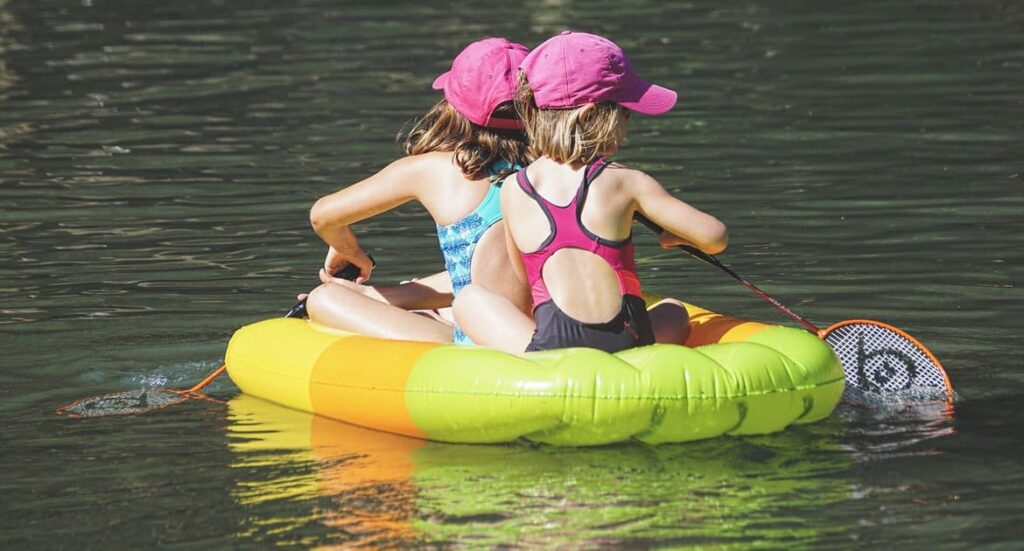
If you use a flotation device on your baby or child, make sure it conforms to safety standards. Always check the label for the recommended size and age, and check to see there are no holes, tears or leaks before using.
No flotation device is a replacement for adult supervision in and around water.
Teaching Your Child to Swim
Baby swimming lessons generally start at around 6 months, but you can take your baby swimming from around 2 months.
Tools and Assistance
First Aid and CPR Courses
Learning CPR and first aid for infants and children is essential. Trusted organizations like St. John Ambulance and the Red Cross offer courses that teach how to respond in emergencies like drowning. These courses provide vital skills for handling various situations before professional help arrives.
Pool Safety Equipment
Several safety tools can help protect children around water:
- Fencing and Alarms: Install pool fencing and alarms to prevent unsupervised acces
- Pool Safety Covers: Ensure the pool is covered when not in use.
- Floatation Devices: Always check that they meet safety standards.












Please log in to leave a comment.